This revised report updates the Jordan 2024 cigarette tax simulation, incorporating new demographic ..
Pakistan has aggressively pursued fiscal consolidation through various tax hikes, yet tobacco taxati ..
The objectives of this study are to: document the size, scope, internal structure, finance and legal ..
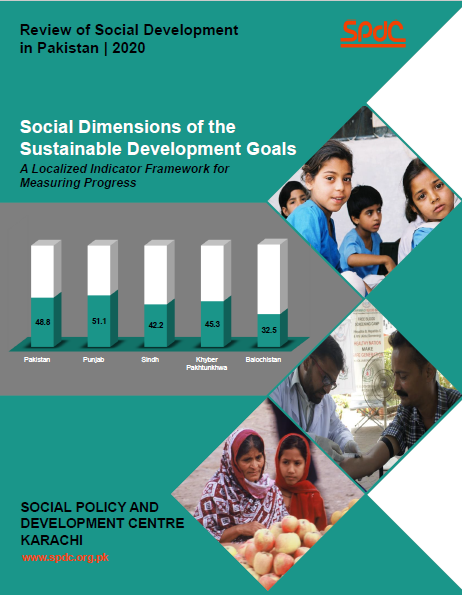
This study evaluates Pakistan’s progress on key Sustainable Development Goals by identifying data gaps and proposing preliminary national indicators for poverty, health, education, gender equality, and reduced inequalities. It also addresses critical policy challenges such as population growth, financing, and the role of local governments, while underscoring the need for integrated policies, equ ..
This report evaluates the state of social development across Pakistan’s urban centers, highlighting disparities in access to education, health, housing, and basic services. It examines the challenges of rapid urbanization, weak local governance, and uneven resource allocation, while identifying policy measures needed to reduce inequality and strengthen urban social infrastructure. By focusing on ..
The Annual Review assesses the state of social development across Pakistan’s rural districts, focusing on disparities in education, health, water supply, and other basic services. It highlights the challenges of poverty, weak infrastructure, and limited local governance, while examining policy options to reduce inequality and strengthen rural livelihoods. ..
This report examines how Pakistan’s devolution process has shaped social development outcomes across provinces and districts. It highlights the opportunities and challenges of decentralization, including resource mobilization, service delivery, and local governance capacity. The link between devolved authority and social sector performance is analyzed to underscore the need for stronger institut ..
The Annual Review of Social Development in Pakistan 2009-10 comprehensively examines the multidimensional socioeconomic crisis stemming from the country's involvement in the post-9/11 war on terror. The report details how escalating terrorist violence and military operations have dislocated economic activity, damaged critical infrastructure, and imposed staggering financial losses estimated by the ..
This study explores the role of women in Pakistan’s labor force, highlighting barriers to participation, wage disparities, and the challenges of balancing work with social responsibilities. It examines structural and cultural constraints that limit women’s economic opportunities, while identifying policy measures to promote gender equity, expand employment prospects, and strengthen women’s c ..
The Annual Review analyzes how Pakistan’s devolution reforms have influenced human development outcomes across provinces and districts. It explores the opportunities and challenges of decentralization in improving education, health, and social services, while assessing the capacity of local governments to deliver equitable development. The study underscores the importance of effective resource m ..
This report examines the complex relationship between trade liberalization, economic growth, and poverty reduction in Pakistan. It analyzes how tariff reforms, market openness, and structural adjustments have influenced income distribution and social development. The study highlights the need for complementary policies such as social protection, equitable resource allocation, and targeted interven ..
This report investigates whether economic growth alone can reduce poverty in Pakistan. It evaluates the limits of growth‑driven strategies, highlighting persistent inequalities and the need for complementary policies in social protection, resource allocation, and human development. Analyzing the interplay between growth, poverty, and social outcomes, the study highlights that sustainable poverty ..
This volume of Social Development in Pakistan focuses on the state of education, examining progress and persistent challenges in access, quality, and equity. It highlights how structural weaknesses in Pakistan’s education system—ranging from resource constraints to governance gaps—continue to undermine human development. By assessing key indicators and policy responses, the report underscore ..
This study explores the interplay between economic growth, income inequality, and poverty reduction in Pakistan. It assesses whether growth has translated into broad‑based improvements in living standards, highlighting persistent disparities across regions and social groups. By examining structural constraints and policy gaps, the study underscores the need for inclusive strategies that combine ..
The Annual Review examines Pakistan’s strategies for reducing poverty, assessing the effectiveness of growth‑driven approaches alongside social sector interventions. It highlights persistent challenges in inequality, resource allocation, and human development, while emphasizing the need for integrated policies and targeted programs. ..
This volume of Social Development in Pakistan examines how recurring economic crises have shaped the trajectory of social progress in the country. It highlights the strain that fiscal imbalances, inflation, and declining growth place on education, health, and poverty reduction, often forcing governments to cut back on essential social sector investments. The report analyzes key indicators to show ..
This report provides a comprehensive overview of Pakistan’s social sector, tracing its evolution through key initiatives such as the Social Action Programme (SAP) and subsequent reforms. It underscores the urgency of addressing persistent gaps in education, health, and basic services, while stressing the role of governance and fiscal planning in shaping outcomes. ..