The Social Policy and Development Centre (SPDC) hosted a webinar on ‘Cigarette Taxation in Pakistan.’ The purpose of this webinar was to discuss the implications of the cigarette tax policy of Pakistan for cigarette consumption, government revenues and health outcomes, particularly in the contex...
The Social Policy and Development Centre (SPDC) hosted a webinar on ' Cigarette Taxation in Pakistan' on Thursday, June 17, 2021. The purpose of this webinar was to discuss the implications of the cigarette tax policy of Pakistan for cigarette consumption, government revenues and health outcomes, pa...
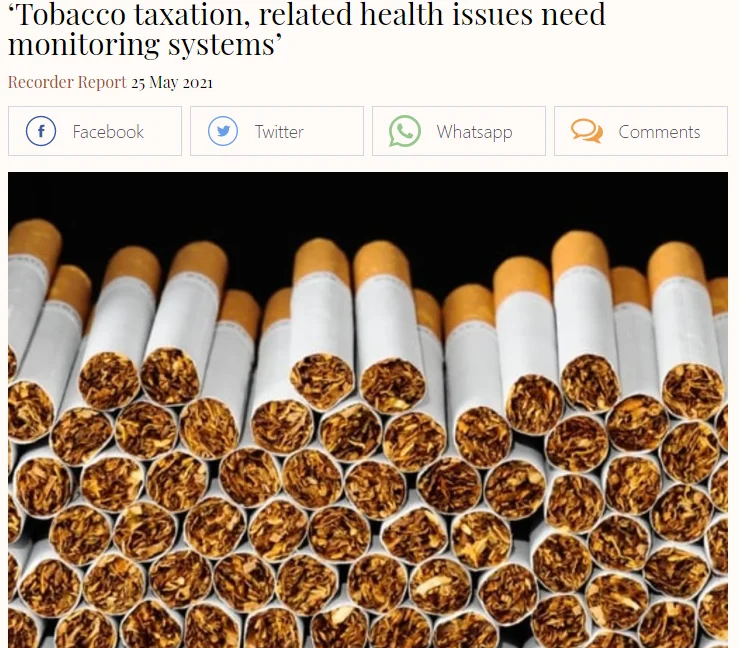
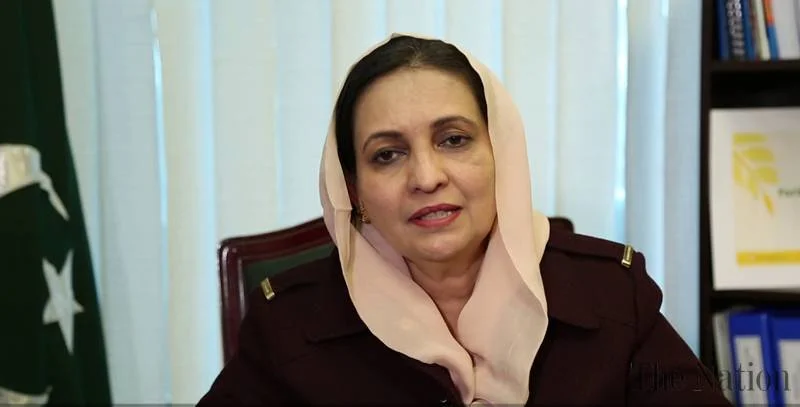
Federal Parliamentary Secretary for Health Dr Nausheen Hamid, Monday, said that tobacco taxation and related health issues need constant monitoring systems, and hence, the federal government is committed to come up with such systems. https://www.brecorder.com/news/40094909...
Federal Parliamentary Secretary for Health, Dr Nausheen Hamid, has said that the tobacco taxation and related health issues need constant monitoring systems and the federal government is committed to come up with such systems. She said this while speaking at the webinar ‘Fiscal intervention for he...
Pakistan is a high tobacco-burden country where more than 29 million adults currently use tobacco in any form. Estimates based on Pakistan’s Household Integrated Economic Survey (HIES) 2018–19 indicate that tobacco is consumed in more than 45 per cent of the households in the country—the ratio...
Raising tax revenues during the third wave of Covid-19 is a daunting task for the policymakers in Pakistan. There are hardly any policy options available for the federal government to raise tax revenues during these challenging times. In this scenario, Social Policy and Development Centre’s (SPDC)...
According to a policy note released by the SPDC, to fulfil its long-term commitment to using tax and price measures to reduce tobacco consumption, the government must continue reforming the tobacco tax system by a) implementing significant excise tax increases to make cigarettes progressively more e...
The in-depth analysis shows that raising the excise tax rate even by only 30 percent would result in 219,000 fewer smokers, a 3.8 percent reduction in smoking prevalence among adults, and the prevention of 424,000 smoking-attributable deaths, including 348,000 future young smokers. On the revenue si...
The tobacco tax reform proposed by SPDC would greatly help the Pakistani government to meet its commitment to tobacco reduction and death from NCDs in line with its commitment to achieve SDG-16 and align its tobacco tax policies with global best practices . http://taxlaw.revie...
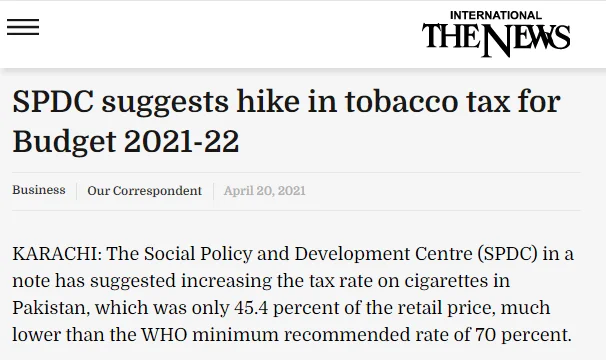
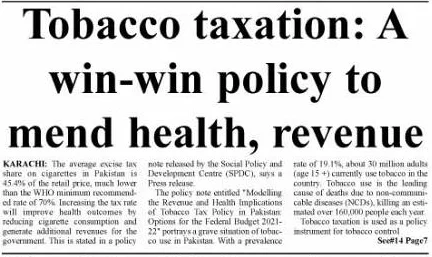
Currently, the average excise tax on cigarettes in Pakistan is at 45.4 percent of the retail price. Increasing the tax rate will improve health outcomes by reducing cigarette consumption and generating additional revenues for the government, according to the SPDC’s policy note titled ‘Modelling ...
Currently, the average excise tax on cigarettes in Pakistan is at 45.4 percent of the retail price. Increasing the tax rate will improve health outcomes by reducing cigarette consumption and generating additional revenues for the government, according to the SPDC’s policy note titled ‘Modelling ...
This would not only help curb tobacco use in the country but would also contribute to generating more revenues that can be used for promoting public health. https://www.brecorder.com/news/40086042/spdc-urges-govt-to-increase-tax-on-tobacco-in-upcoming-federal-budget...
The average excise tax share on cigarettes in Pakistan is 45.4% of the retail price, much lower than the WHO minimum recommended rate of 70%. https://citynews.com.pk/2021/04/19/tobacco-taxation-a-win-win-policy-for-improving-health-outcomes-and-revenue-generation/...
Parliamentarians and activists at a seminar on Monday demanded increase duties on tobacco products, as the taxes in Pakistan were below the standards set by World Health Organisation’s (WHO) Framework Convention on Tobacco Control (FCTC). https://www.dawn.com/news/1606334/govt-asked-t...
Tobacco control activists demand that the government shall increase FED on tobacco products, including smokeless tobacco products, in Pakistan. Currently, there are two tax slabs for cigarettes. An amount of Rs33 FED is imposed on cigarettes costing less than Rs90 per packet and Rs90 on cigarettes w...