This revised report updates the Jordan 2024 cigarette tax simulation, incorporating new demographic ..
Pakistan has aggressively pursued fiscal consolidation through various tax hikes, yet tobacco taxati ..
The objectives of this study are to: document the size, scope, internal structure, finance and legal ..
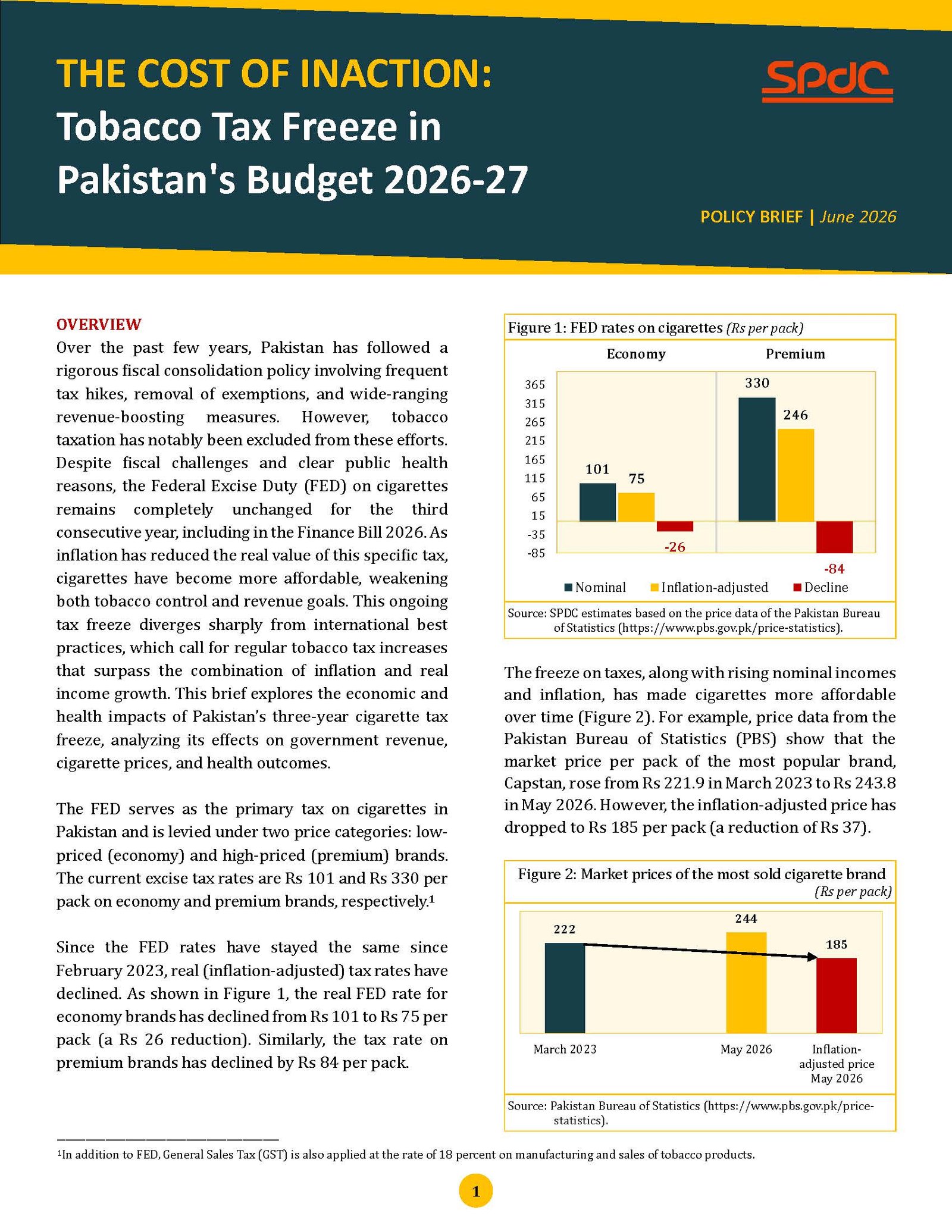
Pakistan has aggressively pursued fiscal consolidation through various tax hikes, yet tobacco taxation has been notably excluded from these efforts. Despite prevailing fiscal pressures and critical public health concerns, the Federal Excise Duty (FED) on cigarettes has been frozen for the third consecutive year, including in the Finance Bill 2026. Because high inflation has severely eroded the rea ..
This paper calls for recalibrating the 7th NFC Award, which still relies on outdated census data and pre‑merger boundaries. Using the 2023 Digital Census, 2024–25 poverty estimates, and updated revenue figures, it proposes an Updated Baseline that refreshes indicators while retaining the original formula. Positioned as an interim measure until the 11th NFC Award, the framework ensures fairness ..
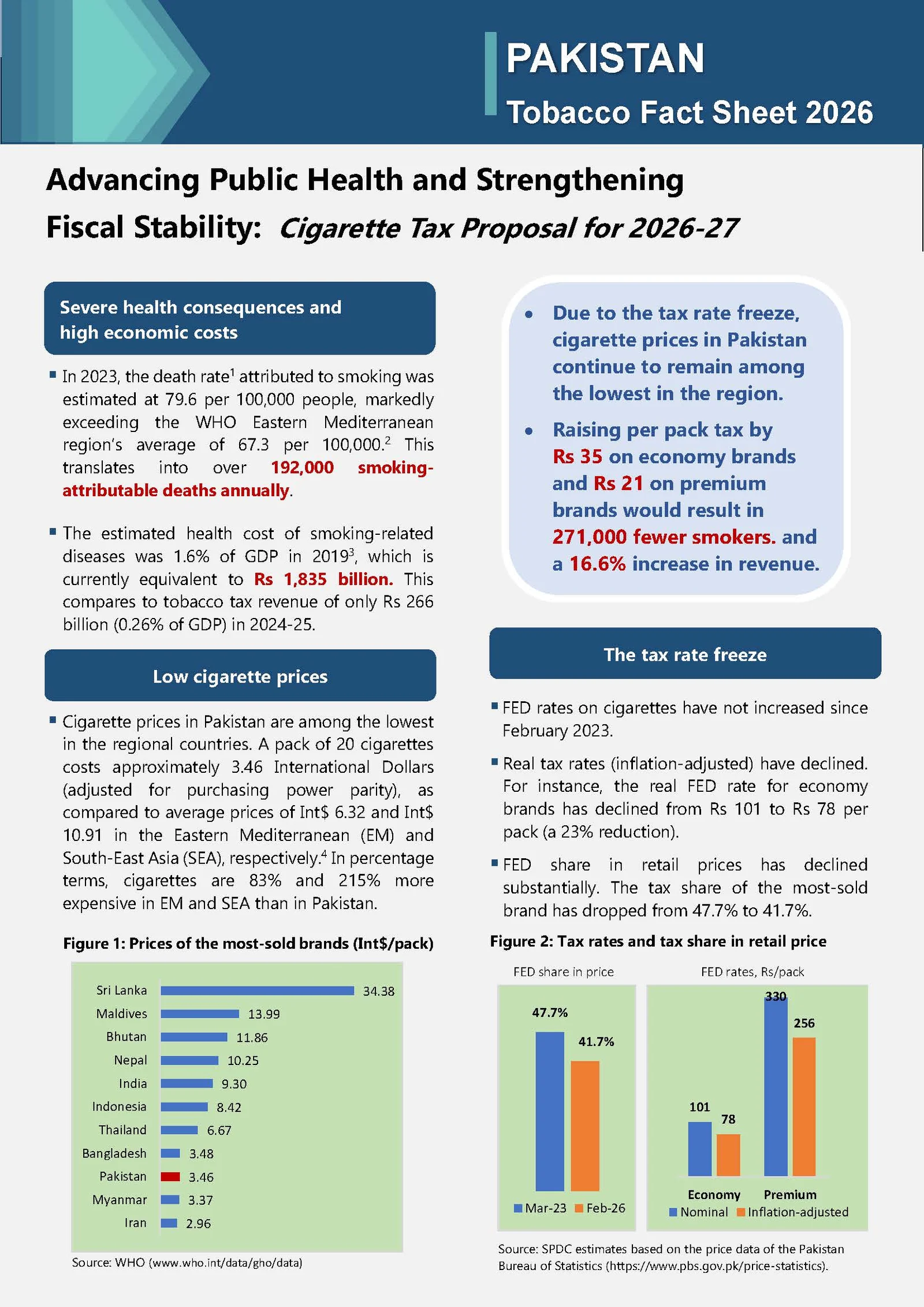
The Tobacco Factsheet presents a forward-looking cigarette tax proposal for FY2026–27, designed to advance public health while reinforcing fiscal stability. It highlights how a unified excise structure can curb smoking prevalence, generate sustainable revenue, and align with the country’s commitments to domestic resource mobilization. ..
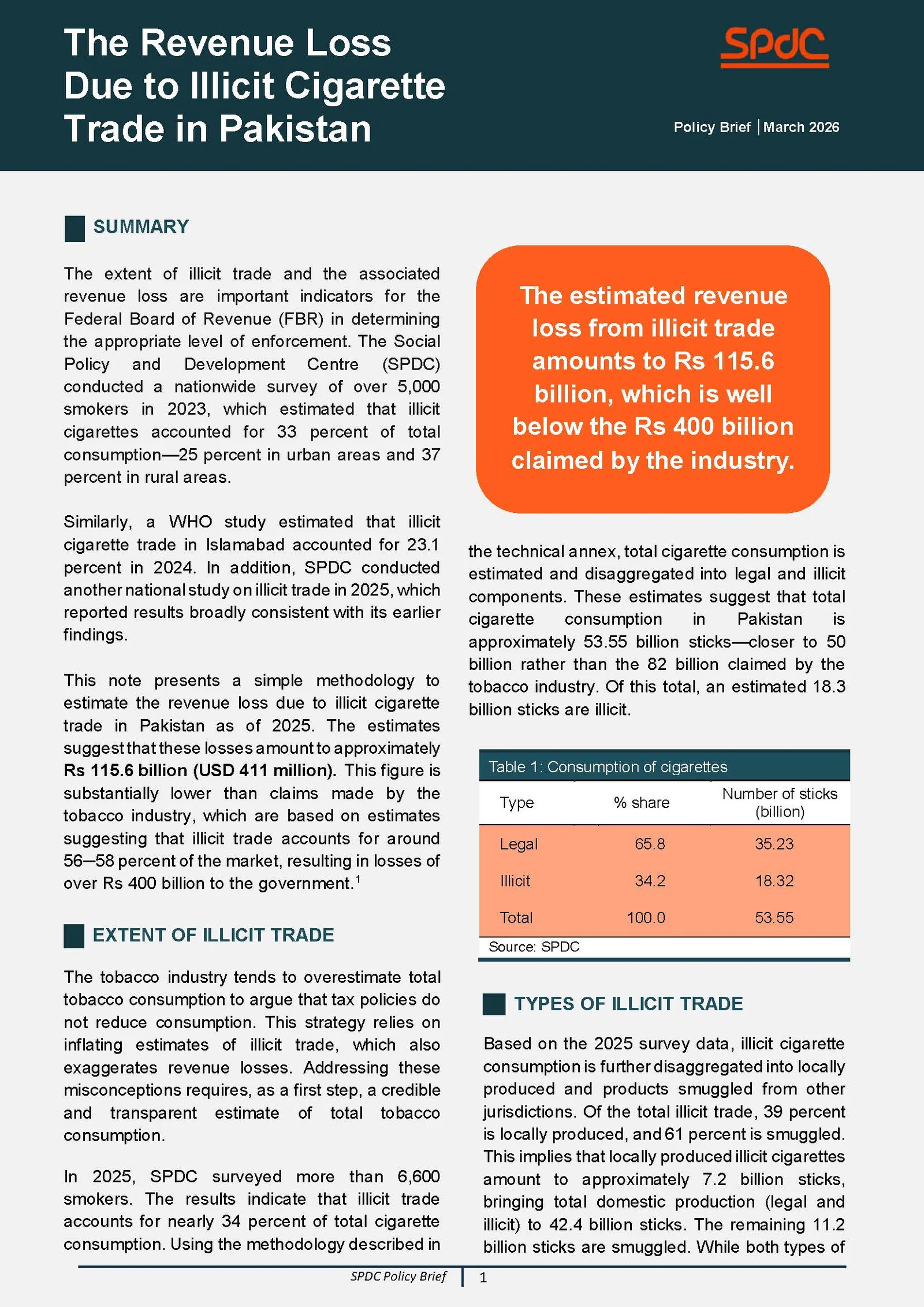
Illicit cigarette trade undermines both fiscal revenues and public health objectives. This study provides the first systematic estimate of revenue losses attributable to tax evasion and smuggling, revealing how weak enforcement and market distortions drain government resources. It calls for evidence-based reforms to strengthen excise administration, close loopholes, and counter industry narratives ..
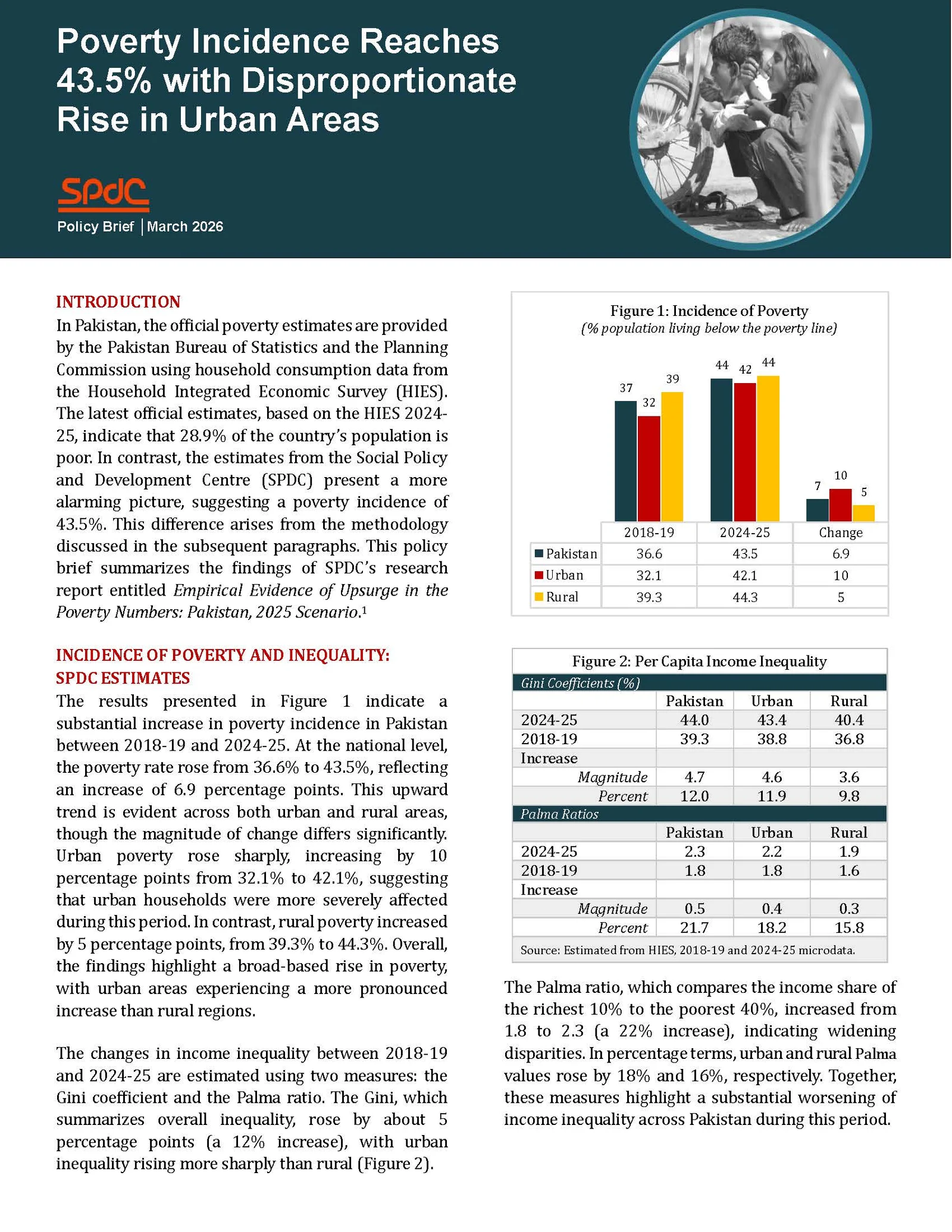
Official estimates based on the HIES 2024-25 place Pakistan’s poverty incidence at 28.9%. In contrast, SPDC’s analysis reveals a far higher rate of 43.5%, driven by methodological refinements and highlighting a disproportionate rise in urban poverty. This policy brief summarizes the findings from SPDC’s report entitled Empirical Evidence of Upsurge in the Poverty Numbers: Pakistan, 2025 Scen ..
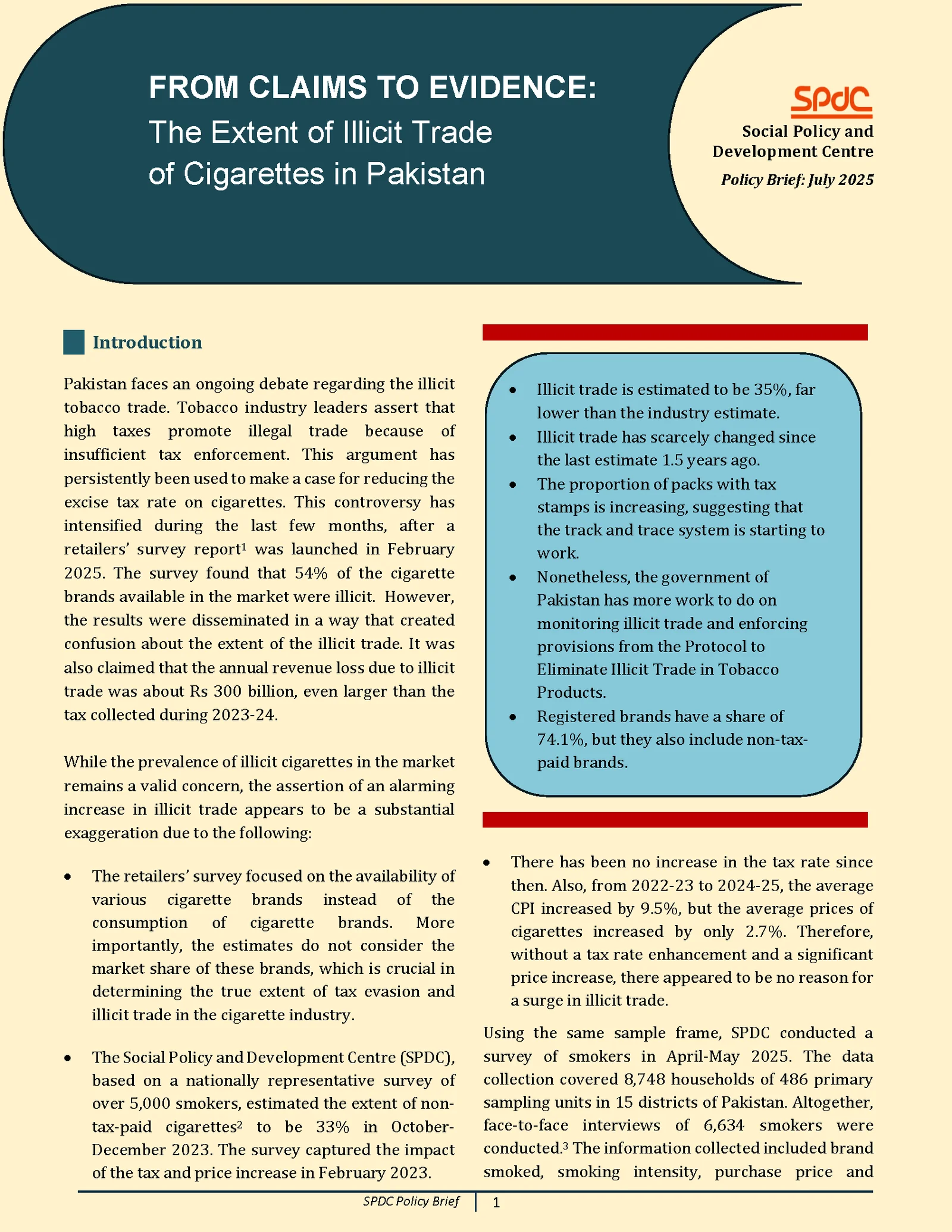
This policy brief challenges industry-driven narratives on illicit cigarette trade in Pakistan by presenting evidence-based estimates of its actual scale. It demonstrates that exaggerated claims have distorted policy debates, while rigorous survey data reveal a more moderate but still significant illicit market. By grounding estimates in consumption-weighted data, the study reveals a more accurate ..
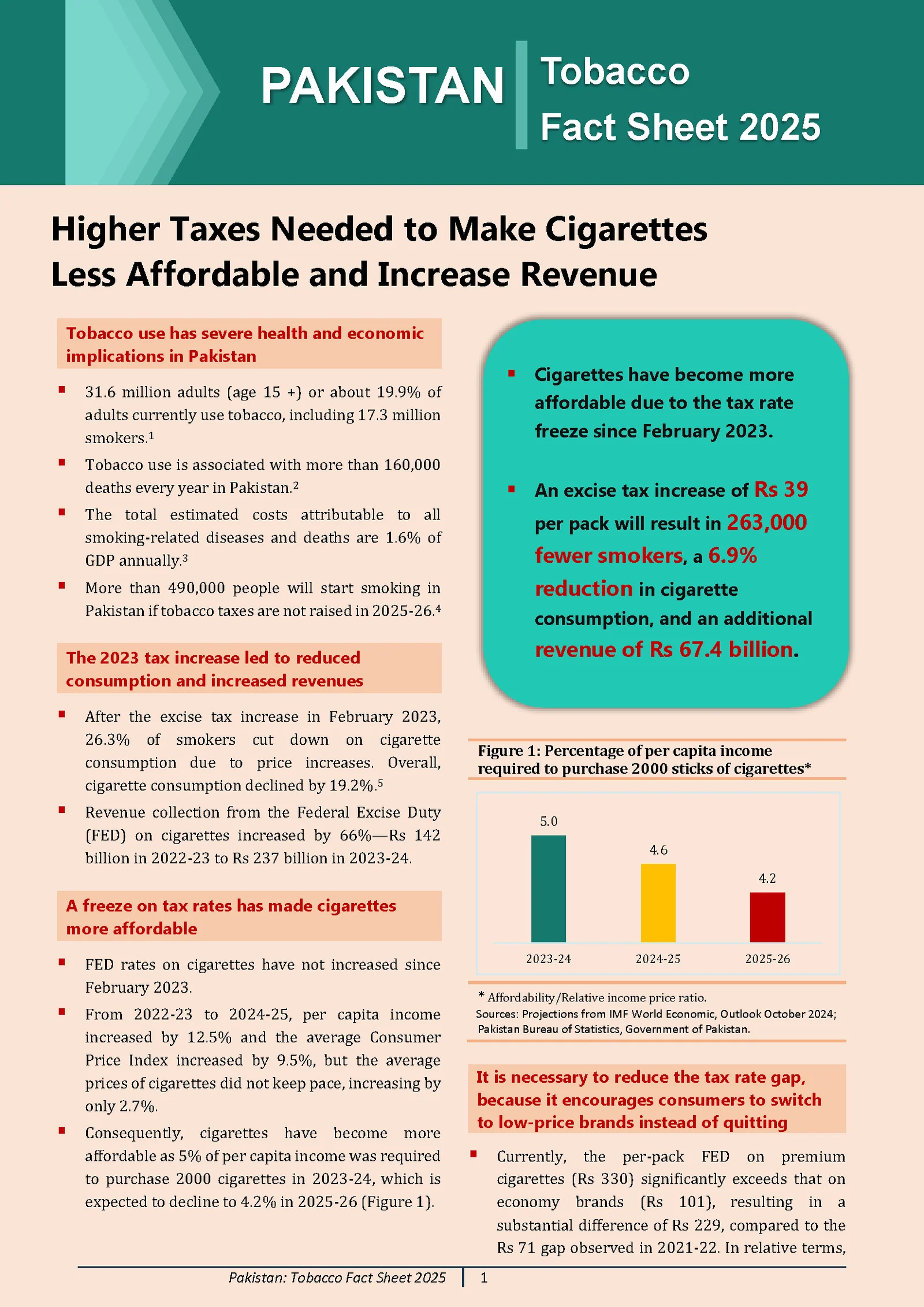
The Tobacco Fact Sheet 2025 brings together the latest evidence on prevalence, consumption patterns, excise revenues, and health costs of tobacco use. It highlights how tobacco taxation can serve as a dual-purpose policy - curbing smoking rates while strengthening fiscal stability. Designed for policymakers, researchers, and advocates, the factsheet provides a clear snapshot of the scale of tobacc ..
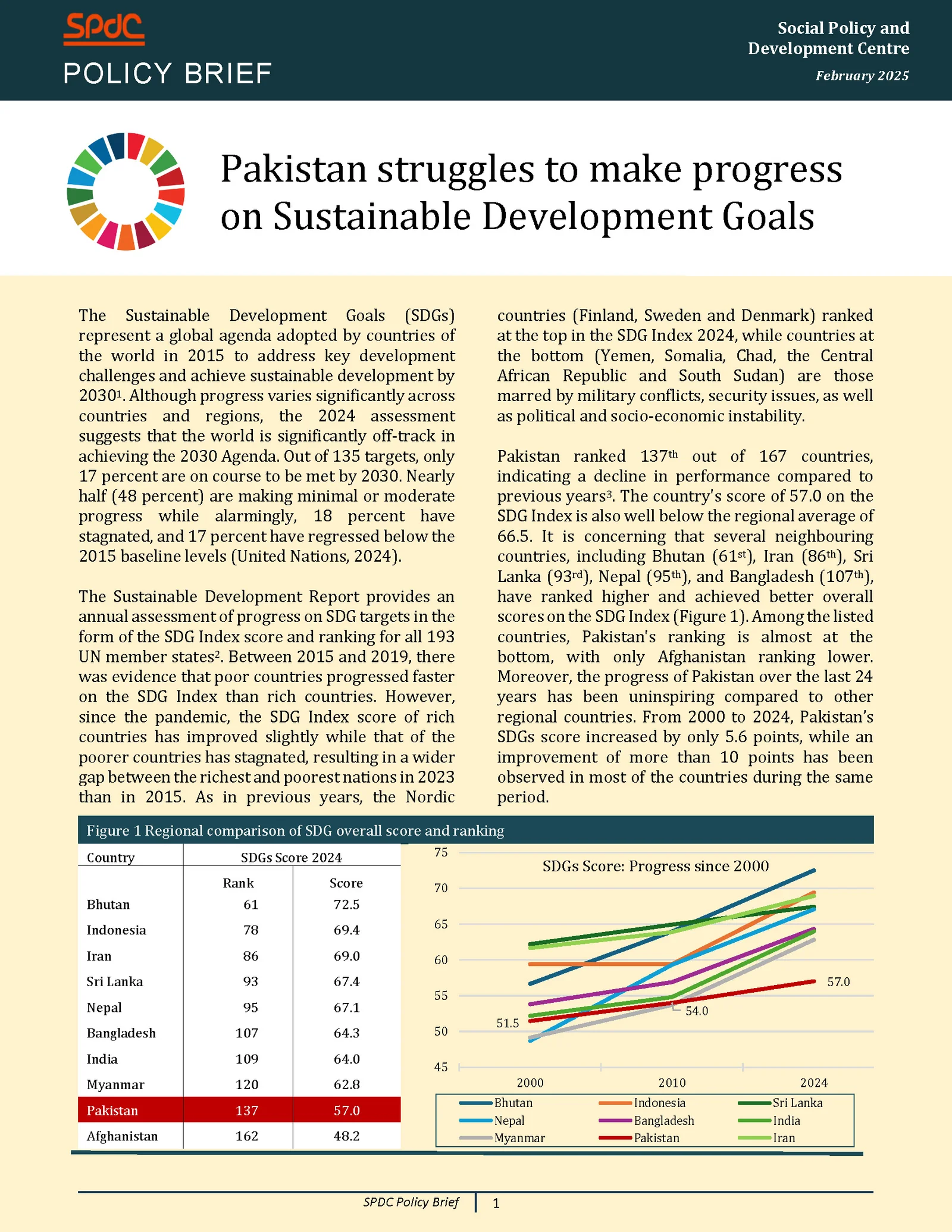
Pakistan’s commitment to the SDGs remains constrained by weak institutional capacity, fragmented governance, and limited fiscal space. This policy brief provides a critical assessment of where the country stands in 2025, revealing persistent shortfalls in poverty reduction, health outcomes, education access, and climate adaptation, despite policy pledges. By situating Pakistan’s trajectory aga ..
This policy brief presents consumption‑weighted estimates that reveal a more moderate yet significant scale of illicit trade. By grounding analysis in nationally representative survey data, it highlights enforcement capacity and not tax levels as the key determinant, offering policymakers a clearer path to fiscal reform. ..
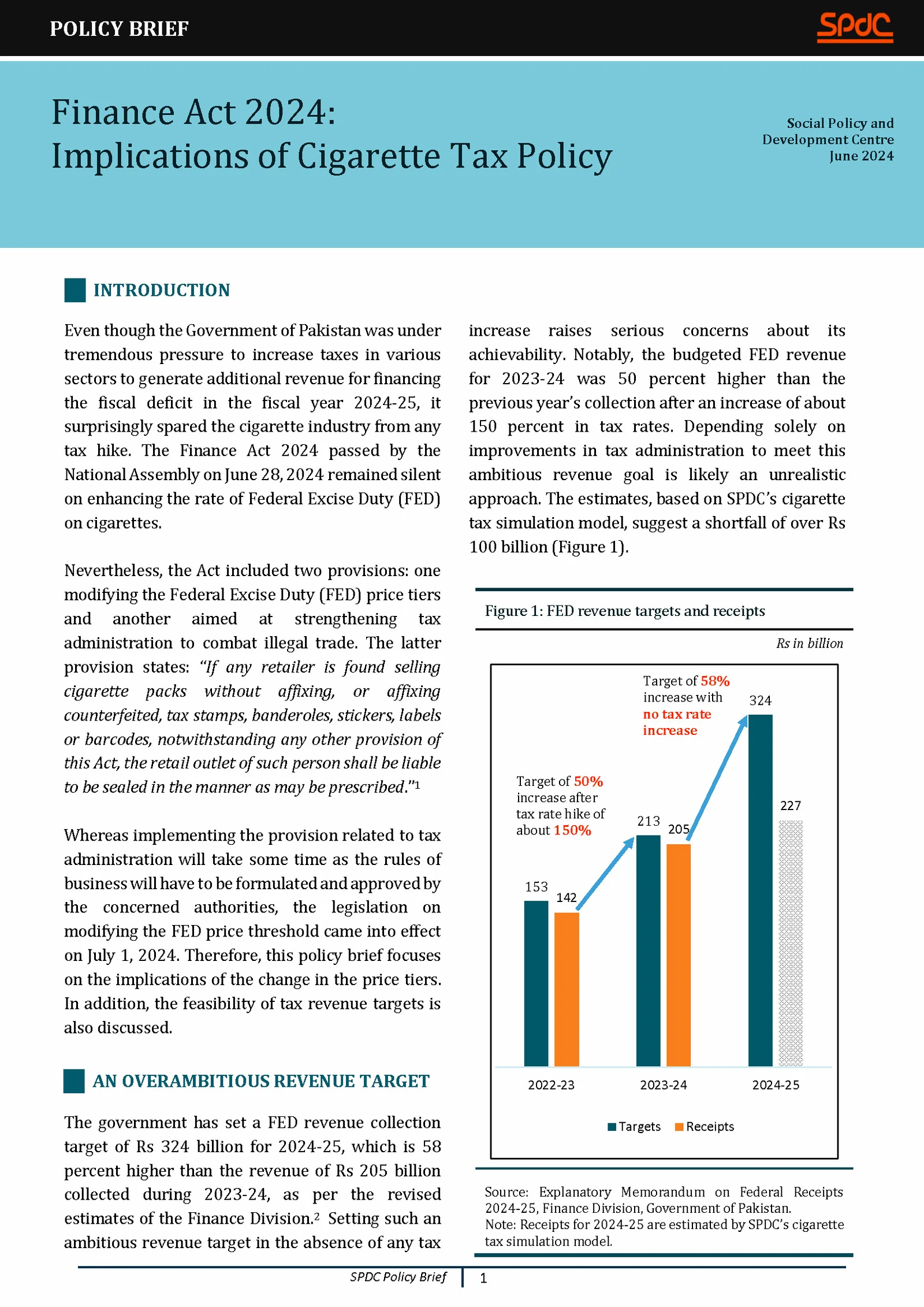
The Finance Act 2024 raised the federal excise duty on cigarettes, shifting the tax structure toward higher specific rates. This has implications for affordability of low‑tier brands, consumption trends among youth, and the expected revenue gains. The analysis cautions that any rollback of these measures would undermine both fiscal stability and public health, stressing the importance of sustain ..
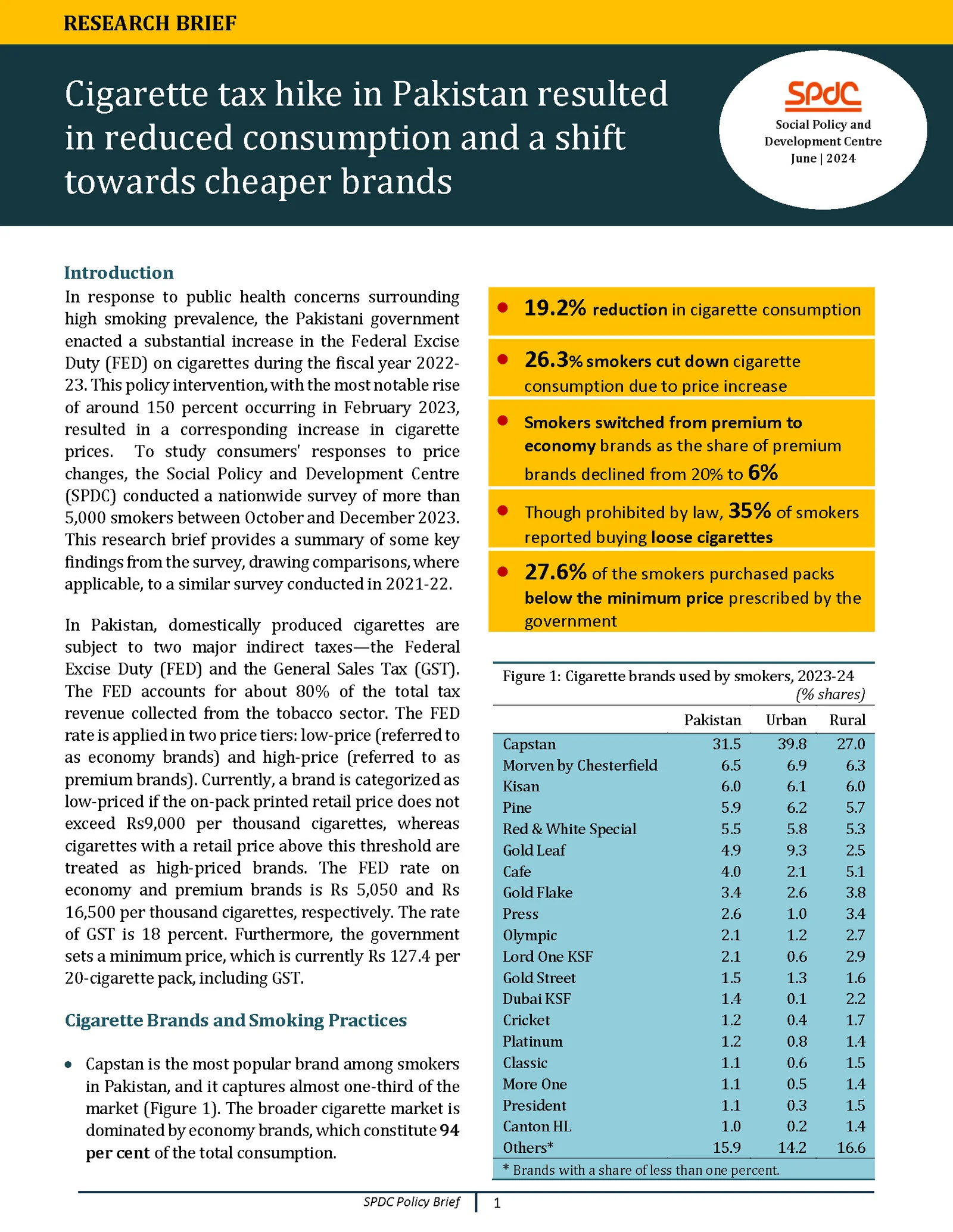
The February 2023 cigarette tax hike produced a clear behavioural response: overall consumption fell by nearly one‑fifth, while many smokers shifted from premium to cheaper brands. This research brief analyzes survey evidence showing reduced smoking intensity, substitution patterns, and the fiscal and health implications of the reform. ..
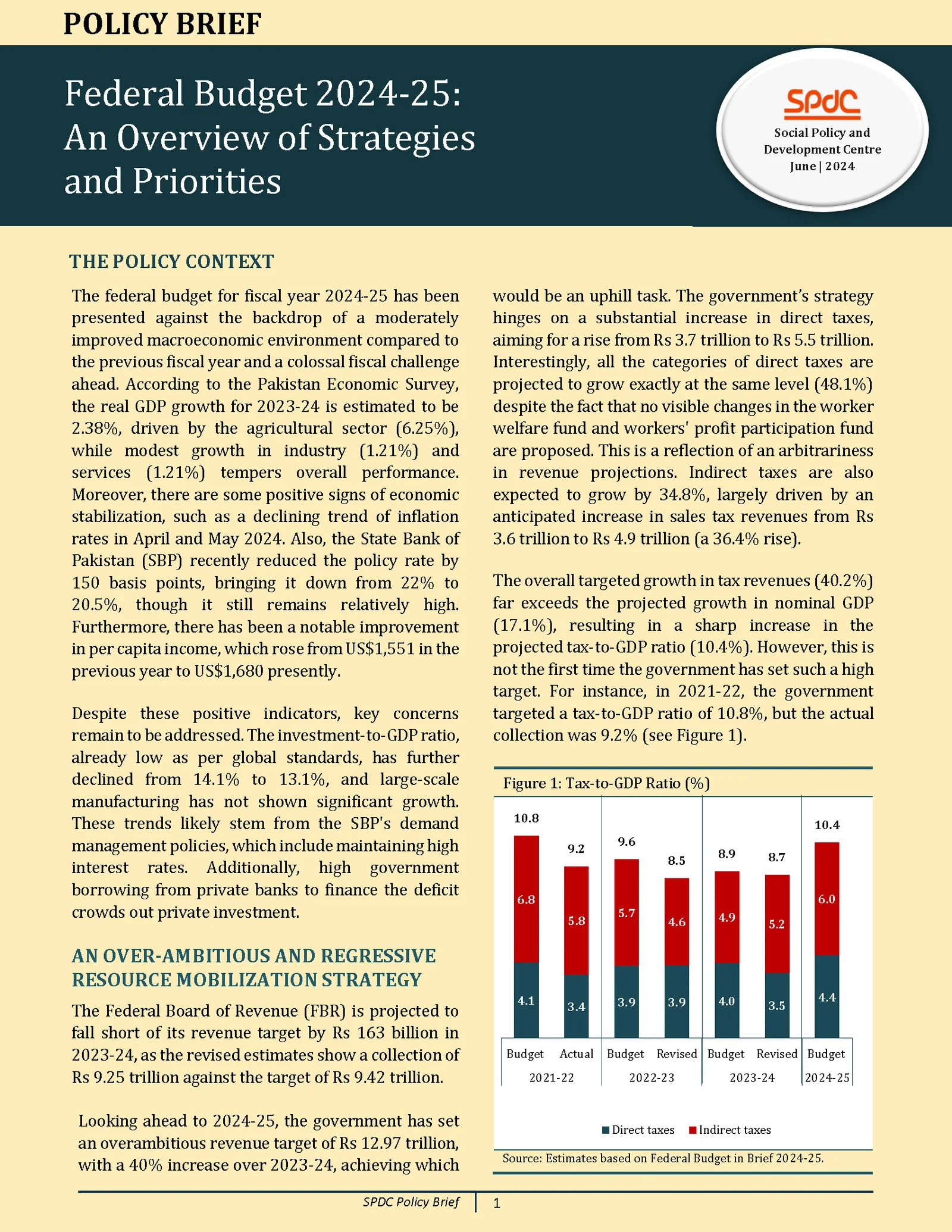
The Federal Budget 2024–25 outlines strategies to stabilize the economy while addressing social sector needs. This brief reviews key measures: higher allocations for debt servicing and defense, modest increases in health and education spending, and limited fiscal space for development programs. It highlights the trade‑offs between fiscal consolidation and inclusive growth, underscoring the nee ..
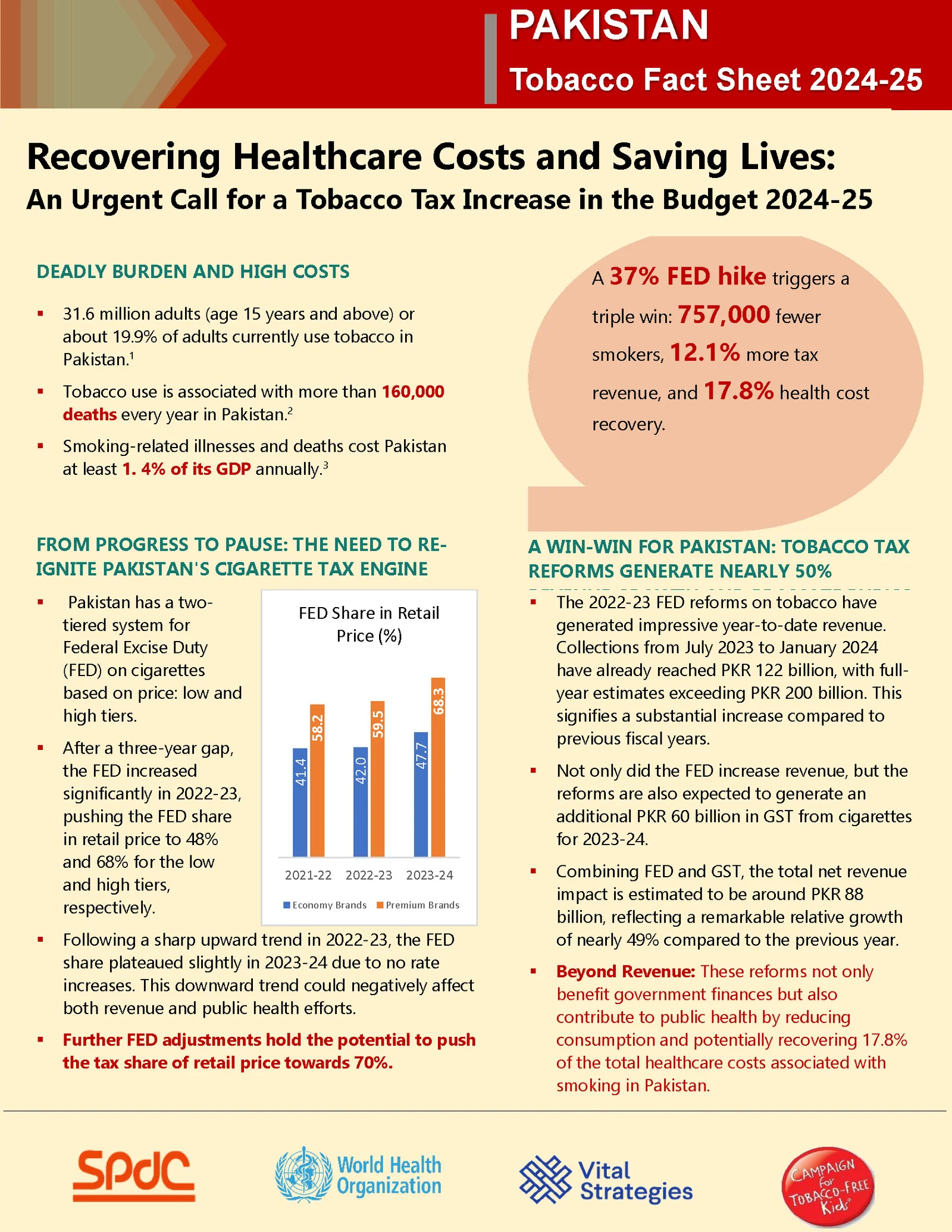
The Tobacco Fact Sheet compiles the latest evidence on smoking prevalence, excise revenues, and health costs in Pakistan. It shows that 19.9% of adults - around 31.6 million people - use tobacco, while smoking‑related deaths exceed 90 per 100,000 annually. The factsheet highlights how excise reforms can reduce consumption, prevent youth initiation, and strengthen fiscal stability. ..
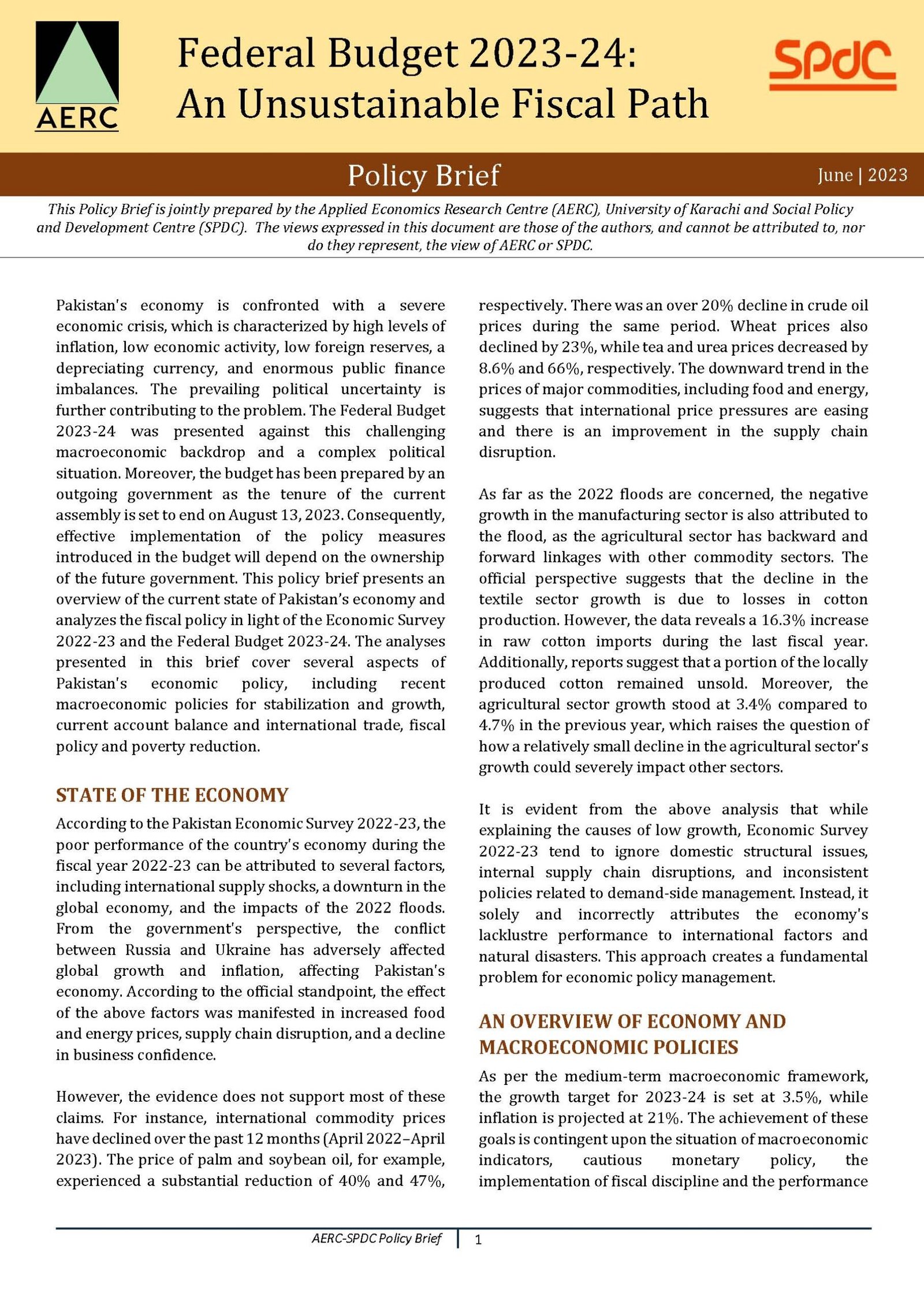
The Federal Budget 2023–24 was presented amid stagflation, political uncertainty, and a looming transition of government. This brief analyzes contradictions between contractionary monetary policy and expansionary fiscal measures, highlighting risks of wage‑price inflation, rising poverty, and unsustainable deficits. It calls for disciplined fiscal management, targeted subsidies, and stronger c ..
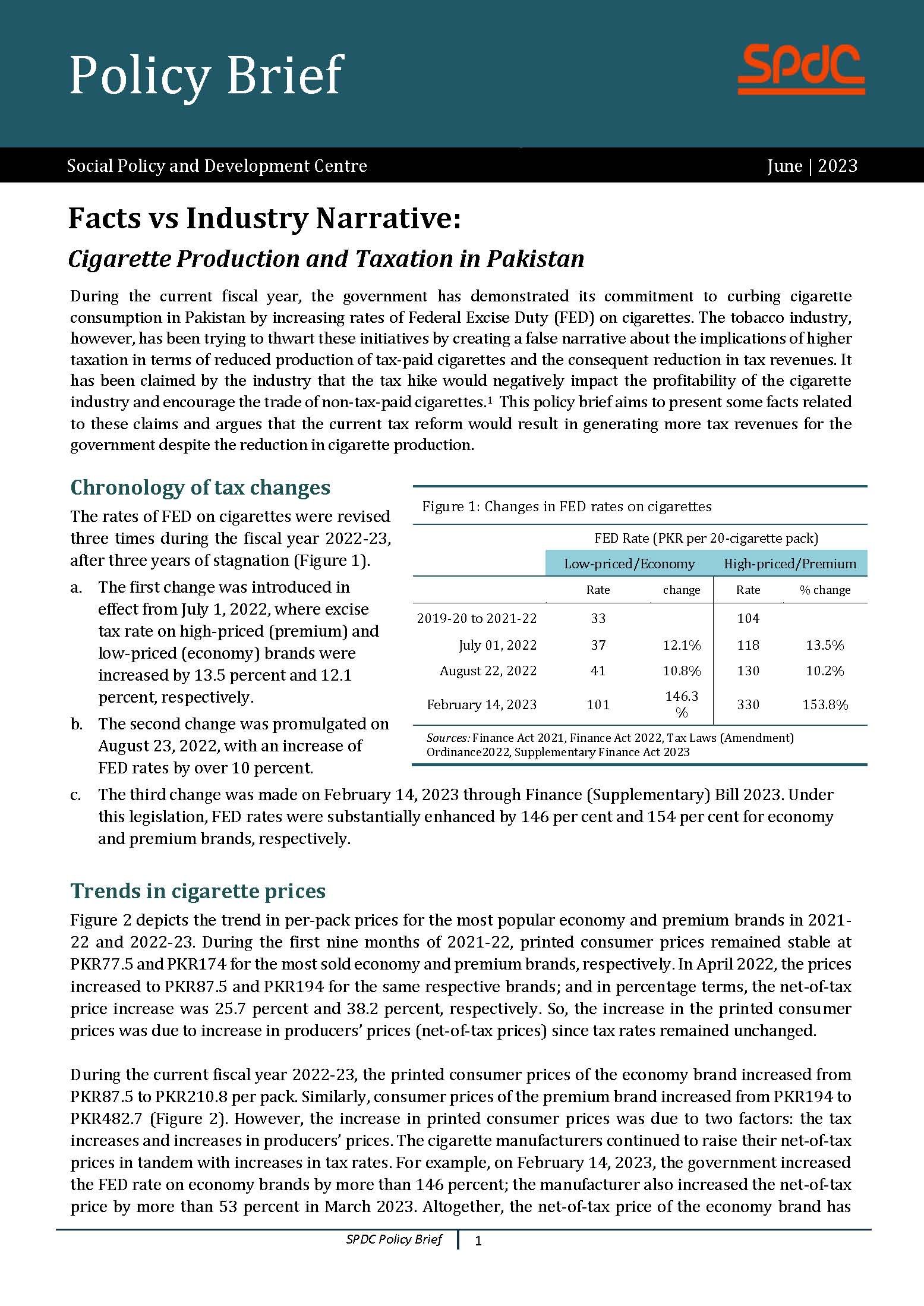
In FY2023–24, Federal Excise Duty (FED) on cigarettes was increased to curb consumption and strengthen revenues. The tobacco industry has countered with claims that higher taxes reduce production of duty‑paid cigarettes, erode profitability, and fuel illicit trade. This policy brief presents evidence showing that, despite lower production volumes, the reform is expected to generate higher reve ..
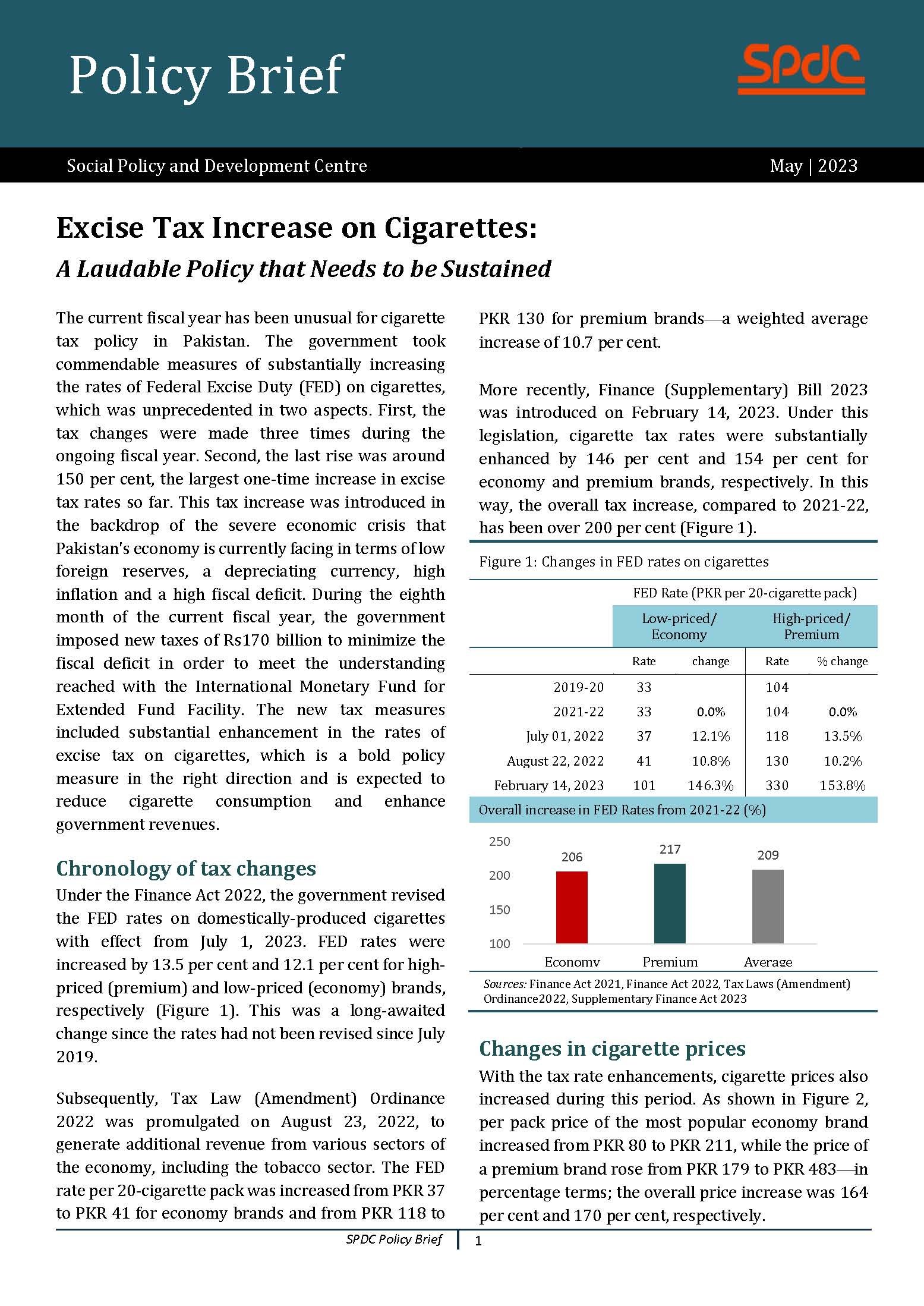
The recent increase in Federal Excise Duty (FED) on cigarettes marks a decisive step toward reducing tobacco consumption and mobilizing domestic revenue. This brief presents evidence that the reform has already curbed smoking prevalence and strengthened fiscal outcomes. It emphasizes that sustaining and institutionalizing this policy is critical to prevent reversals, protect public health, and sec ..
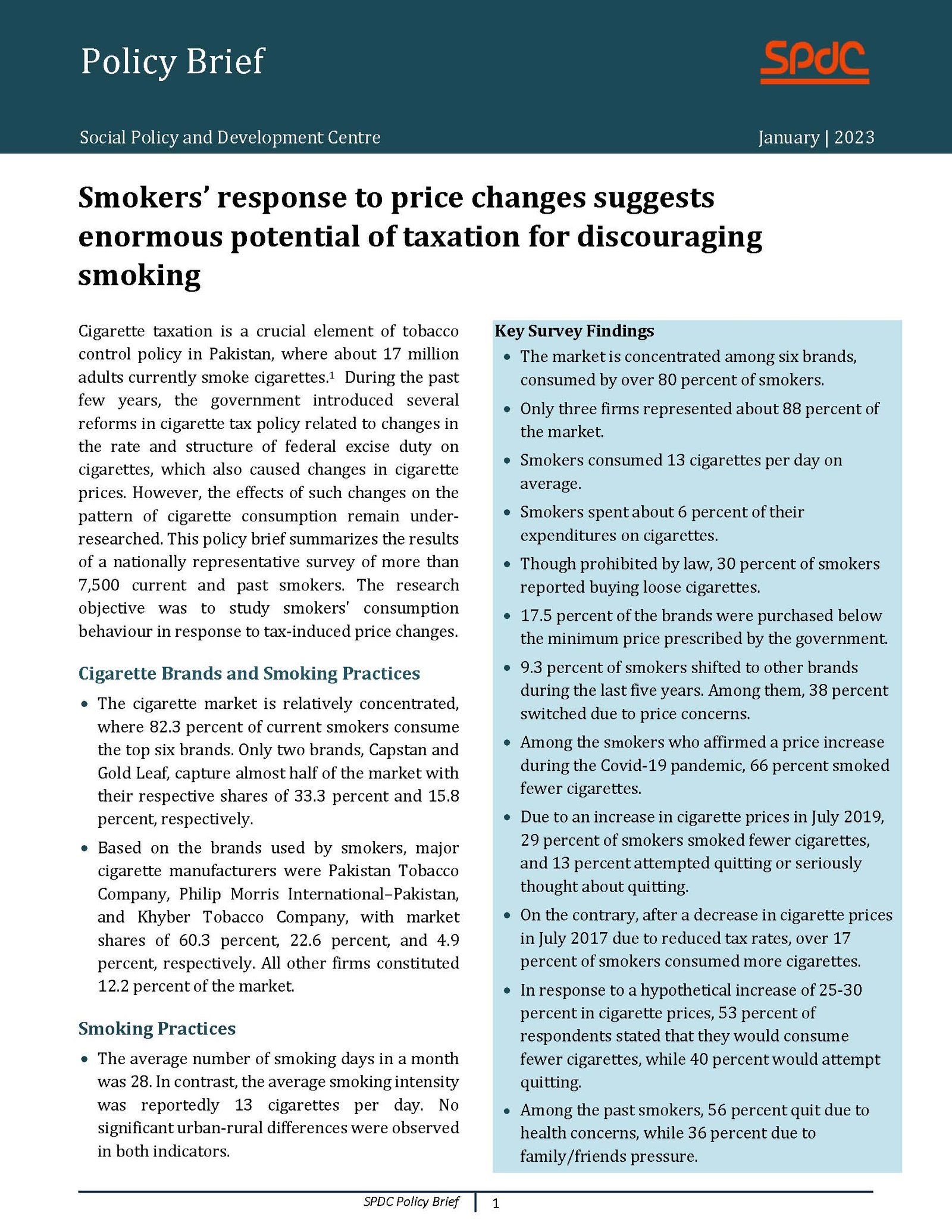
This SPDC brief underscores the enormous potential of taxation to discourage smoking, reduce prevalence, and raise revenues. Survey evidence shows Pakistan’s cigarette market is highly concentrated, with six brands consumed by over 80% of smokers and three firms controlling 88% of sales. Price changes strongly influence behaviour: past hikes reduced consumption and prompted quit attempts, while ..
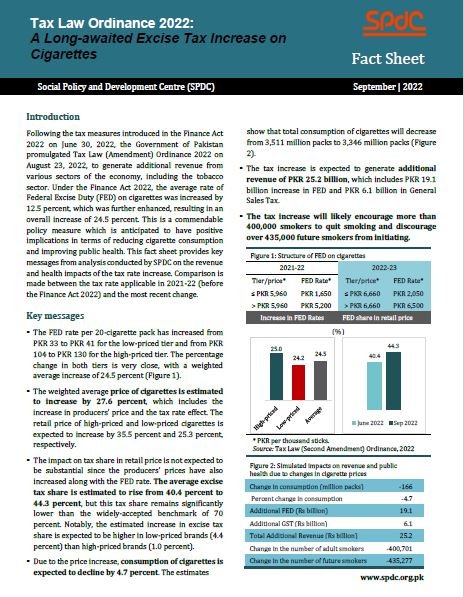
The Finance Act 2022 and subsequent Tax Law (Amendment) Ordinance raised FED on cigarettes by 24.5%. This fact sheet shows the reform’s dual impact: a projected 4.7% decline in consumption, PKR 25.2 billion in additional revenue, and over 400,000 smokers quitting alongside 435,000 youth discouraged from initiation. Despite progress, Pakistan’s excise share in retail price remains below the 70% ..
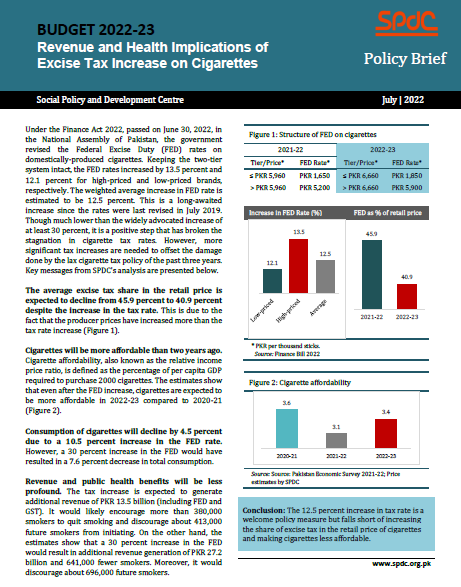
The Finance Act 2022 raised FED on cigarettes by an average of 12.5%, but the increase fell short of the recommended 30% benchmark. SPDC’s analysis shows that despite higher rates, producer price hikes reduced the excise share in retail price from 45.9% to 40.9%, leaving cigarettes more affordable than two years ago. The reform is expected to cut consumption by 4.5%, generate PKR 13.5 billion in ..
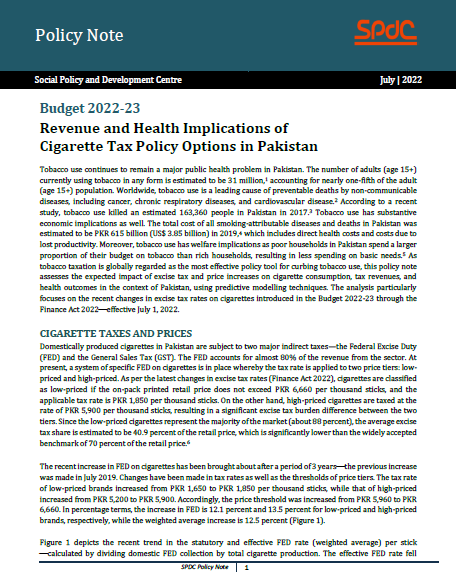
Tobacco use remains a major public health and economic challenge in Pakistan, with 31 million adults consuming tobacco and over 163,000 deaths attributed to smoking in 2017. The economic burden reached PKR 615 billion in 2019, disproportionately affecting poor households. This SPD policy note uses predictive modeling to assess the impact of excise tax increases introduced in the Finance Act 2022, ..
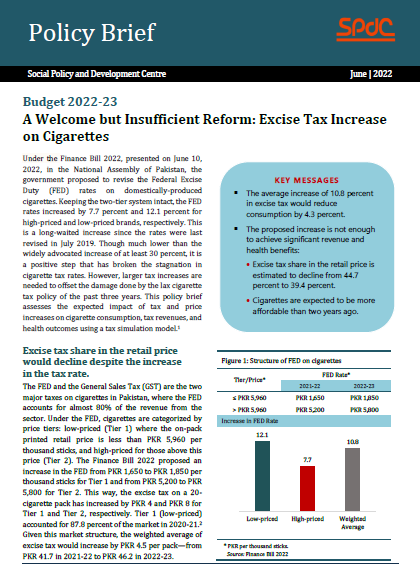
The Finance Bill 2022 raised FED on cigarettes by 7.7% for premium brands and 12.1% for low‑tier brands - breaking a three‑year stagnation in tax rates. While this adjustment is a welcome step, it remains far below the recommended 30% benchmark. SPDC’s analysis shows that the increase will modestly reduce consumption, generate additional revenue, and encourage quit attempts, but cigarettes w ..
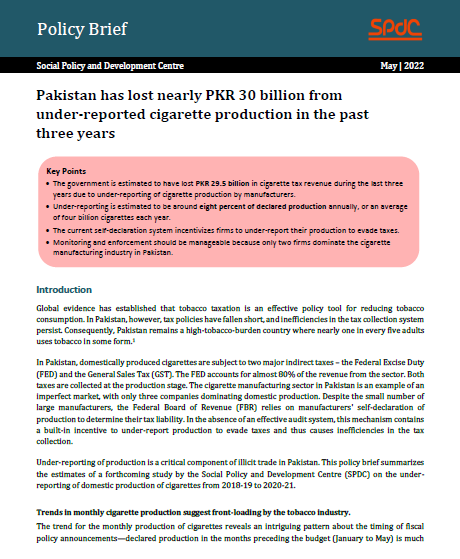
Despite global evidence that tobacco taxation curbs consumption, Pakistan’s tax system remains weak and prone to evasion. Nearly one in five adults uses tobacco, yet under‑reporting of cigarette production by manufacturers has cost the government an estimated PKR 29.5 billion in lost revenue between 2018–19 and 2020–21. With only three firms dominating the market, reliance on self‑declar ..
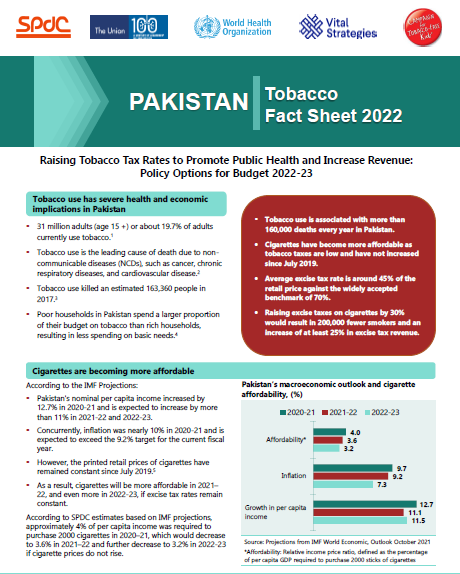
Tobacco use remains a critical public health and economic challenge in Pakistan, with over 163,000 deaths attributed to smoking in 2017. This fact sheet highlights prevalence, health costs, and fiscal implications of tobacco use. To sustain progress, Pakistan must adopt larger excise hikes, index taxes to inflation, move to a uniform duty across brands, and harmonize taxation across all tobacco pr ..
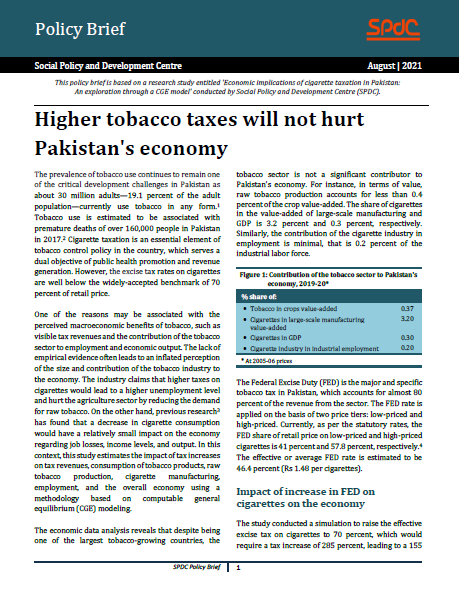
Contrary to industry claims, higher tobacco taxes strengthen Pakistan’s economy rather than harm it. Evidence shows that excise increases reduce smoking prevalence, generate substantial revenue, and ease the burden of tobacco‑related health costs. This policy brief is based on a research study entitled 'Economic implications of cigarette taxation in Pakistan: An exploration through a CGE model ..
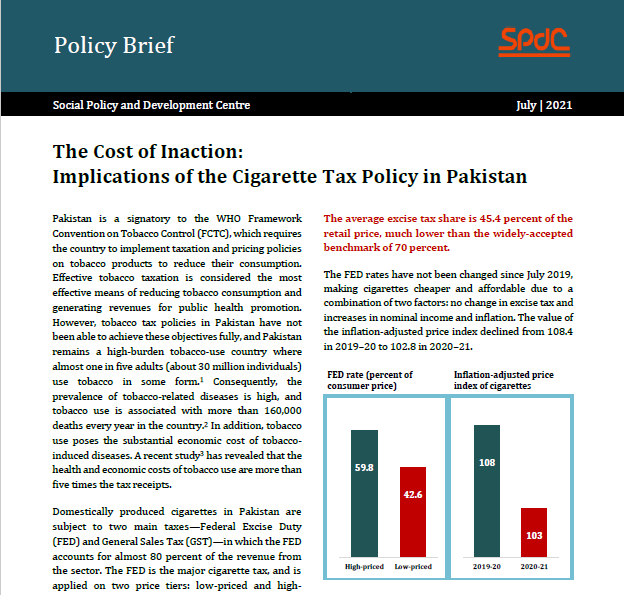
As a signatory to the WHO Framework Convention on Tobacco Control (FCTC), Pakistan is obligated to implement strong taxation and pricing policies to reduce tobacco consumption. Yet, nearly one in five adults (around 30 million people) still use tobacco, causing over 160,000 deaths annually and imposing economic costs five times higher than tax receipts. This policy brief argues that a 30% increase ..
Tobacco use imposes heavy social and economic costs, with over 29 million adults consuming tobacco and nearly half of households reporting use. Evidence from the HIES (2018–19) shows that tobacco spending crowds out essential expenditures on food, health, education, and housing - especially among poorer households. Following the 2017–18 excise tax cut, cigarette prices fell by 27% in real term ..
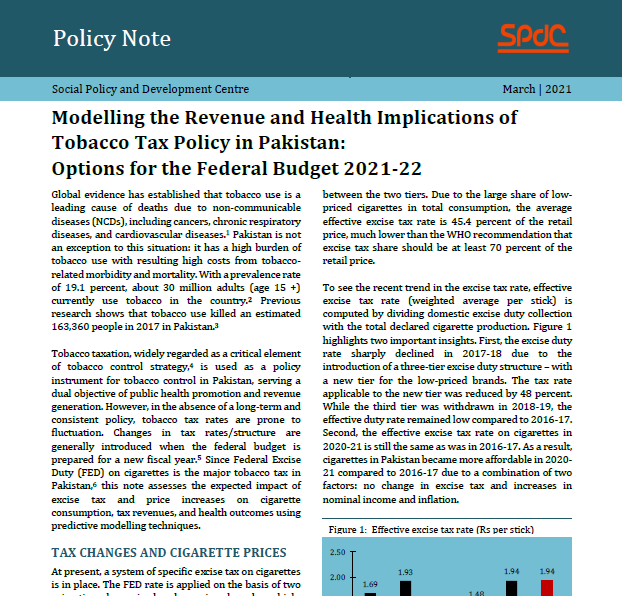
Tobacco taxation is globally recognized as the most effective tool to reduce smoking and generate revenue. In Pakistan, however, weak tax policy has kept cigarettes affordable and undermined public health. This SPDC study models alternative excise tax scenarios for the 2021–22 Federal Budget, showing that substantial increases in FED could simultaneously lower consumption, encourage quitting, de ..
SPDC is holding a series of dialogues to examine the drivers of violent extremism (VE) in Pakistan. The project aims to strengthen civil society’s capacity for countering violent extremism (CVE) by connecting practitioners who face VE on the ground with analysts who study its broader trends. Four themes guide the discussions: the nexus between intolerance and violent extremism, unemployment and ..
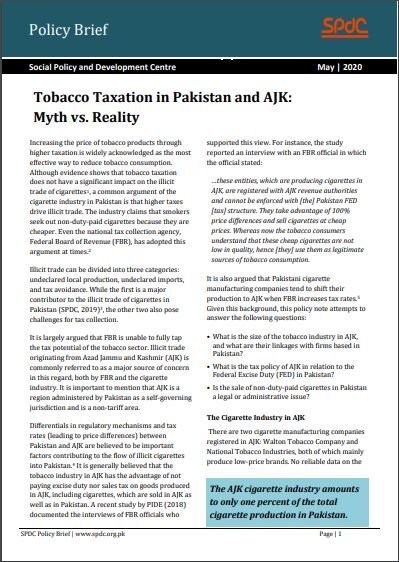
Illicit cigarette trade in Pakistan is often linked to Azad Jammu & Kashmir (AJK), a self‑governing non‑tariff area. While AJK accounts for only 1% of total cigarette production, weak tax administration and regulatory gaps have enabled under‑reporting and evasion. Fiscal laws on excise duty and sales tax are the same in AJK and Pakistan, but enforcement remains limited. The policy brief ..
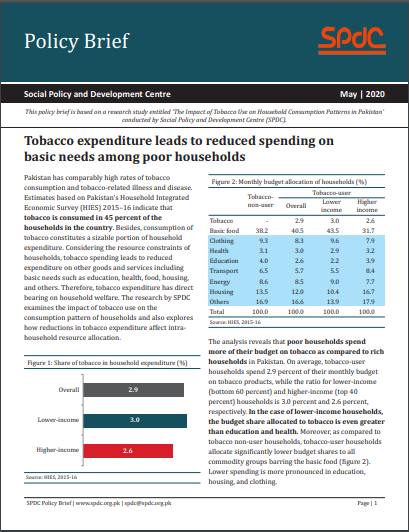
This policy brief is based on a research study entitled ‘The Impact of Tobacco Use on Household Consumption Patterns in Pakistan. It shows that tobacco‑using households spend significantly less on essential goods and services than non‑users, with strong evidence of a crowding‑out effect. Reducing tobacco expenditure frees resources for food, health, education, housing, and other needs - pa ..
SPDC is holding a series of dialogues to examine the drivers of violent extremism (VE) in Pakistan. The project aims to strengthen civil society’s capacity for countering violent extremism (CVE) by connecting practitioners who face VE on the ground with analysts who study its broader trends. Four themes guide the discussions: the nexus between intolerance and violent extremism, unemployment and ..
SPDC is holding a series of dialogues to examine the drivers of violent extremism (VE) in Pakistan. The project aims to strengthen civil society’s capacity for countering violent extremism (CVE) by connecting practitioners who face VE on the ground with analysts who study its broader trends. Four themes guide the discussions: the nexus between intolerance and violent extremism, unemployment and ..
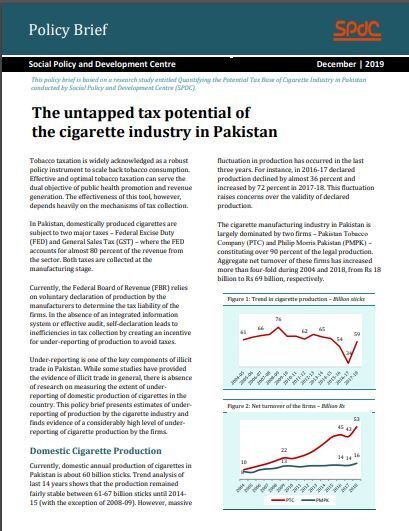
This policy brief is based on a research study entitled Quantifying the Potential Tax Base of Cigarette Industry in Pakistan. The cigarette industry remains under‑taxed, with FBR unable to fully capture its revenue potential. Despite tobacco being a high‑burden sector, weak enforcement, under‑reporting, and industry influence have led to significant fiscal losses. SPDC’s analysis highlight ..
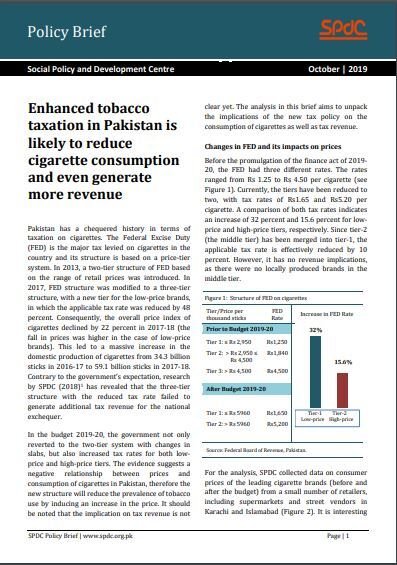
The FED has alternated between two‑tier and three‑tier systems over the past decade. The 2017 move to a three‑tier structure, which lowered rates for low‑price brands, triggered a sharp fall in retail prices and a surge in domestic production - yet failed to deliver additional revenue. In response, the 2019–20 budget restored a two‑tier system and raised rates across tiers. Evidence sh ..

Cigarette manufacturing contributes just 1.1% of industrial output and 0.3% of industrial employment in Pakistan. Yet, the social and health costs are staggering: 25 million adults use tobacco, and it is linked to over 100,000 deaths annually. This policy brief explores how the economic footprint of tobacco is dwarfed by its adverse impacts, underscoring the need for stronger taxation and control ..
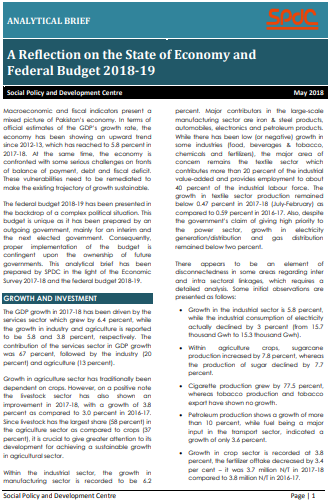
Pakistan’s economy grew by 5.8% in 2017-18, driven mainly by the services sector (6.4%) and industry (5.8%). Yet fiscal and external imbalances deepened, raising concerns about sustainability. The Federal Budget 2018-19, presented by an outgoing government, was unusual in its transitional nature - requiring ownership by successive administrations. This brief reflects on growth trends, sectoral p ..
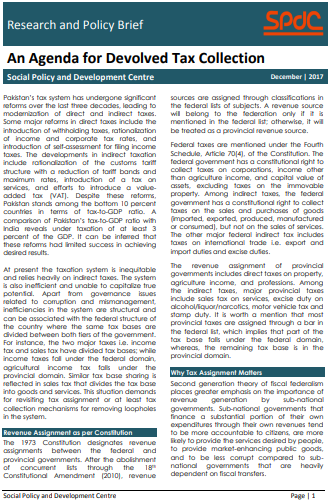
Pakistan’s tax‑to‑GDP ratio remains among the lowest globally, trailing India by at least 3 percentage points of GDP. The system’s inefficiency stems not only from governance issues but also from structural overlaps: income tax is split between federal (non‑agricultural) and provincial (agricultural) domains, while sales tax divides goods (federal) and services (provincial). This fragmen ..
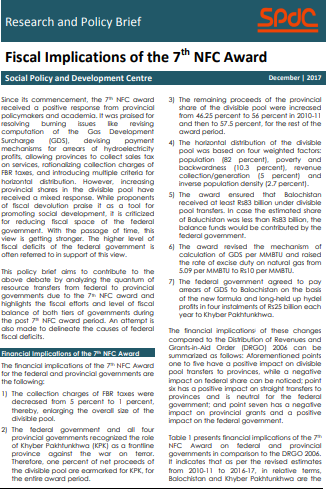
The policy brief argues that the 7th NFC Award is not the primary driver of Pakistan’s higher federal deficit. While it shifted less than 1% of GDP to provinces compared to DRGO 2006, the deficit widened mainly due to surging current expenditures. FBR’s revenue shortfall had only a minor impact, affecting provinces more than the center. Crucially, the Award directed more resources to backward ..
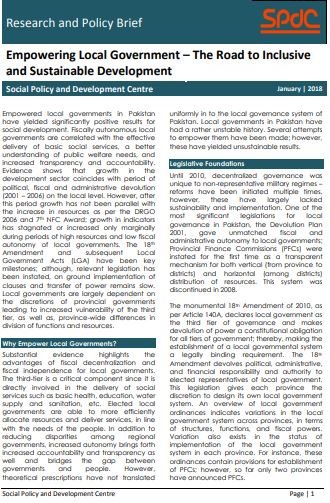
The 18th Amendment and provincial Local Government Acts provide the framework for devolving authority to the third tier, but reforms must go beyond resource transfers. The analysis identifies timely Provincial Finance Commissions (PFCs), legislation for fiscal transfers, and devolving responsibilities in primary health, education, and property tax collection as critical. Strengthening local govern ..

This brief examines the impact of tax reduction policies on tobacco consumption and revenue mobilization in Pakistan. Pakistan’s experiment with a three‑tier cigarette tax structure in 2017, which reduced rates for low‑price brands by nearly 48%, led to a sharp 22% fall in retail prices and a surge in domestic production from 34.3 billion to 59.1 billion sticks within a year. Contrary to exp ..
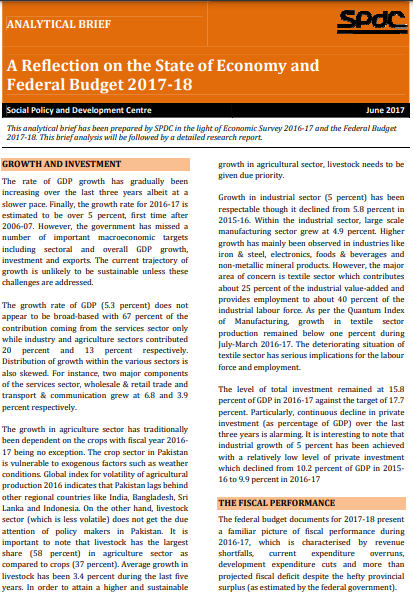
Pakistan’s economy in 2016–17 recorded growth of 5.3%, the highest in a decade, driven by agriculture recovery, industrial expansion, and strong services. Yet, the Federal Budget 2017–18 was framed against rising fiscal and external pressures - widening deficits, growing debt, and balance‑of‑payments concerns. Presented in a politically transitional context, the budget sought to sustain ..
Pakistan’s economy continues to grapple with persistent structural challenges - low tax mobilization, widening fiscal deficits, external account pressures, and uneven sectoral growth. This analytical brief highlights the key issues in the state of the economy, examining fiscal imbalances, governance gaps, and policy trade‑offs that shape Pakistan’s economic trajectory and its prospects for s ..
..
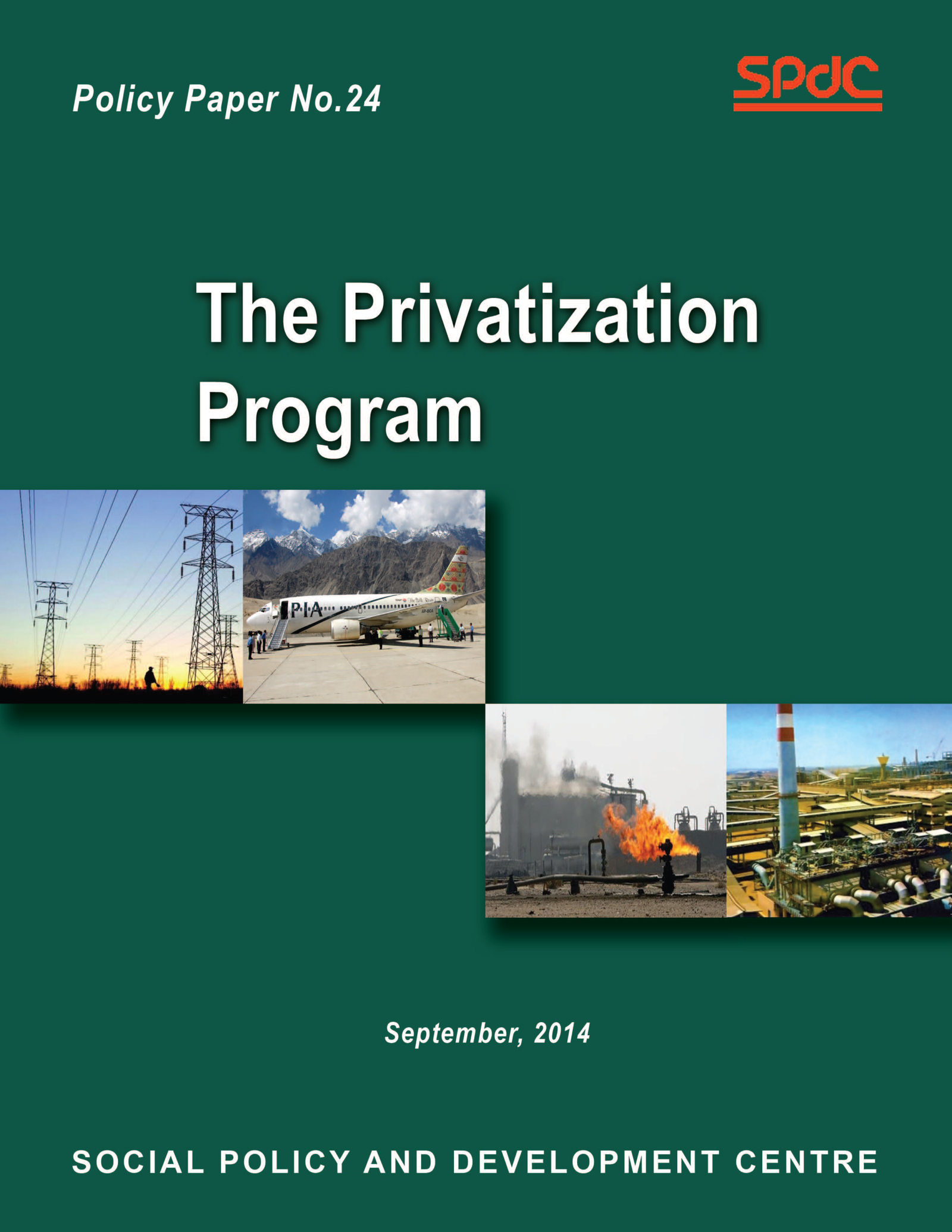
Privatization of state assets in Pakistan has long sparked debate. Advocates highlight efficiency gains and reduced fiscal burdens, while critics warn of monopolies, job losses, and wealth concentration. With the government preparing a new round of privatization after six years, this paper reviews the existing framework, past experiences, and IMF‑linked commitments. It argues for a cautious, cri ..
Pakistan’s population dividend cannot be fully realized without integrating women into the economy. Yet official statistics show their participation remains low, leaving a significant share of the workforce untapped. Persistent barriers such as mobility constraints, workplace discrimination, and weak labour rights limit opportunities. This policy brief highlights the gender gap in employment and ..
Pakistan must advance social development despite the ongoing security crisis, as neglect would deepen instability. SPDC’s analysis shows the crisis has undermined investment, social indicators, and fiscal stability, distorting public spending priorities. While the situation is alarming, the 7th NFC Award offers hope that provinces will prioritize comprehensive social service delivery. This brief ..
The elimination of textile quotas in 2005 reshaped Pakistan’s trade with the European Union, intensifying competition with China, India, and Turkey. This policy brief reviews actual export performance since quota removal, assesses challenges facing the textile and clothing sector, and identifies priority policy areas- investment, productivity, diversification, infrastructure, and compliance with ..
The report presents a review of the Economic Survey 2002–03 and the Federal Budget 2003–04. Drawing on official data and independent sources, the report offers an objective assessment of the economy, acknowledging recent gains while cautioning against overly optimistic judgments. It highlights areas of weakness where policy shifts are needed to sustain revival, with a focus on equity, employme ..
Different studies on poverty often report conflicting results, even when relying on the same data and methods. Such inconsistencies weaken the credibility of poverty estimates and complicate comparisons over time. To address this challenge, greater consensus is needed among researchers on the criteria and procedures for measurement. This policy paper outlines a recommended strategy for estimating ..
Poverty rose sharply during the 1990s, with nearly one in three families living below the poverty line. Recognizing this urgent challenge, SPDC presents a comprehensive national poverty reduction strategy that goes beyond short-term alleviation programs. This paper highlights the structural causes of poverty, regional disparities, and vulnerable groups, while underscoring the critical role of inte ..
Macroeconomic Framework for Debt Management ..
The Social Action Programme (SAP), once envisioned as Pakistan’s flagship initiative for improving education, health, and basic services, fell short of expectations due to weak design and implementation gaps. SAP‑II seeks to build a stronger policy environment for social services by shifting focus from new construction to improving quality. This policy paper examines the shortcomings of SAP an ..
In the late 1990s, Pakistan faced mounting social and economic challenges that demanded urgent policy attention. SPDC presented this statement to the visiting Commonwealth Delegation to highlight the country’s poverty trends, fiscal constraints, and governance issues. The paper underscores the need for coordinated donor support, stronger institutional reforms, and evidence‑based strategies to ..
Pakistan’s balance of payments remains the foremost challenge to economic revival, with debt relief set to expire by December 2000. Without reducing the current account deficit, the country risks severe import compression and stalled growth, even if further relief is secured. This note reviews the fragile external position of the 1990s and outlines policy options to strengthen repayment capacity ..
Broad-Basing of GST: The Strategy for Transition ..
This paper examines the challenges provinces face in raising revenues, highlights structural gaps in taxation and fiscal capacity, and proposes strategies to broaden the revenue base. It finds that linking provincial and federal tax administration through a shared computerized database can boost revenue, streamline collection, lower costs, and curb corruption and evasion through cross‑checks, wh ..
Non‑governmental organizations (NGOs) play a vital role in delivering social services and supporting development in Pakistan, yet their financial sustainability remains a pressing concern. This paper examines the fiscal challenges NGOs face and proposes measures within the 1998-99 federal budget to strengthen their long‑term viability. By outlining strategies for resource mobilisation, donor c ..
Pakistan’s tax system has long struggled with low fiscal effort, heavy reliance on indirect taxes, narrow bases, and weak administration. These structural flaws have kept the tax‑to‑GDP ratio stagnant, fueled high deficits, and eroded efficiency. Beginning in the early 1990s, successive governments launched reform efforts - ranging from presumptive and withholding taxes to broadening sales t ..
The Ninth Five Year Plan (1998–2003) is framed at a time when markets are seen as the most efficient means of resource allocation. The paper argues that markets alone cannot secure sustained growth or distributive justice. Rather, planning remains vital through strategic interventions in sectors that generate positive externalities and broaden equity. Effective development planning must also be ..
The paper highlights how the new Terms of Reference (TOR) for Pakistan’s National Finance Commission reshape fiscal federalism by expanding cost‑sharing responsibilities, redefining expenditure assignments, and emphasizing institutional reforms to balance efficiency with equity. ..
The provincial budgets for 1995–96 stand out for their unprecedented emphasis on resource mobilization. All four provinces introduced both traditional measures such as higher motor vehicle taxes and innovative, politically sensitive instruments including levies on advertisements, cheques, and property surcharges. Punjab and NWFP achieved surpluses, while Sindh and Balochistan reduced deficits. N ..
Fiscal Effort by Provincial Governments in Pakistan ..
This study examines the stark differences in octroi revenues from international imports, contrasting Karachi’s buoyant sea dues with the relatively modest collections at dry ports. It explores whether these disparities stem from the nature of imports or from variations in tax structures and administration. By reviewing Karachi and Lahore’s systems, the report assesses the feasibility of adopti ..
Octroi remains the largest revenue source for local governments, yet its structure is riddled with fiscal anomalies. Based on a representative sample of urban councils, this study quantifies commodity‑wise variations in octroi rates and highlights their regressive incidence where basic goods often bear higher burdens than luxury items. By proposing a rationalized, revenue‑neutral structure, th ..
This study examines the efficiency of Pakistan’s public health care delivery system and the expanding role of the private sector. Despite rising public expenditure, cost recovery remains minimal, and management weaknesses persist. Using affordability and willingness‑to‑pay analysis, the findings support higher user charges in public hospitals, alongside continued subsidies for outpatient car ..
The Sindh Government Budget of 1993–94 marked a critical effort to strengthen provincial finances through new resource mobilization measures and fiscal reforms. While traditional taxes remained important, the budget introduced innovative proposals to broaden the revenue base and reduce deficits. Many of these measures drew directly from SPDC’s research and recommendations, underscoring the Cen ..
Primary education is critical to Pakistan’s social and economic development, yet funding remains vulnerable to austerity and competing infrastructure priorities. Despite rising public expenditure, cost recovery has declined sharply, and private participation is uneven in quality. This study highlights the need for phased increases in user charges, improved regulation of private schools, and stro ..
Sales Taxation of Services by Provincial Governments ..
Stamp duty, the single largest source of provincial tax revenue, has shown strong buoyancy since the early 1980s, driven mainly by property transactions. Yet its century‑old structure under the 1899 Stamp Act remains riddled with anomalies, outdated rates, and weak coverage. This study reviews the current system and proposes reforms to modernize and rationalize stamp duty by shifting selectively ..