This revised report updates the Jordan 2024 cigarette tax simulation, incorporating new demographic inputs, improved elasticity estimates, and modernized mortality modeling. The study evaluates four excise tax scenarios and demonstrates how well‑designed reforms can simultaneously strengthen gover ..
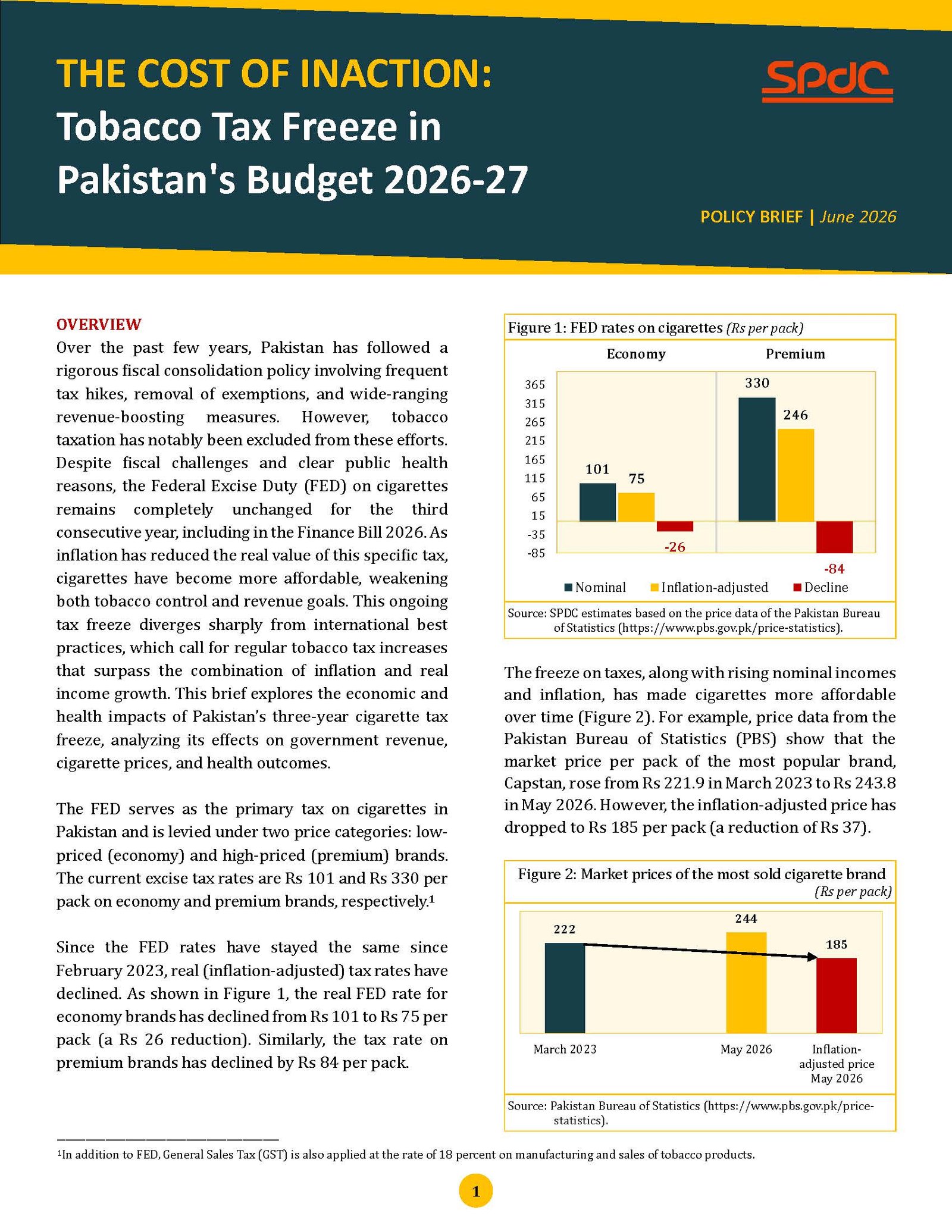
Pakistan has aggressively pursued fiscal consolidation through various tax hikes, yet tobacco taxation has been notably excluded from these efforts. Despite prevailing fiscal pressures and critical public health concerns, the Federal Excise Duty (FED) on cigarettes has been frozen for the third cons ..
This paper calls for recalibrating the 7th NFC Award, which still relies on outdated census data and pre‑merger boundaries. Using the 2023 Digital Census, 2024–25 poverty estimates, and updated revenue figures, it proposes an Updated Baseline that refreshes indicators while retaining the origina ..
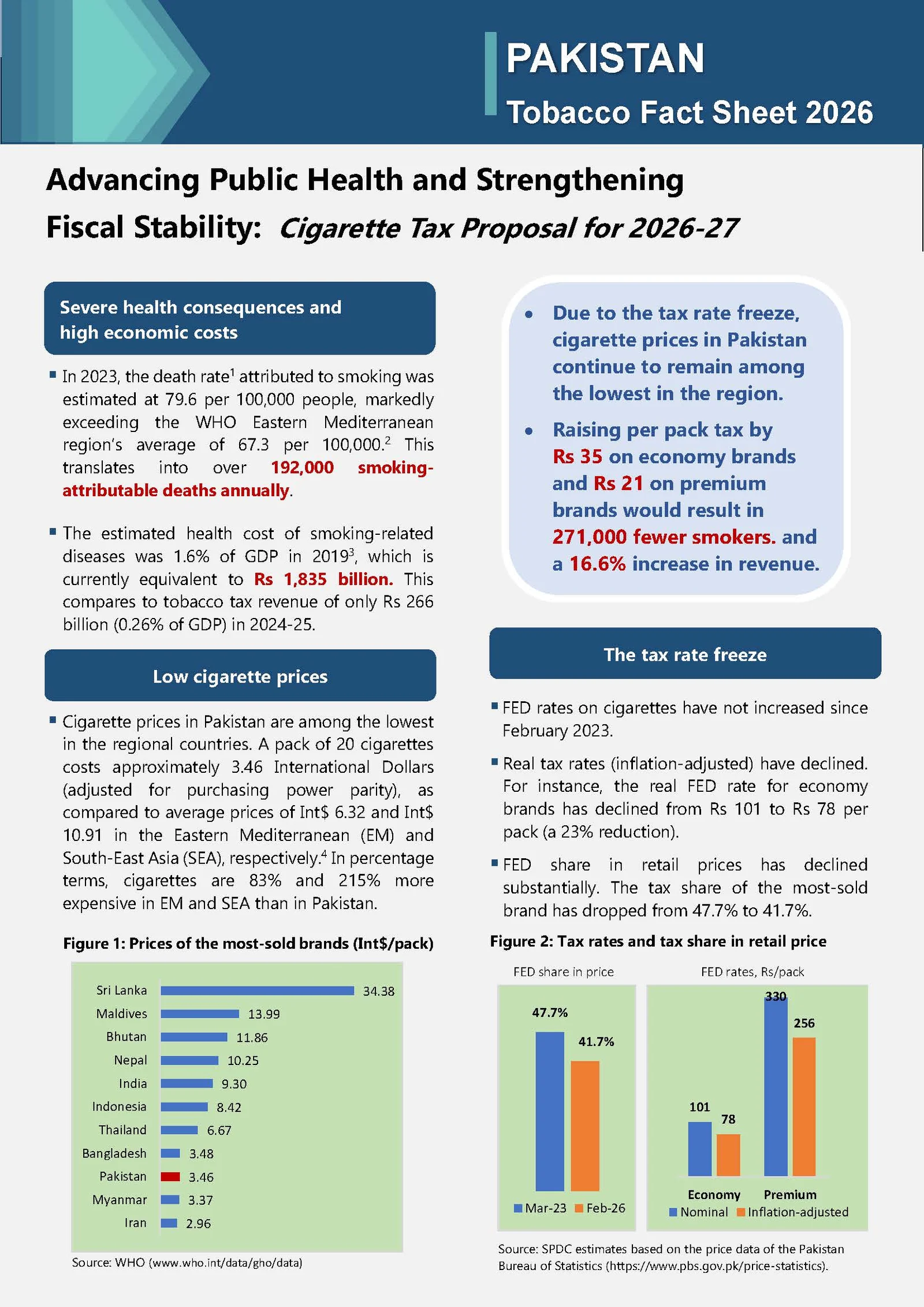
The Tobacco Factsheet presents a forward-looking cigarette tax proposal for FY2026–27, designed to advance public health while reinforcing fiscal stability. It highlights how a unified excise structure can curb smoking prevalence, generate sustainable revenue, and align with the country’s commit ..
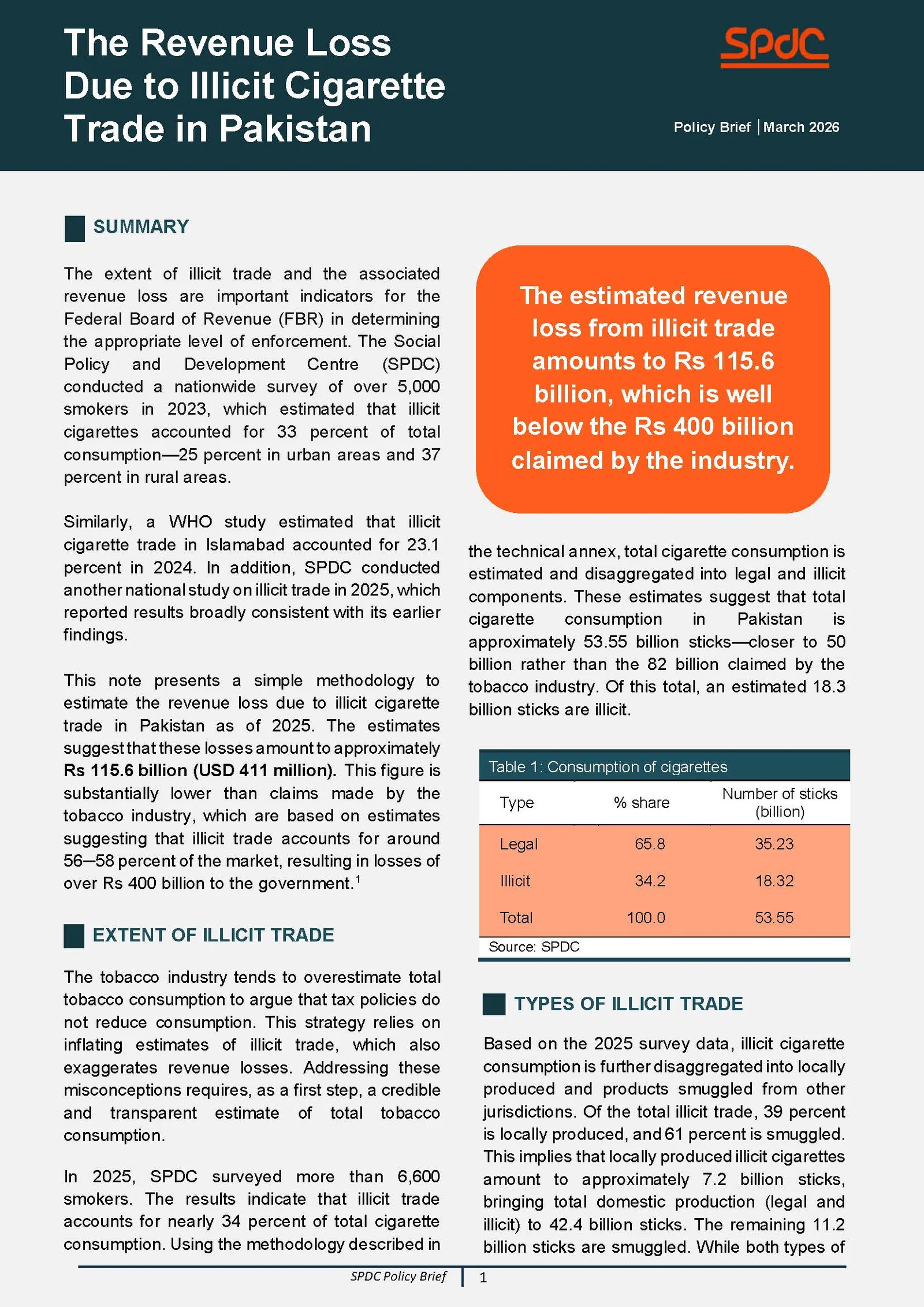
Illicit cigarette trade undermines both fiscal revenues and public health objectives. This study provides the first systematic estimate of revenue losses attributable to tax evasion and smuggling, revealing how weak enforcement and market distortions drain government resources. It calls for evidence ..
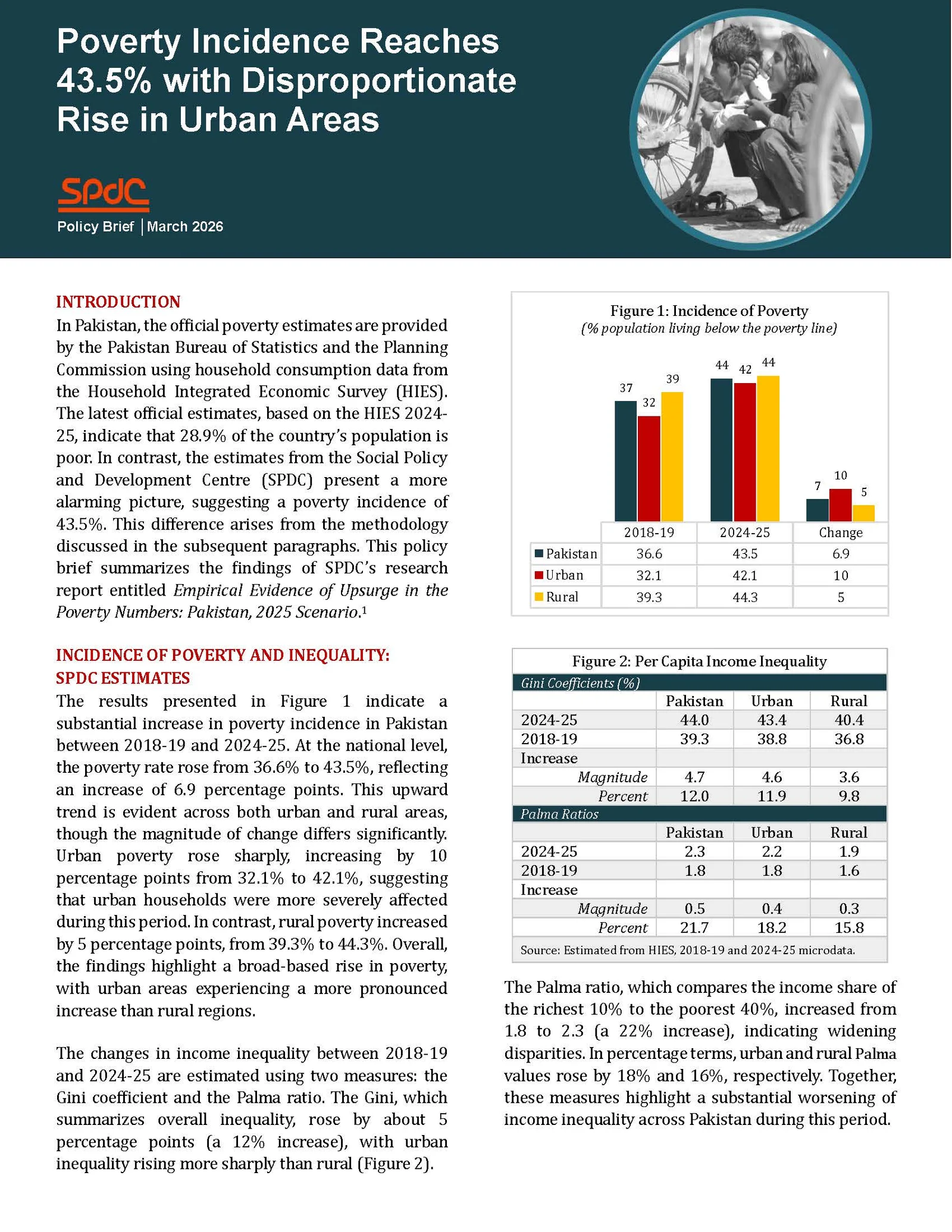
Official estimates based on the HIES 2024-25 place Pakistan’s poverty incidence at 28.9%. In contrast, SPDC’s analysis reveals a far higher rate of 43.5%, driven by methodological refinements and highlighting a disproportionate rise in urban poverty. This policy brief summarizes the findings fro ..
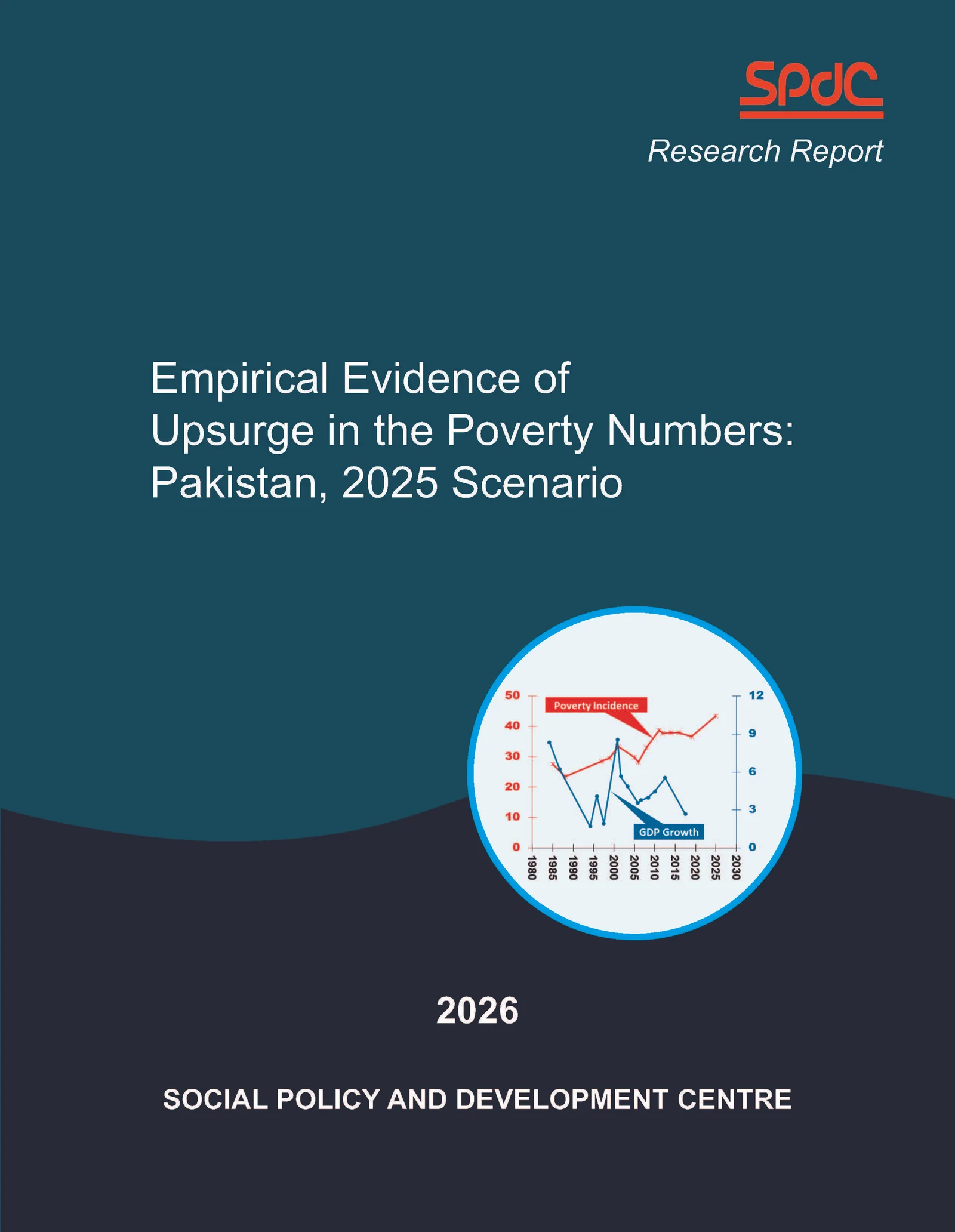
SPDC’s report Empirical Evidence of Upsurge in the Poverty Numbers: Pakistan, 2025 Scenario presents independent estimates showing that 43.5% of Pakistan’s population (about 105 million people) now lives below the poverty line, compared to the official figure of 28.9%. Drawing on the latest HIES ..
Pakistan stands at a critical crossroads, poised to make a significant leap into the digital era. The 'URAAN Pakistan–National Economic Transformation Plan (2024-2029)' articulates a clear and ambitious national vision: to drive sustainable economic growth, foster human development, and position P ..
This policy brief challenges industry-driven narratives on illicit cigarette trade in Pakistan by presenting evidence-based estimates of its actual scale. It demonstrates that exaggerated claims have distorted policy debates, while rigorous survey data reveal a more moderate but still significant il ..
The report evaluates the design and implementation of Punjab’s flagship social protection initiative for senior citizens. Drawing on household‑level data and programme records, the study highlights the scheme’s coverage, targeting efficiency, and fiscal sustainability. The findings provide evi ..
POLICY BRIEF - AN ASSESSMENT OF THE BA-HIMMAT BUZURG PROGRAMME - 2024 ..
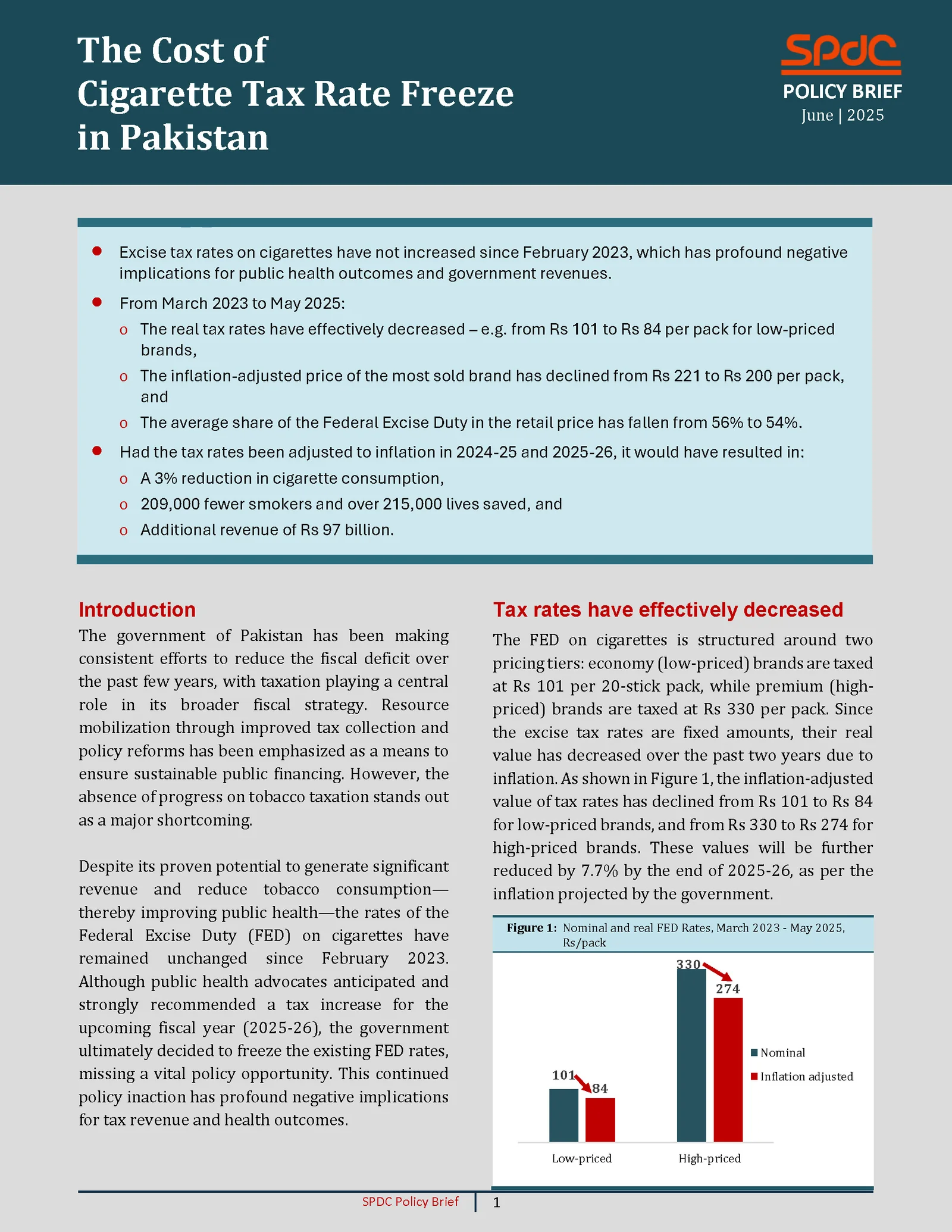
The government of Pakistan has been making consistent efforts to reduce the fiscal deficit over the past few years, with taxation playing a central role in its broader fiscal strategy. Resource mobilization through improved tax collection and policy reforms has been emphasized as a means to ensure s ..
Heavy tobacco consumption in Jordan poses serious public health and economic challenges. SPDC’s report An Analysis of the Tobacco Market in Jordan: A Household Survey provides nationally representative evidence on consumption patterns, prevalence, and affordability. The study highlights widespread ..
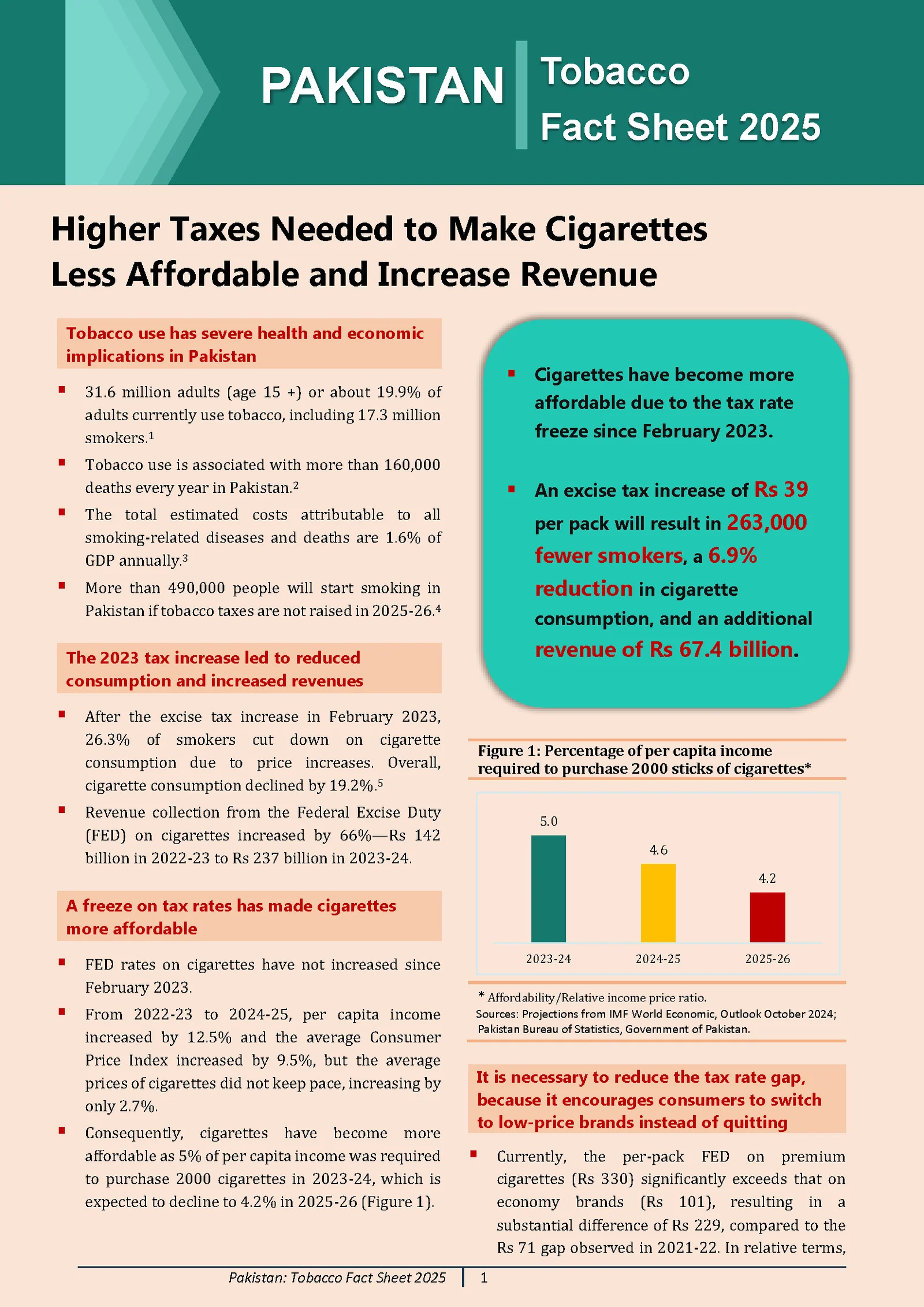
The Tobacco Fact Sheet 2025 brings together the latest evidence on prevalence, consumption patterns, excise revenues, and health costs of tobacco use. It highlights how tobacco taxation can serve as a dual-purpose policy - curbing smoking rates while strengthening fiscal stability. Designed for poli ..
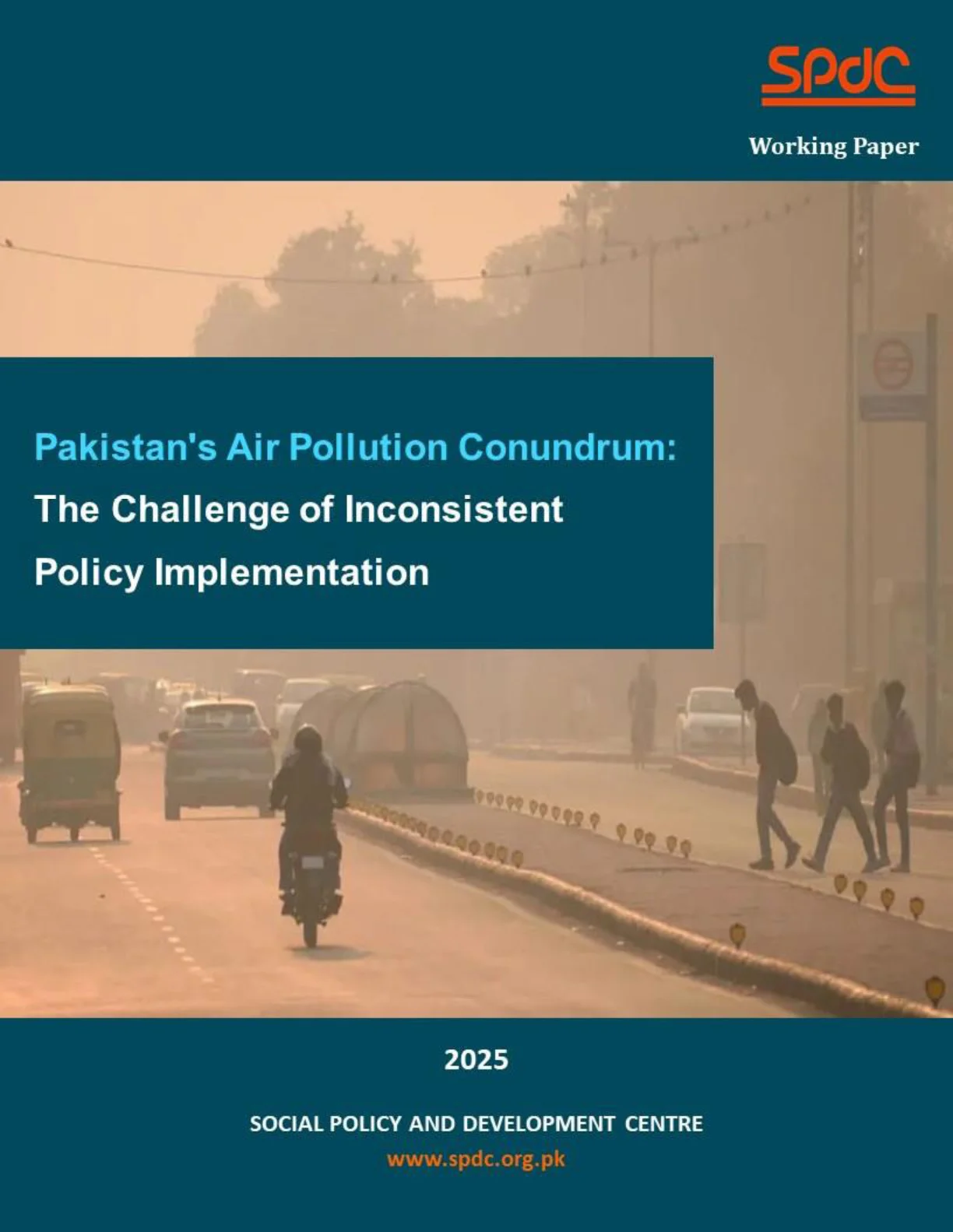
Air pollution remains one of Pakistan’s most pressing environmental and public health challenges. SPDC’s report Pakistan’s Air Pollution Conundrum: The Challenge of Inconsistent Policy Implementation highlights how weak enforcement, fragmented governance, and inconsistent data systems undermin ..
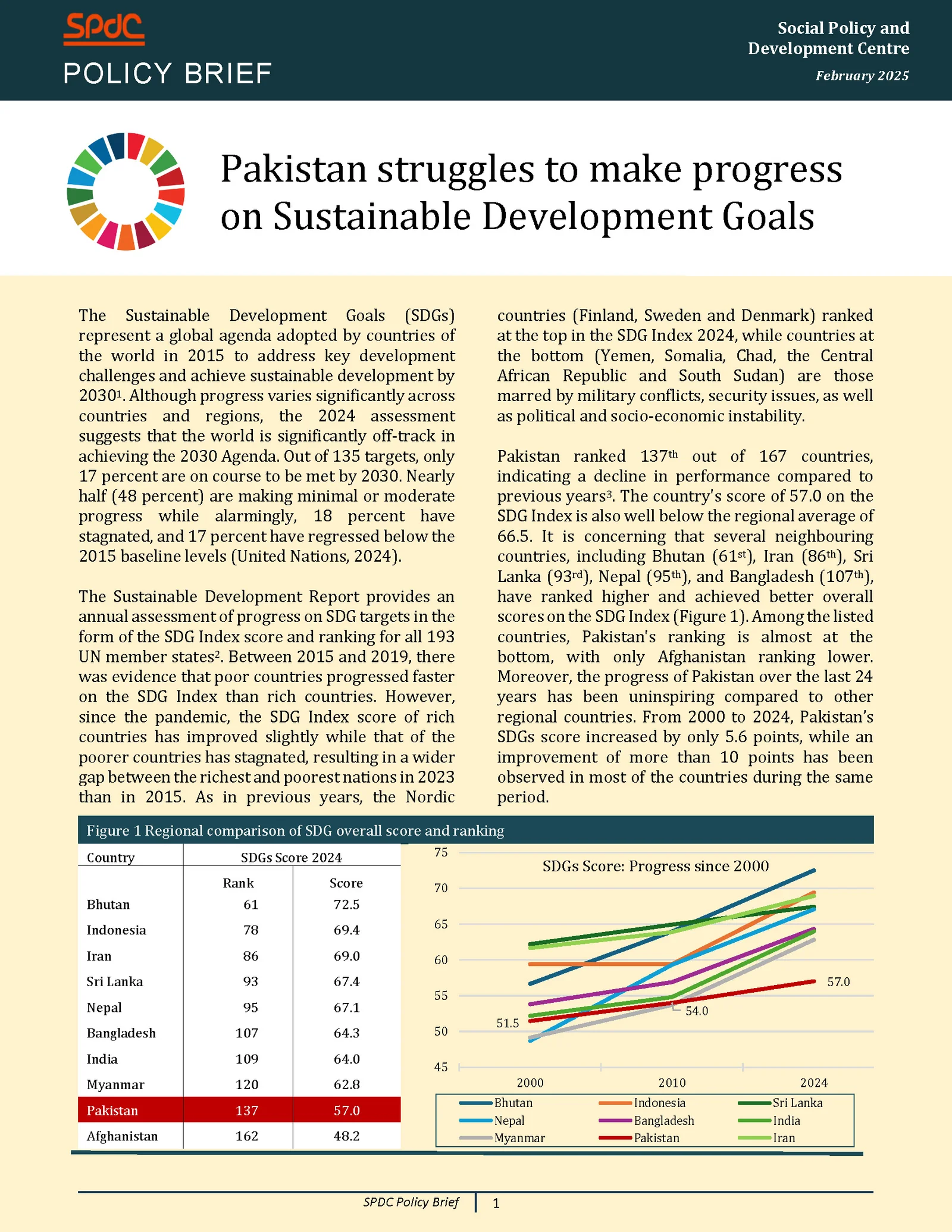
Pakistan’s commitment to the SDGs remains constrained by weak institutional capacity, fragmented governance, and limited fiscal space. This policy brief provides a critical assessment of where the country stands in 2025, revealing persistent shortfalls in poverty reduction, health outcomes, educat ..
The report provides new empirical evidence on how smokers respond to price changes, offering critical insights for excise tax policy and tobacco control. It highlights both the direct impact of cigarette price increases and substitution effects across brands and product types. The findings confirm t ..

Tax evasion remains a major challenge in Pakistan’s tobacco control policies, with tobacco industry often overstating illicit trade. Drawing on a nationwide survey conducted after the February 2023 tax hike, SPDC’s report The Extent of Illicit Trade of Cigarettes in Pakistan provides fresh evide ..
The report Consumption Behaviour of Cigarette Smokers in Pakistan: The 2023 Survey presents findings from a nationwide survey of nearly 9,000 households conducted after the February 2023 tax hike. The study assesses how smokers adjusted consumption through quitting, reducing daily intake, or shiftin ..
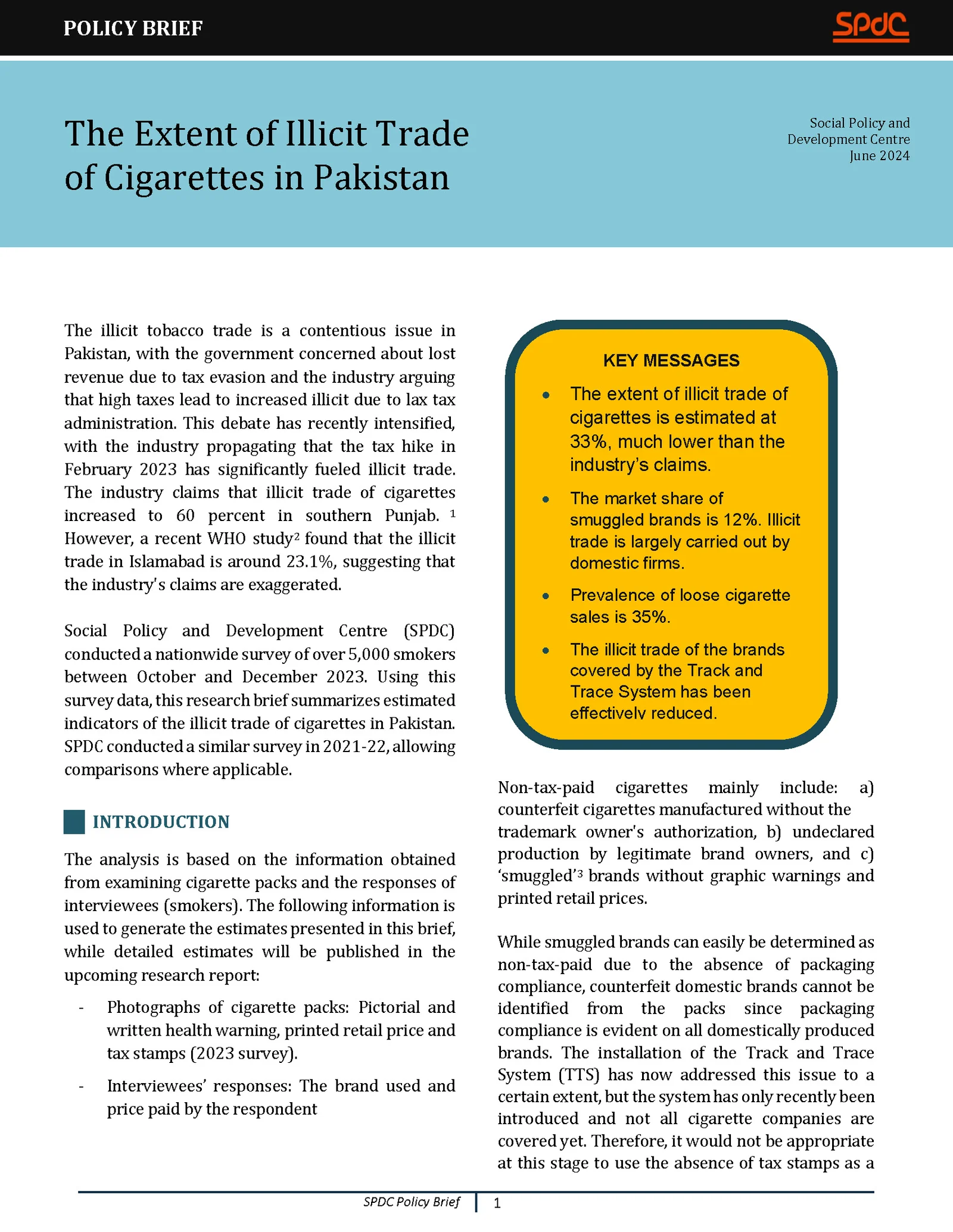
This policy brief presents consumption‑weighted estimates that reveal a more moderate yet significant scale of illicit trade. By grounding analysis in nationally representative survey data, it highlights enforcement capacity and not tax levels as the key determinant, offering policymakers a cleare ..
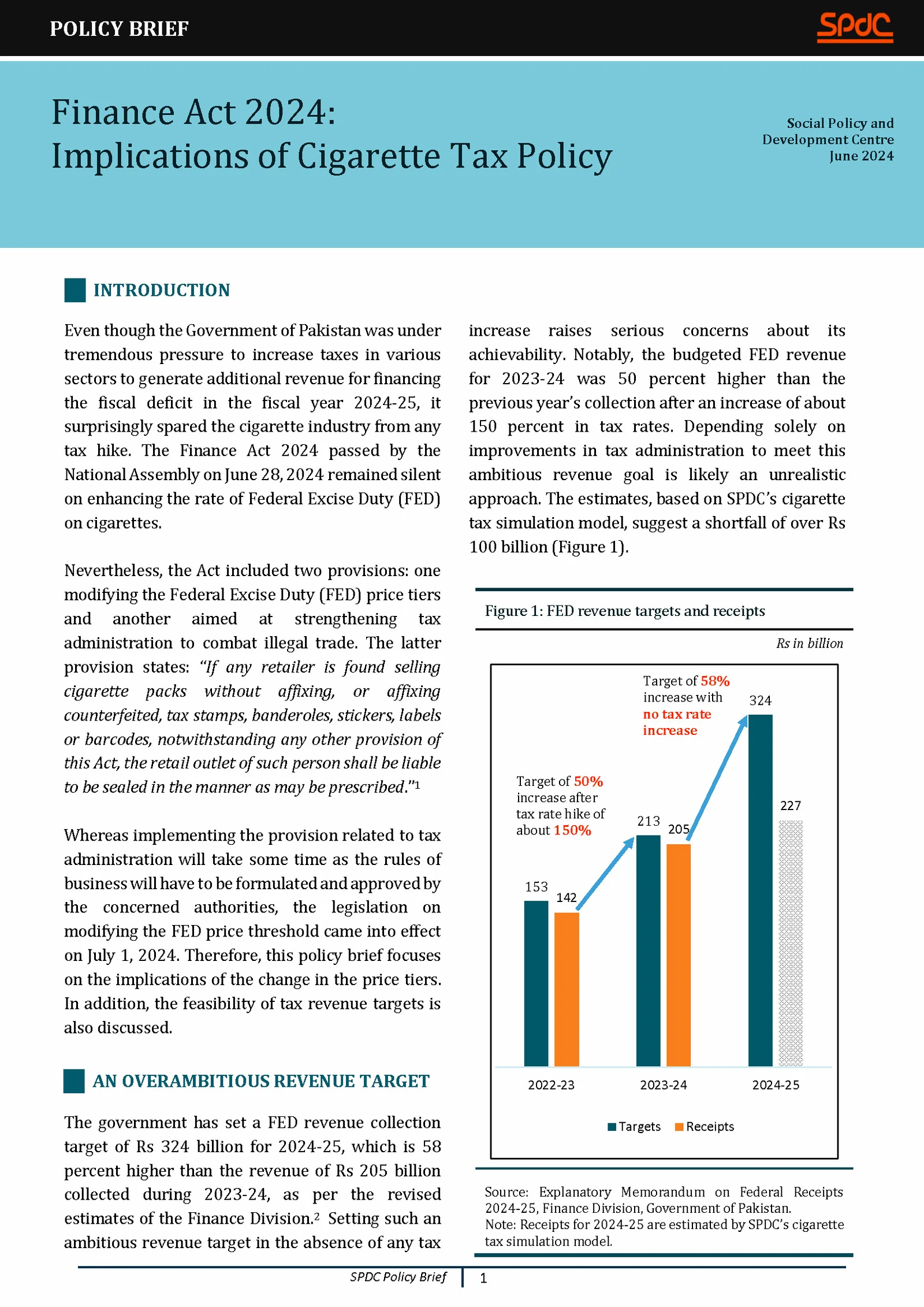
The Finance Act 2024 raised the federal excise duty on cigarettes, shifting the tax structure toward higher specific rates. This has implications for affordability of low‑tier brands, consumption trends among youth, and the expected revenue gains. The analysis cautions that any rollback of these m ..
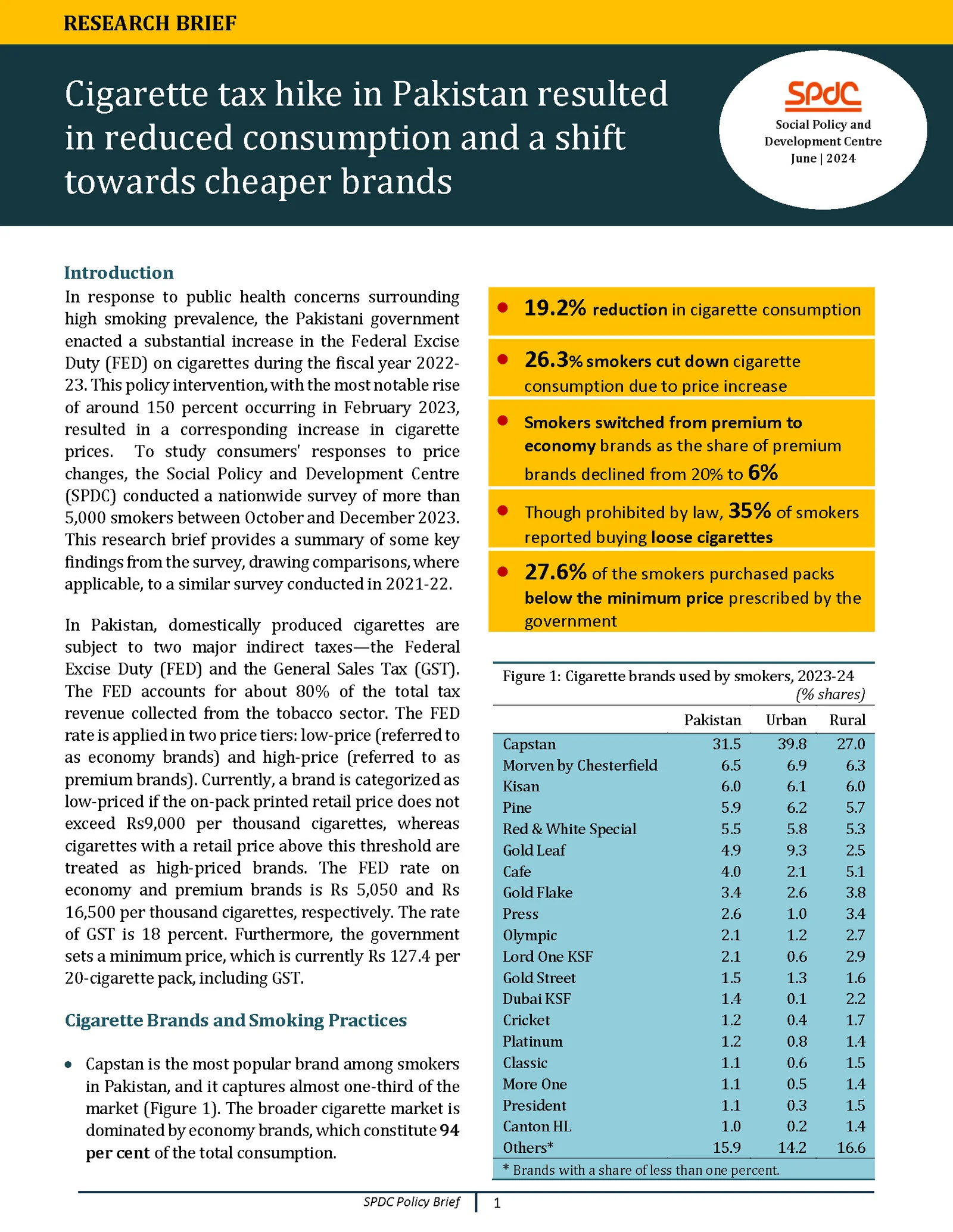
The February 2023 cigarette tax hike produced a clear behavioural response: overall consumption fell by nearly one‑fifth, while many smokers shifted from premium to cheaper brands. This research brief analyzes survey evidence showing reduced smoking intensity, substitution patterns, and the fiscal ..
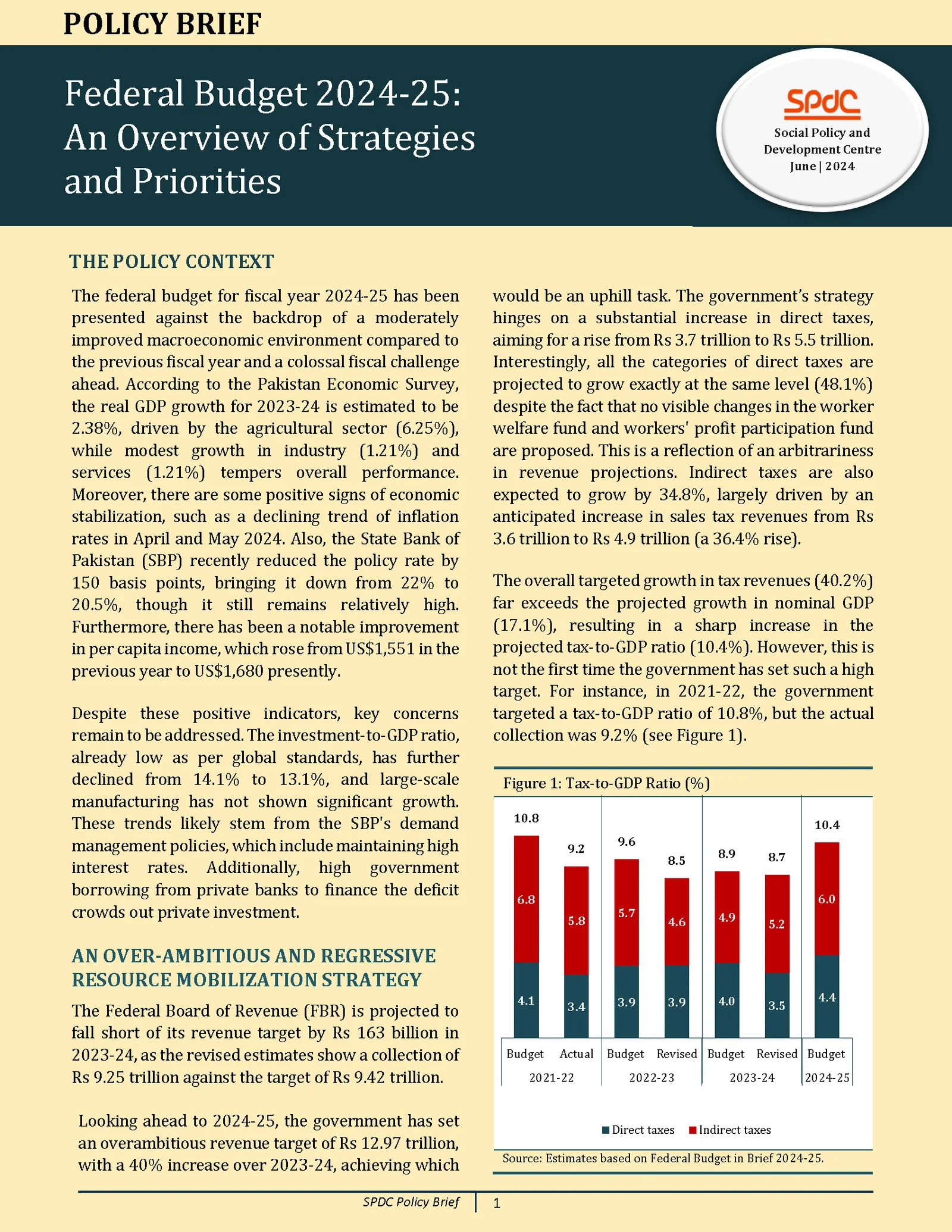
The Federal Budget 2024–25 outlines strategies to stabilize the economy while addressing social sector needs. This brief reviews key measures: higher allocations for debt servicing and defense, modest increases in health and education spending, and limited fiscal space for development programs. It ..
Impact Of Budget On Investment And Savings ..
Issues in Institutional Reform for Devolution ..
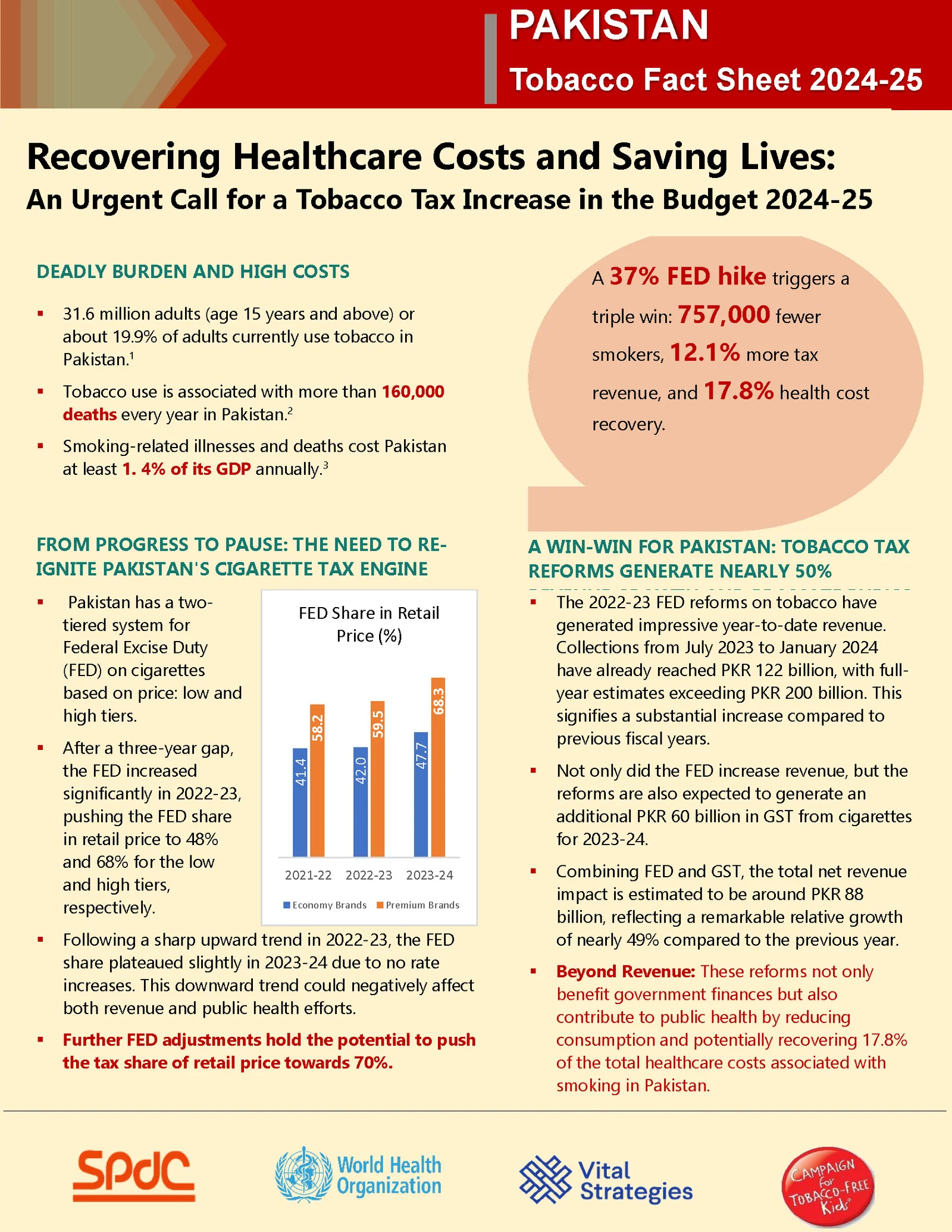
The Tobacco Fact Sheet compiles the latest evidence on smoking prevalence, excise revenues, and health costs in Pakistan. It shows that 19.9% of adults - around 31.6 million people - use tobacco, while smoking‑related deaths exceed 90 per 100,000 annually. The factsheet highlights how excise refor ..
Security Threat and its Costs ..
Pakistan’s economy faces a severe crisis marked by high inflation, low growth, dwindling reserves, currency depreciation, and deep fiscal imbalances compounded by political uncertainty. Against this backdrop, the Federal Budget 2023-24 was presented. SPDC’s report Pakistan’s Economic Outlook a ..

Experts at a seminar jointly organized by AERC and SPDC underscored the contradictions between Pakistan’s fiscal and monetary policies, warning of their negative implications for achieving the government’s macroeconomic and fiscal targets. The brief highlights that net federal revenue receipts a ..
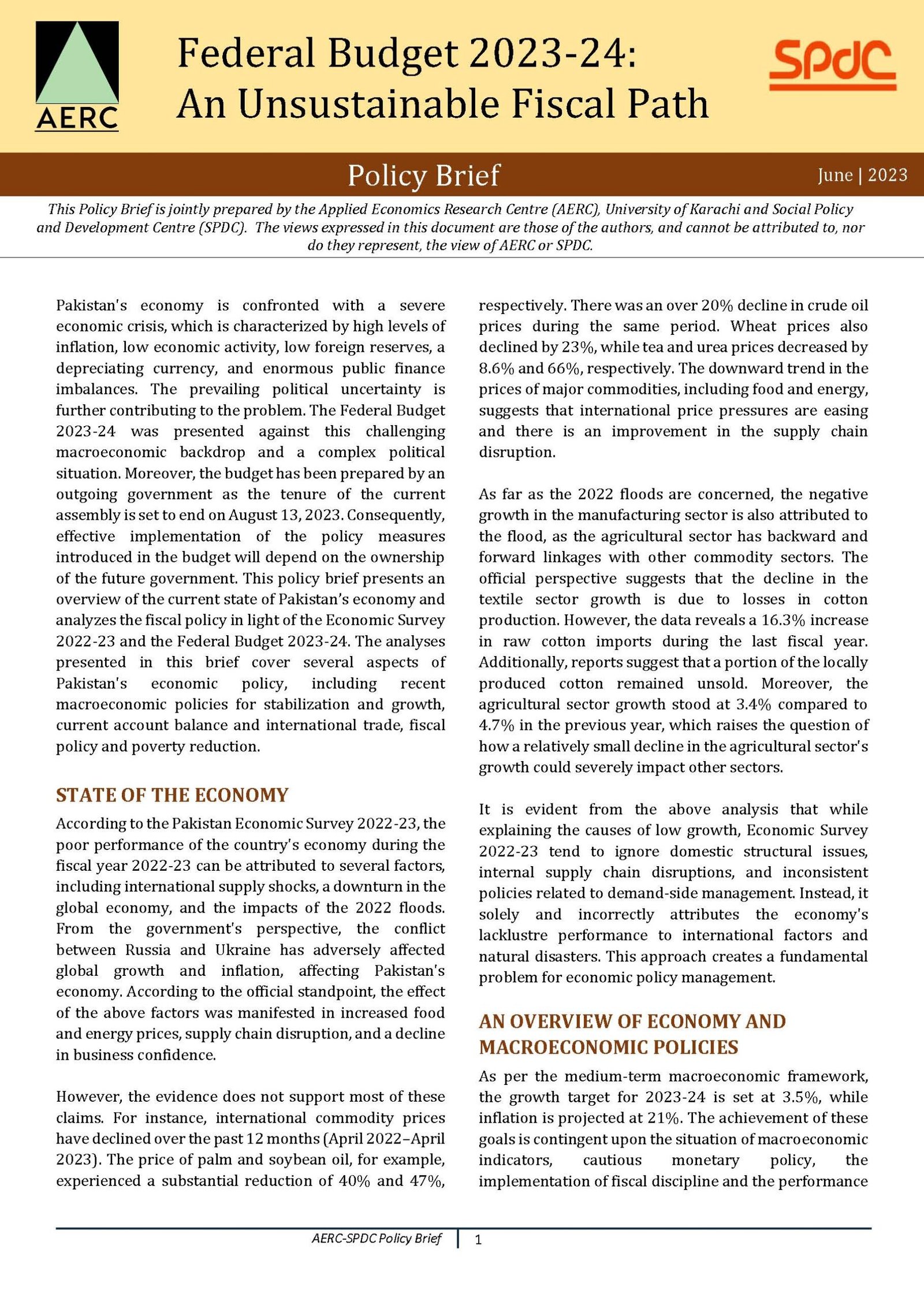
The Federal Budget 2023–24 was presented amid stagflation, political uncertainty, and a looming transition of government. This brief analyzes contradictions between contractionary monetary policy and expansionary fiscal measures, highlighting risks of wage‑price inflation, rising poverty, and un ..
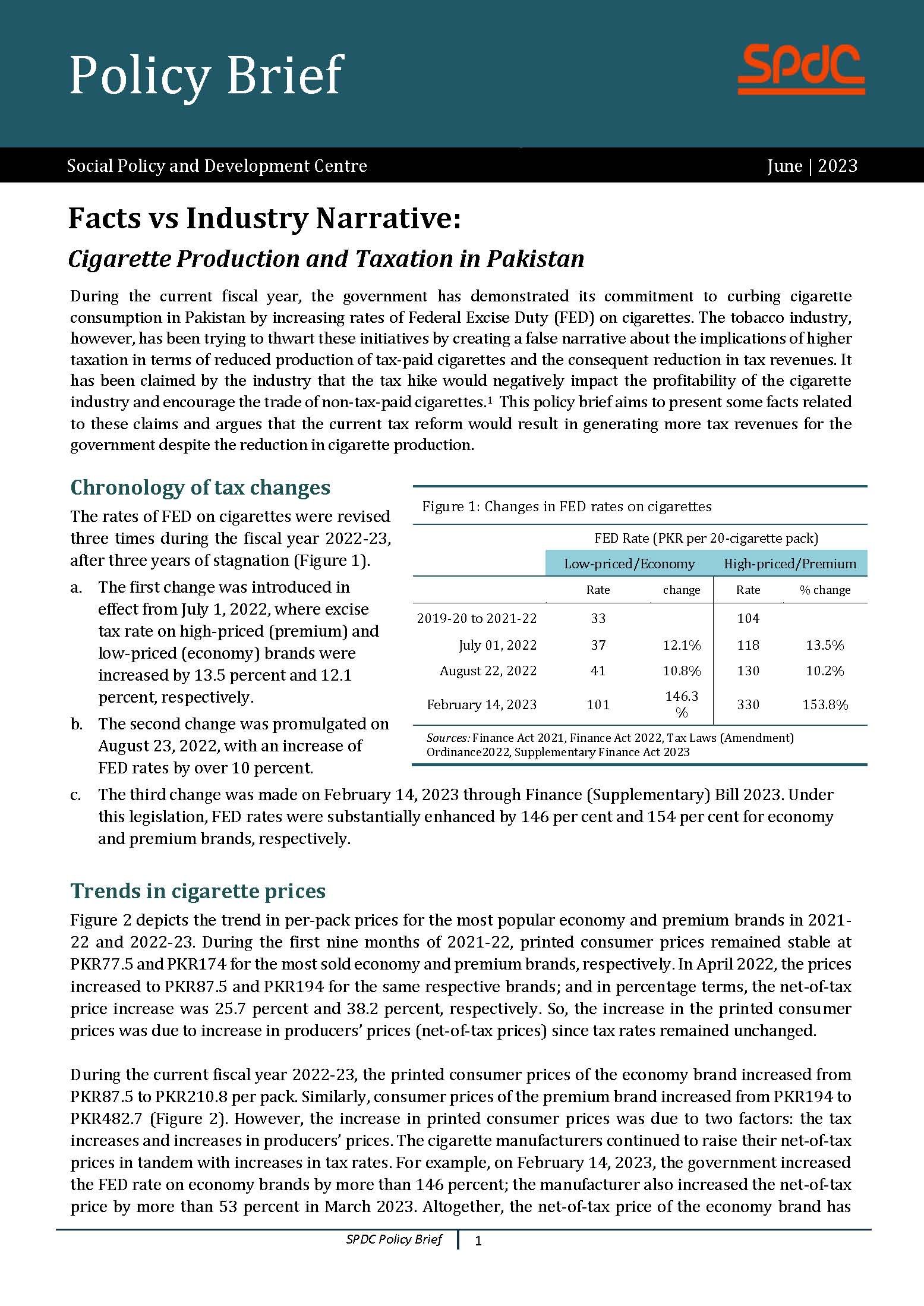
In FY2023–24, Federal Excise Duty (FED) on cigarettes was increased to curb consumption and strengthen revenues. The tobacco industry has countered with claims that higher taxes reduce production of duty‑paid cigarettes, erode profitability, and fuel illicit trade. This policy brief presents evi ..
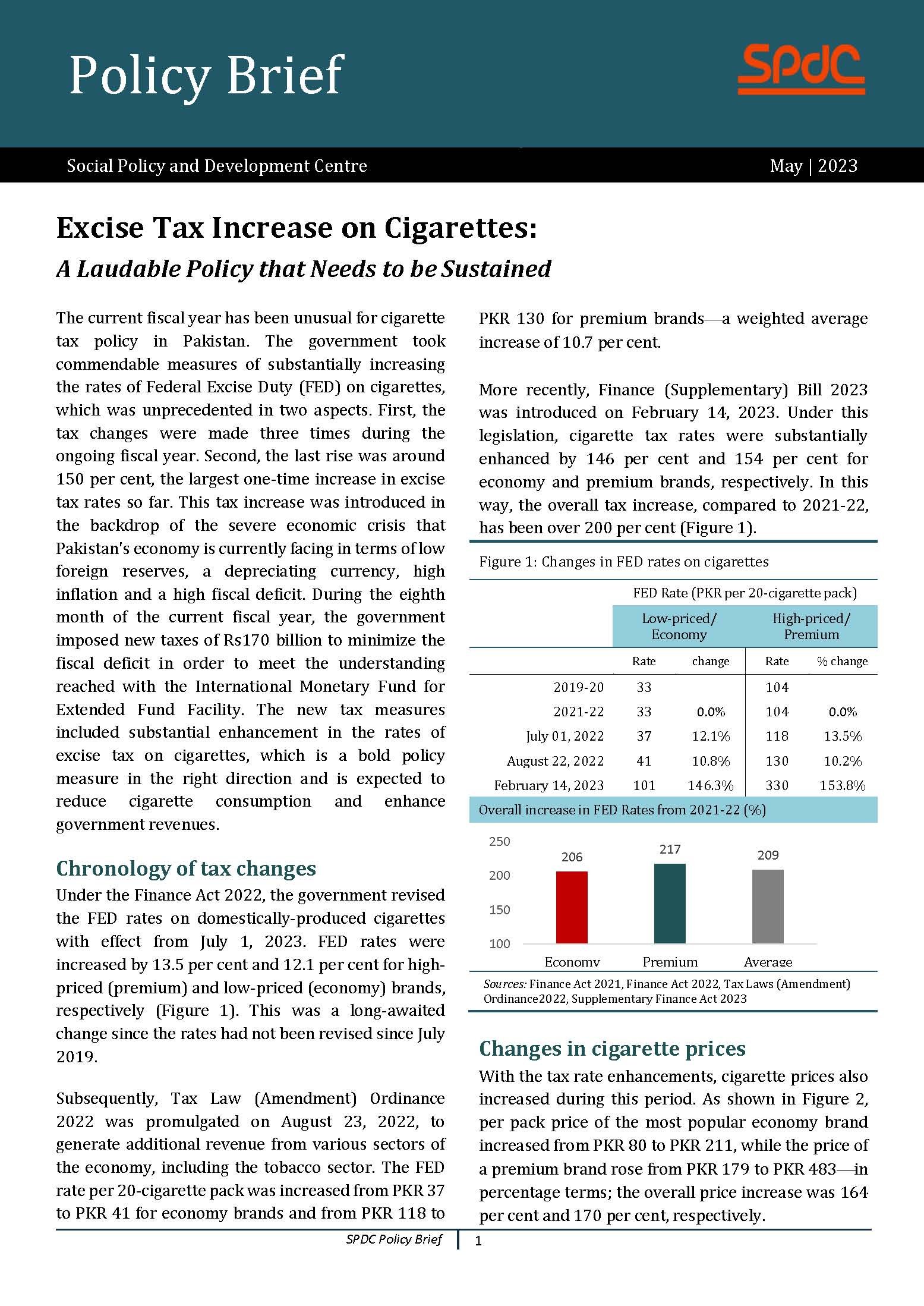
The recent increase in Federal Excise Duty (FED) on cigarettes marks a decisive step toward reducing tobacco consumption and mobilizing domestic revenue. This brief presents evidence that the reform has already curbed smoking prevalence and strengthened fiscal outcomes. It emphasizes that sustaining ..
The report presents findings from a nationwide household survey of over 7,500 current and past smokers. The study examines price and non‑price drivers of cigarette use, highlighting how tax‑induced price changes influence quitting, reduced intake, and brand substitution. The report provides poli ..
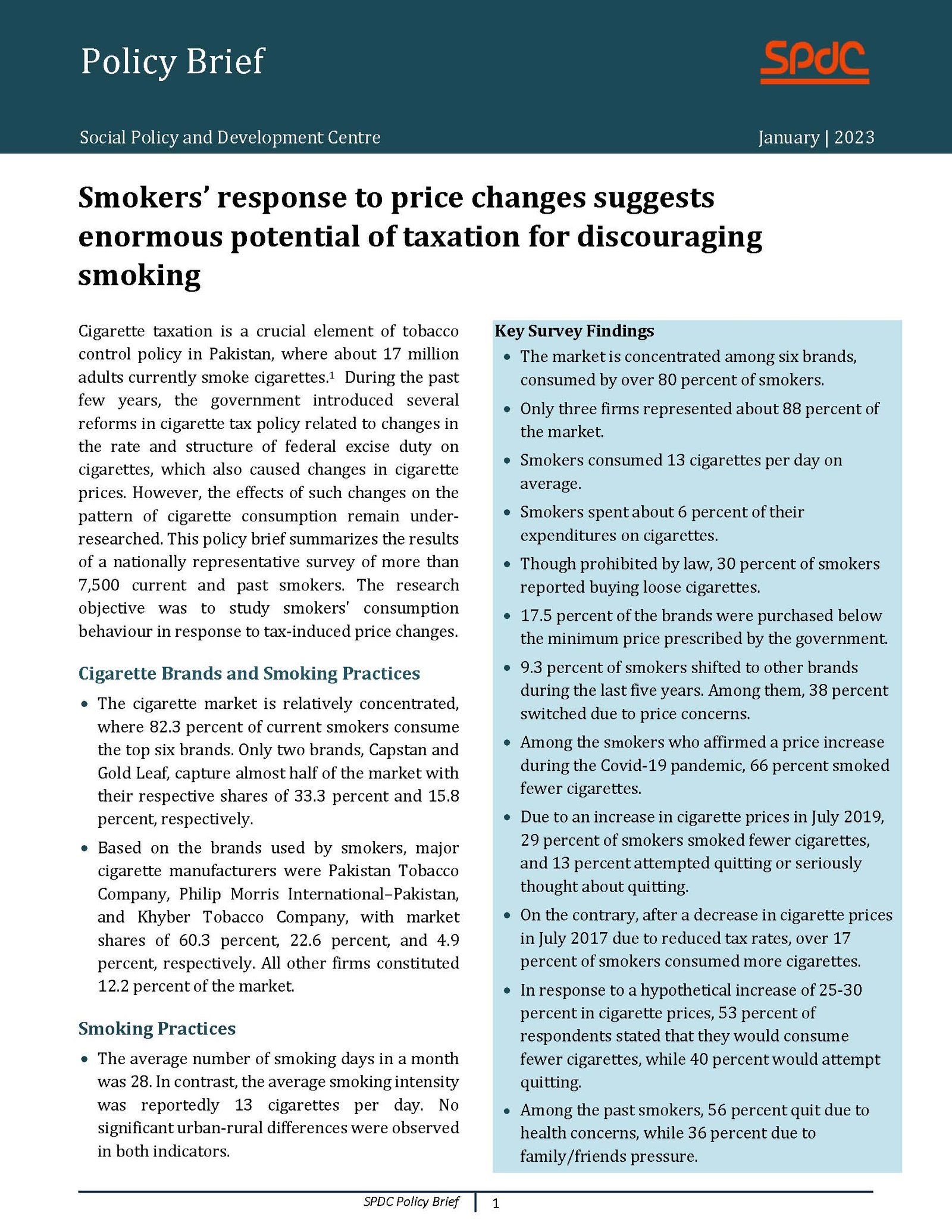
This SPDC brief underscores the enormous potential of taxation to discourage smoking, reduce prevalence, and raise revenues. Survey evidence shows Pakistan’s cigarette market is highly concentrated, with six brands consumed by over 80% of smokers and three firms controlling 88% of sales. Price cha ..
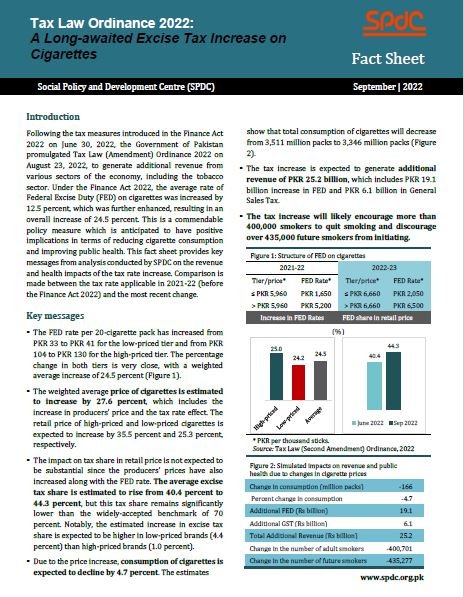
The Finance Act 2022 and subsequent Tax Law (Amendment) Ordinance raised FED on cigarettes by 24.5%. This fact sheet shows the reform’s dual impact: a projected 4.7% decline in consumption, PKR 25.2 billion in additional revenue, and over 400,000 smokers quitting alongside 435,000 youth discourage ..
Tobacco taxation is a key tool to reduce consumption, yet Pakistan’s system remains undermined by inefficiencies in tax collection. The Federal Board of Revenue relies on manufacturers’ self‑declared production, leaving room for under‑reporting and tax evasion in the absence of effective aud ..
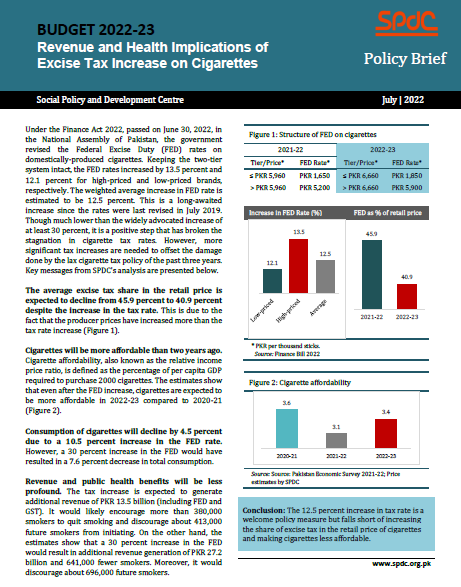
The Finance Act 2022 raised FED on cigarettes by an average of 12.5%, but the increase fell short of the recommended 30% benchmark. SPDC’s analysis shows that despite higher rates, producer price hikes reduced the excise share in retail price from 45.9% to 40.9%, leaving cigarettes more affordable ..
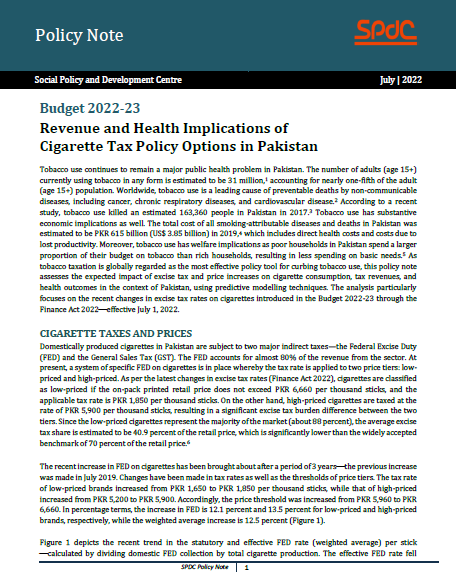
Tobacco use remains a major public health and economic challenge in Pakistan, with 31 million adults consuming tobacco and over 163,000 deaths attributed to smoking in 2017. The economic burden reached PKR 615 billion in 2019, disproportionately affecting poor households. This SPD policy note uses p ..
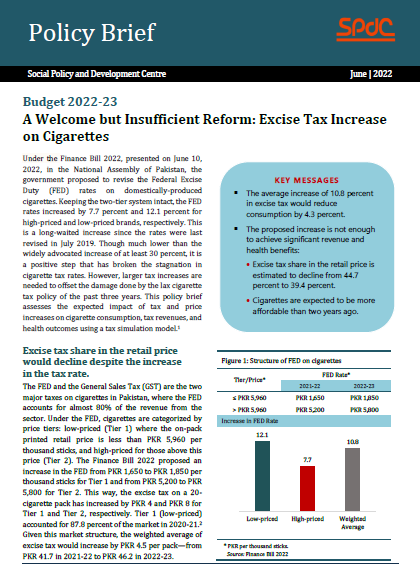
The Finance Bill 2022 raised FED on cigarettes by 7.7% for premium brands and 12.1% for low‑tier brands - breaking a three‑year stagnation in tax rates. While this adjustment is a welcome step, it remains far below the recommended 30% benchmark. SPDC’s analysis shows that the increase will mod ..
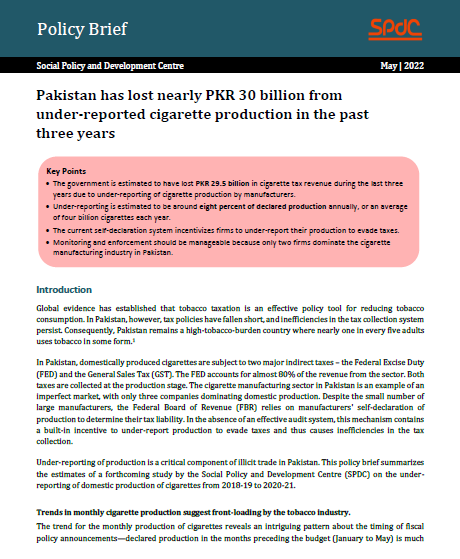
Despite global evidence that tobacco taxation curbs consumption, Pakistan’s tax system remains weak and prone to evasion. Nearly one in five adults uses tobacco, yet under‑reporting of cigarette production by manufacturers has cost the government an estimated PKR 29.5 billion in lost revenue bet ..
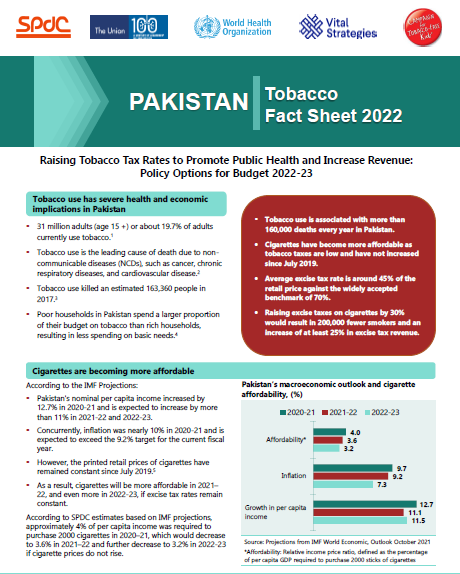
Tobacco use remains a critical public health and economic challenge in Pakistan, with over 163,000 deaths attributed to smoking in 2017. This fact sheet highlights prevalence, health costs, and fiscal implications of tobacco use. To sustain progress, Pakistan must adopt larger excise hikes, index ta ..
The report examines how weak local governance and centralized fiscal structures have constrained urban development, particularly in Karachi. The study argues for a strengthened Provincial Finance Commission framework that integrates urban and rural indicators, alongside greater fiscal autonomy and c ..
SPDC's latest report focuses on formulating a localised indicator framework for measuring progress on SDGs. Read Dr Pervez Tahir's OpEd on SPDC's Review of Social Development in Pakistan here: https://tribune.com.pk/story/2323727/some-numbers-to-ponder ..
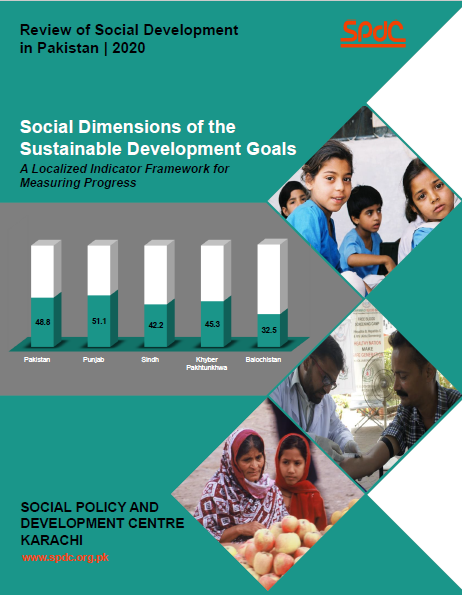
This study evaluates Pakistan’s progress on key Sustainable Development Goals by identifying data gaps and proposing preliminary national indicators for poverty, health, education, gender equality, and reduced inequalities. It also addresses critical policy challenges such as population growth, fi ..
The macroeconomic impacts of tobacco taxation is an under-researched subject in Pakistan. The lack of empirical evidence often leads to an inflated perception of the size and contribution of the tobacco industry to the economy. This study analyzes the macroeconomic and distributional impacts of the ..
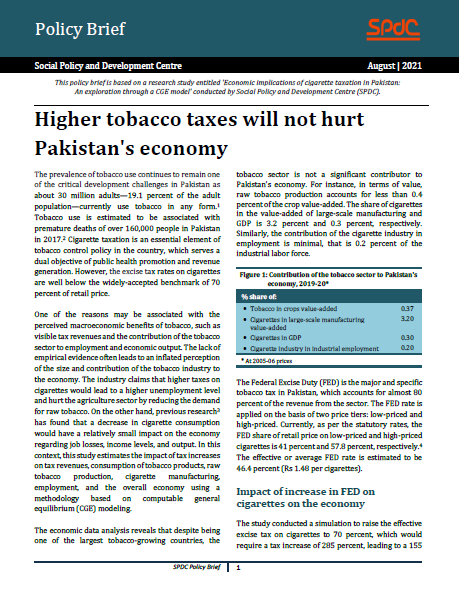
Contrary to industry claims, higher tobacco taxes strengthen Pakistan’s economy rather than harm it. Evidence shows that excise increases reduce smoking prevalence, generate substantial revenue, and ease the burden of tobacco‑related health costs. This policy brief is based on a research study e ..
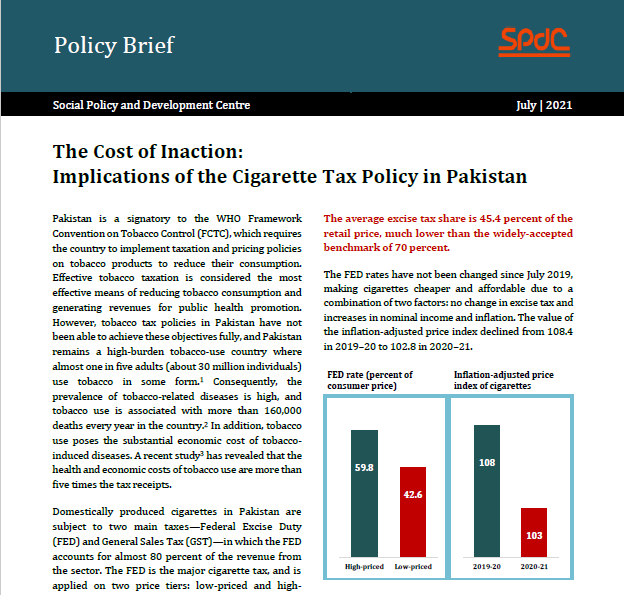
As a signatory to the WHO Framework Convention on Tobacco Control (FCTC), Pakistan is obligated to implement strong taxation and pricing policies to reduce tobacco consumption. Yet, nearly one in five adults (around 30 million people) still use tobacco, causing over 160,000 deaths annually and impos ..

Raising tax revenues during the third wave of Covid-19 is a daunting task for the policymakers in Pakistan. There are hardly any policy options available for the federal government to raise tax revenues during these challenging times. In this scenario, Social Policy and Development Centre’s (SPDC) ..
The 18th Constitutional Amendment 2010 devolved key powers to provincial governments, reshaping Pakistan’s education sector. Using household data from PSLM surveys, the report evaluates provincial performance across five core indicators of educational achievement. Composite indices reveal comparat ..
Tobacco use imposes heavy social and economic costs, with over 29 million adults consuming tobacco and nearly half of households reporting use. Evidence from the HIES (2018–19) shows that tobacco spending crowds out essential expenditures on food, health, education, and housing - especially among ..
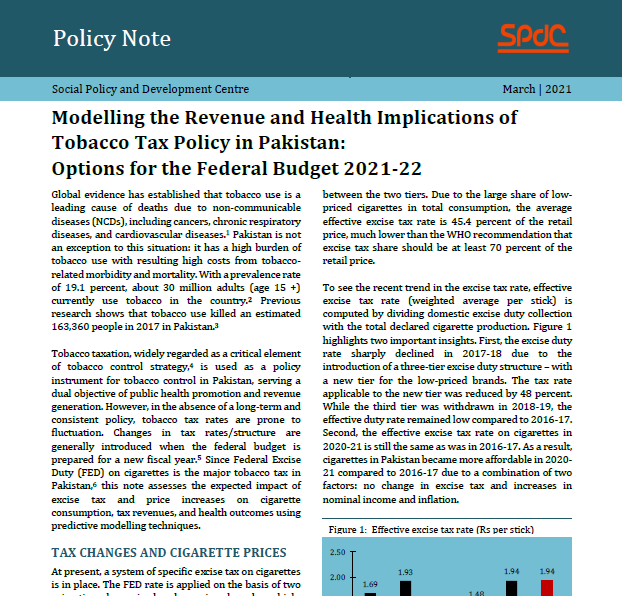
Tobacco taxation is globally recognized as the most effective tool to reduce smoking and generate revenue. In Pakistan, however, weak tax policy has kept cigarettes affordable and undermined public health. This SPDC study models alternative excise tax scenarios for the 2021–22 Federal Budget, show ..
The report explores how household expenditure on cigarettes displaces essential spending on food, health, and education. Using nationally representative survey data, the study quantifies the welfare costs of tobacco consumption and highlights its broader social and economic consequences. The finding ..
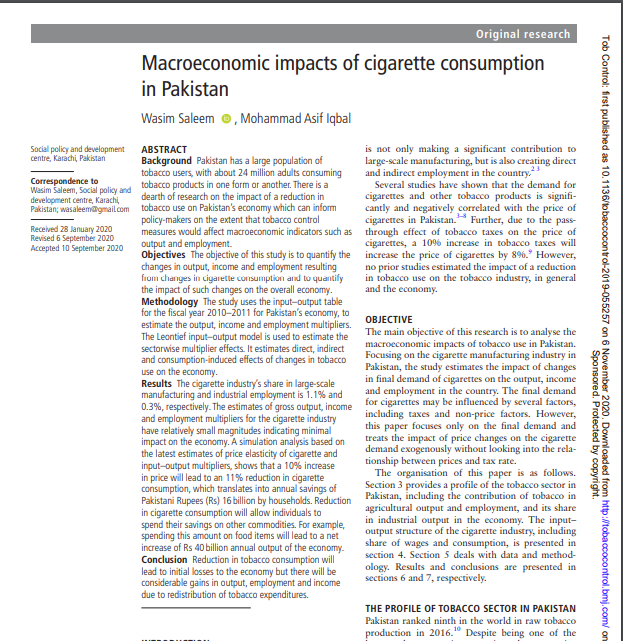
Pakistan has a large population of tobacco users, with about 24 million adults consuming tobacco products in one form or another. There is a dearth of research on the impact of a reduction in tobacco use on Pakistan’s economy which can inform policy-makers on the extent that tobacco control measur ..
SPDC initiated a consultative process to address violent extremism in Sindh, recognizing the lack of localized research. SPDC’s report Interactive Dialogues on Countering Violent Extremism: The Composite Report synthesizes insights from nationwide consultations with diverse stakeholders. It highli ..
This study is the first attempt to estimate how tobacco use shapes household consumption patterns in Pakistan, complementing global research on the crowding‑out effect of cigarette spending. Using data from the Pakistan Household Integrated Economic Survey 2015-16, the report shows how tobacco exp ..
SPDC is holding a series of dialogues to examine the drivers of violent extremism (VE) in Pakistan. The project aims to strengthen civil society’s capacity for countering violent extremism (CVE) by connecting practitioners who face VE on the ground with analysts who study its broader trends. Four ..
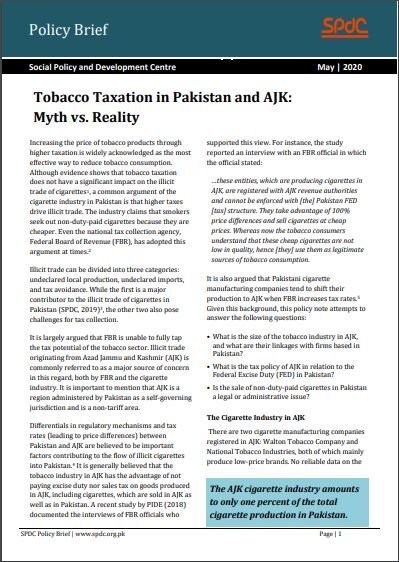
Illicit cigarette trade in Pakistan is often linked to Azad Jammu & Kashmir (AJK), a self‑governing non‑tariff area. While AJK accounts for only 1% of total cigarette production, weak tax administration and regulatory gaps have enabled under‑reporting and evasion. Fiscal laws on excise dut ..
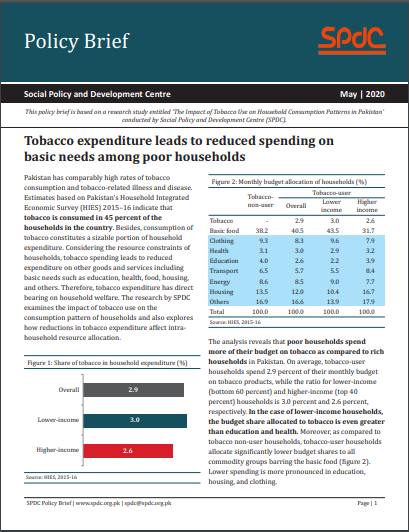
This policy brief is based on a research study entitled ‘The Impact of Tobacco Use on Household Consumption Patterns in Pakistan. It shows that tobacco‑using households spend significantly less on essential goods and services than non‑users, with strong evidence of a crowding‑out effect. Red ..
SPDC is holding a series of dialogues to examine the drivers of violent extremism (VE) in Pakistan. The project aims to strengthen civil society’s capacity for countering violent extremism (CVE) by connecting practitioners who face VE on the ground with analysts who study its broader trends. Four ..
SPDC is holding a series of dialogues to examine the drivers of violent extremism (VE) in Pakistan. The project aims to strengthen civil society’s capacity for countering violent extremism (CVE) by connecting practitioners who face VE on the ground with analysts who study its broader trends. Four ..
SPDC is holding a series of dialogues to examine the drivers of violent extremism (VE) in Pakistan. The project aims to strengthen civil society’s capacity for countering violent extremism (CVE) by connecting practitioners who face VE on the ground with analysts who study its broader trends. Four ..
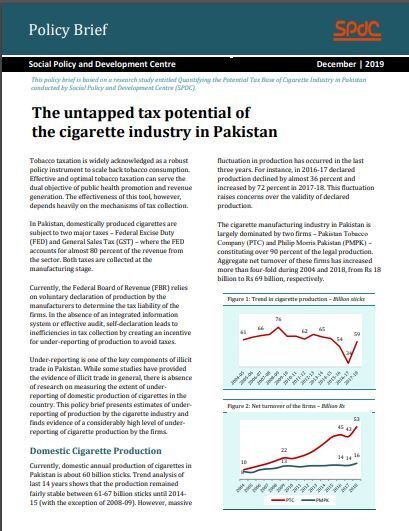
This policy brief is based on a research study entitled Quantifying the Potential Tax Base of Cigarette Industry in Pakistan. The cigarette industry remains under‑taxed, with FBR unable to fully capture its revenue potential. Despite tobacco being a high‑burden sector, weak enforcement, under‑ ..
The report assesses the gap between actual cigarette production and reported figures to estimate the untapped revenue potential. Using survey data and industry analysis, the study highlights how under‑reporting erodes fiscal gains and weakens excise policy. Its findings support expanding the tax b ..
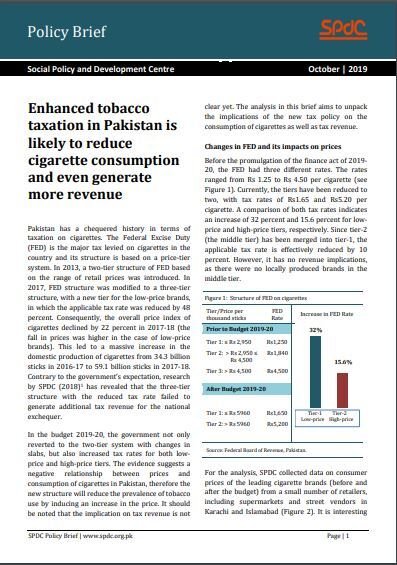
The FED has alternated between two‑tier and three‑tier systems over the past decade. The 2017 move to a three‑tier structure, which lowered rates for low‑price brands, triggered a sharp fall in retail prices and a surge in domestic production - yet failed to deliver additional revenue. In re ..
This report provides the first comprehensive assessment of the economic and social burden of violence against women and girls (VAWG) in Pakistan. It quantifies the direct and indirect costs of VAWG - including impacts on health, productivity, household income, and social cohesion - while highlightin ..
A macroeconomic case for higher tobacco taxes in Pakistan ..
This report provides the first comprehensive assessment of the economic and social burden of violence against women and girls (VAWG) in Pakistan. It quantifies the direct and indirect costs of VAWG - including impacts on health, productivity, household income, and social cohesion - while highlightin ..

Cigarette manufacturing contributes just 1.1% of industrial output and 0.3% of industrial employment in Pakistan. Yet, the social and health costs are staggering: 25 million adults use tobacco, and it is linked to over 100,000 deaths annually. This policy brief explores how the economic footprint of ..
Pinning down social vulnerability in Sindh Province ..
Climate Change and Drought: Impact of Food Insecurity on Gender Based Vulnerability in District Tharparkar ..
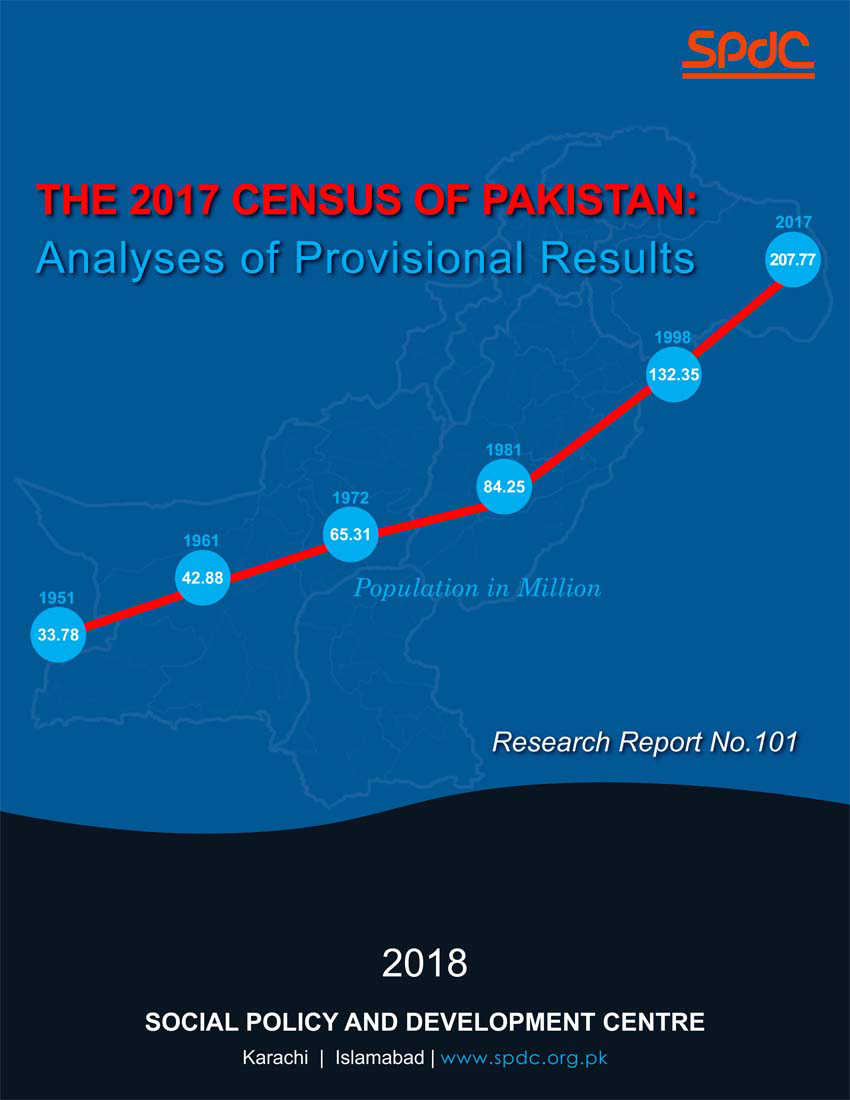
The report provides an in‑depth examination of Pakistan’s latest population census. It highlights demographic trends, provincial variations, and urban–rural shifts, offering evidence on population growth, distribution, and structural changes. The study presents critical insights for policymake ..
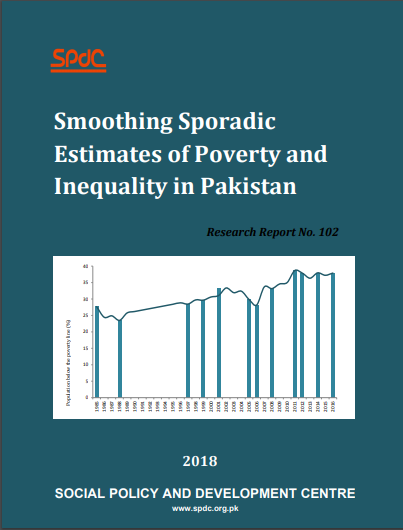
Poverty and inequality are estimated from household surveys, but their sporadic nature prevents the creation of continuous time‑series data needed for rigorous analysis. To address this gap, SPDC’s report Smoothing Sporadic Estimates of Poverty and Inequality in Pakistan applies interpolation te ..
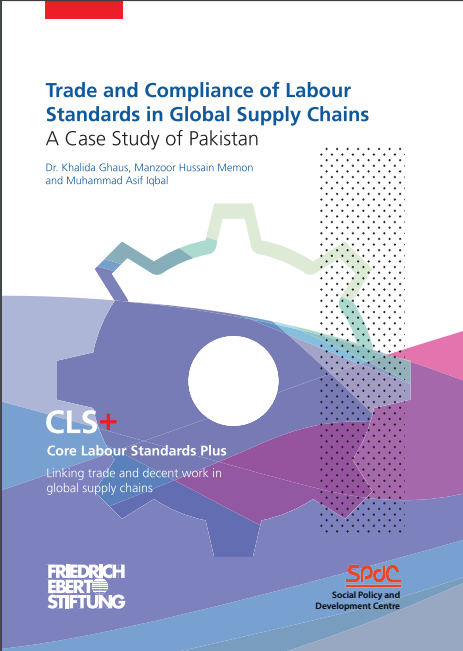
The report examines how Pakistan’s key export industries - garments, footwear, and electronics - align with international labour standards. Drawing on fieldwork, stakeholder interviews, and policy analysis, the study highlights compliance challenges, governance gaps, and the implications of trade ..
Strengthening Fiscal Federalism in Pakistan ..
The report compares the design and outcomes of fiscal transfer systems in India and Pakistan. It examines constitutional frameworks, allocation formulas, and institutional practices to highlight similarities, differences, and lessons for reform. The study highlights how intergovernmental transfers s ..
The report quantifies the broader costs of smoking beyond public health. Drawing on national data, the study estimates the economic burden of tobacco through healthcare expenditures, productivity losses, and premature mortality. It highlights how tobacco use erodes fiscal stability, undermines growt ..
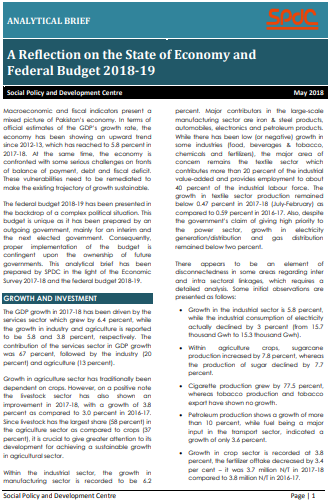
Pakistan’s economy grew by 5.8% in 2017-18, driven mainly by the services sector (6.4%) and industry (5.8%). Yet fiscal and external imbalances deepened, raising concerns about sustainability. The Federal Budget 2018-19, presented by an outgoing government, was unusual in its transitional nature - ..
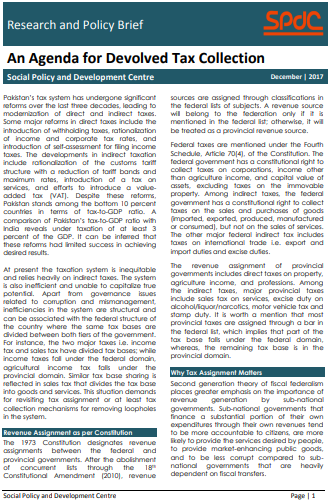
Pakistan’s tax‑to‑GDP ratio remains among the lowest globally, trailing India by at least 3 percentage points of GDP. The system’s inefficiency stems not only from governance issues but also from structural overlaps: income tax is split between federal (non‑agricultural) and provincial (ag ..
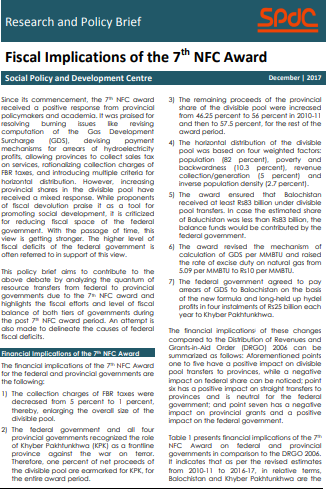
The policy brief argues that the 7th NFC Award is not the primary driver of Pakistan’s higher federal deficit. While it shifted less than 1% of GDP to provinces compared to DRGO 2006, the deficit widened mainly due to surging current expenditures. FBR’s revenue shortfall had only a minor impact, ..
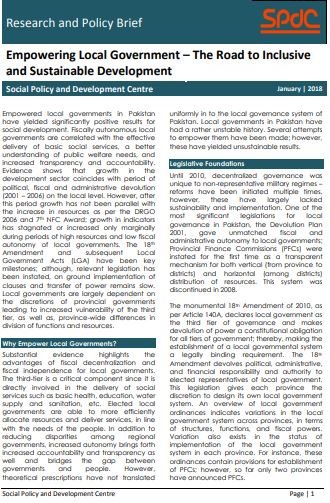
The 18th Amendment and provincial Local Government Acts provide the framework for devolving authority to the third tier, but reforms must go beyond resource transfers. The analysis identifies timely Provincial Finance Commissions (PFCs), legislation for fiscal transfers, and devolving responsibiliti ..

This brief examines the impact of tax reduction policies on tobacco consumption and revenue mobilization in Pakistan. Pakistan’s experiment with a three‑tier cigarette tax structure in 2017, which reduced rates for low‑price brands by nearly 48%, led to a sharp 22% fall in retail prices and a ..
This study provides updated poverty and vulnerability statistics from the Household Integrated Economic Survey (HIES) 2015–16. Results show that 38 percent of the population lived below the poverty line, with rural poverty deeper and more severe than urban. The number of poor rose from 61 million ..
The report investigates the links between women’s empowerment and domestic violence. Using nationally representative survey data, the study examines how factors such as education, employment, decision‑making, and social norms influence the risk of spousal violence. Its findings offer insights fo ..
The report evaluates household vulnerability and institutional capacity across selected districts in Pakistan, including Lower Dir, Nowshera, Rahim Yar Khan, and Sargodha. how households in Pakistan cope with economic shocks and identifies gaps in existing social protection mechanisms. By analyzing ..
Pakistan’s economy in 2016–17 recorded growth of 5.3%, the highest in a decade, driven by agriculture recovery, industrial expansion, and strong services. Yet, the Federal Budget 2017–18 was framed against rising fiscal and external pressures - widening deficits, growing debt, and balance‑of ..
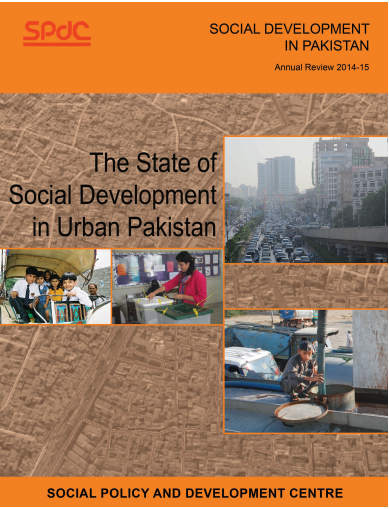
This report evaluates the state of social development across Pakistan’s urban centers, highlighting disparities in access to education, health, housing, and basic services. It examines the challenges of rapid urbanization, weak local governance, and uneven resource allocation, while identifying po ..
Quantifying Sub-National Human Development Indices from Household Survey Data ..
SPDC’s Urban Citizens’ Perception Survey on Public Service Delivery (2015) gathered opinions from nearly 4,000 households across Pakistan on access, quality, and reliability of public services. Households were randomly selected from three tiers of local government- Municipal/Metropolitan Corpora ..
The report explores how political structures, governance arrangements, and fiscal priorities shape the country’s social development outcomes. It examines the interplay between institutions, resource allocation, and policy choices, highlighting constraints that limit progress in education, health, ..
The report analyzes the challenges and opportunities of aligning Pakistan’s development agenda with the UN Sustainable Development Goals (SDGs). It examines institutional readiness, resource mobilization, and policy coherence, highlighting gaps in governance and coordination. The study highlights ..
Gender budgeting — a pathway to sustainable development ..
Pakistan’s economy continues to grapple with persistent structural challenges - low tax mobilization, widening fiscal deficits, external account pressures, and uneven sectoral growth. This analytical brief highlights the key issues in the state of the economy, examining fiscal imbalances, governan ..
Human Capital and Economic Growth: The Role of Governance ..
Gender Inequality in Labour Force Participation: An Empirical Investigation ..
Simulating the Impact of Income Distribution on Poverty Reduction ..
An Empirical Analysis of Meat Demand: A Case Study of Pakistan ..
Ter aie dhagi wara tarakiyati aie moashi mansooba ..
Mutafariq: Thatta ke Saheeli Dehaat aur Samandari Mudakhalat ..
Manchar Dhand: Kheer ji neher ya zeher jo dukh ..
Badin men Samandari Mudakhalat aur LBOD ki Tabahkari ..
Tharparker: Eik Zarkhez Sehrah, Kahhet se Mosamiyati Tabdeeli tak ..
Where does the axe fall? Sindh loses focus in budget ..
Budget 2015-16 Khyber Pakhtunkhwa: Social development, gender equality put on the backburner ..
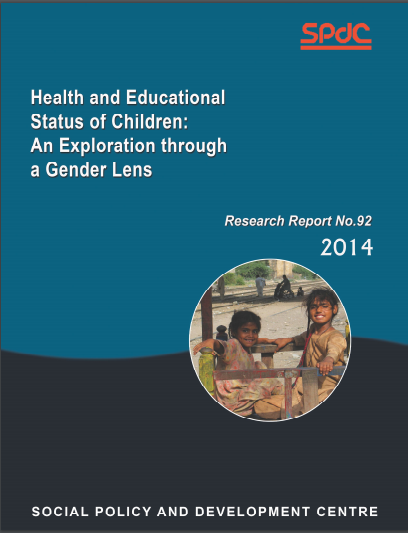
The report uses MICS data from Punjab and Balochistan to assess child nutrition, mortality, and schooling across poverty and gender lines. Findings show higher deprivation in poor households, mixed gender disparities in nutrition, evidence of gender bias in child mortality in Balochistan, and persis ..
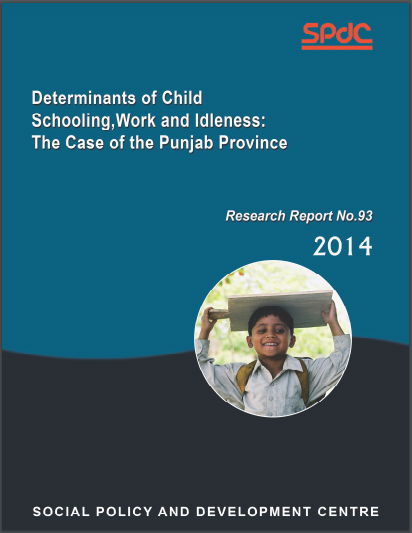
The study analyzes determinants of child activity with regard to schooling, working, or neither schooling nor working in the age cohort 5-14 years, using Punjab’s MICS 2010–11 data. It examines the role of household poverty, parental education, gender equity, and mother’s autonomy in shaping t ..
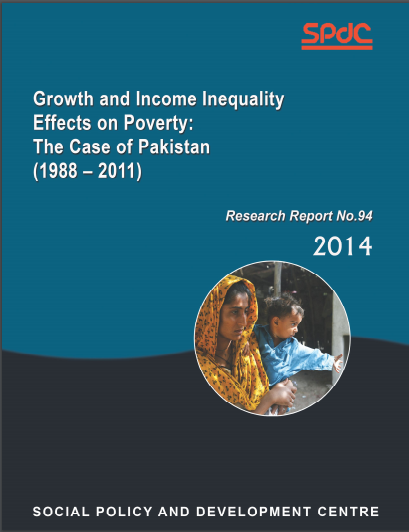
This research assesses the distributional characteristics of growth in Pakistan by applying statistical techniques suggested in the empirical literature on poverty and income inequality. An attempt is also made to determine the relative contribution of economic growth and distribution of income to c ..
Decapitalising the decline in international oil prices ..
SPDC’s report State of the Economy: An Evaluation of the Federal Budget 2015–16 provides an independent assessment of Pakistan’s fiscal priorities and macroeconomic outlook. It reviews revenue and expenditure trends, budgetary allocations, and policy measures, highlighting their implications f ..
Cooking the books (Part 1 and Part II) ..
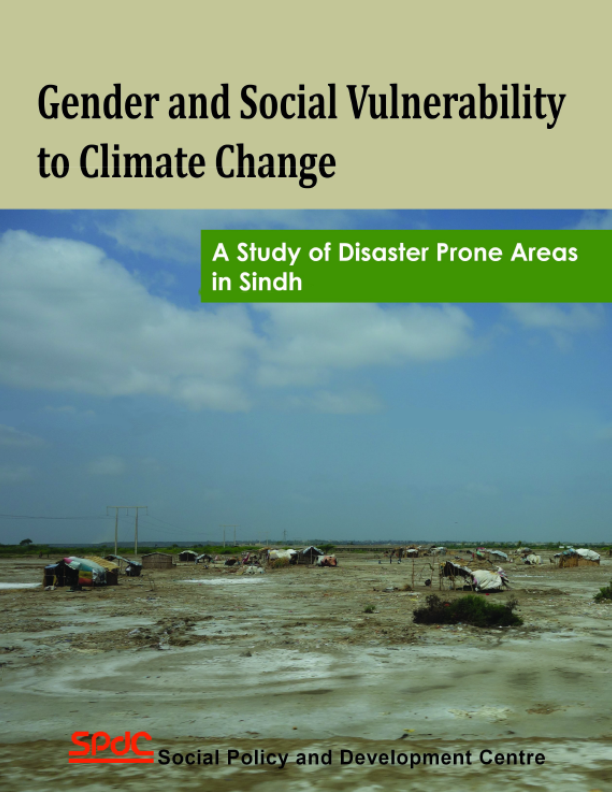
The study examines how climate risks intersect with gender inequality in communities exposed to floods, droughts, and cyclones. Covering districts such as Thatta, Badin, Dadu, and Tharparkar, the study highlights women’s heightened vulnerability due to limited access to resources, mobility constra ..
External Debt and Foreign Exchange Reserves ..
Mosamyati Tabdeeli se dochar Zila Dadu ..
Provincial Finance Commission Awards: A tool for inclusive development ..
This Compendium brings together pioneering studies conducted under SPDC’s Gender Research Programme between 2009 and 2013, designed to integrate gender perspectives into economic and social policy analysis. The research highlights the need for gender‑disaggregated data and national‑level inqui ..
The Annual Review assesses the state of social development across Pakistan’s rural districts, focusing on disparities in education, health, water supply, and other basic services. It highlights the challenges of poverty, weak infrastructure, and limited local governance, while examining policy opt ..
Womens struggle in Pakistan Movement ..
Economic Development and Income Redistribution ..
Sindh budget 2014-15: A compromise on development ..
The report is based on an in-depth and objective analysis of the macroeconomic and fiscal situation and policies. It brings forward the issues related to economic growth, a number of fiscal challenges being confronted, and the development priorities of the government. It reviews the economic perform ..
This report presents fresh evidence on how Pakistan’s general sales tax (GST) affects households across income groups. By analyzing the distributional burden of GST, the study reveals its regressive impact showing that poorer households bear a disproportionately higher share of the tax relative to ..
The study highlights the major characteristics of schooling in rural Pakistan by providing a situation analysis in terms of access, equality and quality of education. A cohort-wise analysis for primary (5-9 age cohort) and secondary (10-14 age cohort) levels is carried out to look at the prevailing ..
The study maps the extent of rural poverty and deprivation using multiple measurement approaches, alongside indices of social exclusion. It highlights how inequality in income and land ownership shapes rural disadvantage and interacts with economic growth. The report also reviews social protection r ..
The report examines how Pakistan’s system of fiscal transfers can be leveraged to promote more equitable and gender-sensitive education financing. By analyzing provincial allocations and expenditure patterns, the study highlights gaps in resource distribution that perpetuate gender disparities in ..
This report reviews how gender perspectives have been mainstreamed within SPDC’s research agenda, institutional practices, and policy engagement. The report evaluates institutional practices - such as staffing, capacity building, and partnerships - to understand how gender sensitivity has been emb ..
This policy paper reviews the fiscal implications of the 7th NFC Award and outlines pressing issues for the 8th Award. The 7th NFC Award (2010) expanded provincial shares and resolved key fiscal issues, but its tenure ended in June 2015, requiring deliberations on the 8th NFC Award. Emerging challen ..
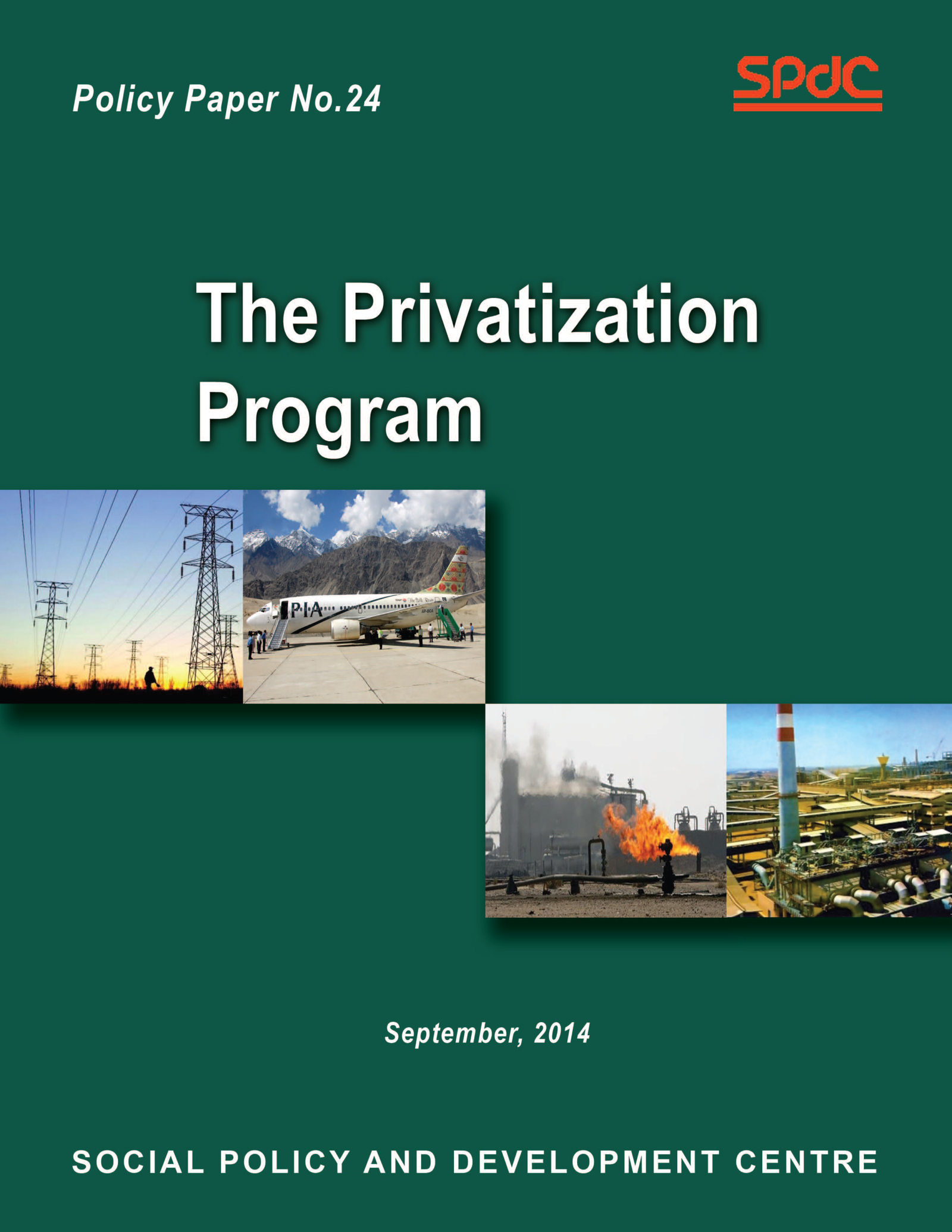
Privatization of state assets in Pakistan has long sparked debate. Advocates highlight efficiency gains and reduced fiscal burdens, while critics warn of monopolies, job losses, and wealth concentration. With the government preparing a new round of privatization after six years, this paper reviews t ..
Mushkilaat, Masael aur Bohrano ki tareek shab ki saher kab hogi? ..
Pakistani Political candidates threatened by Taliban terror attacks ..
Pakistan’s Emphasis on Social Development ..
An ambitious budget(part-1 and part-2) ..
Building Bridges with India-Pakistan Peace ..
Social spending: Punjab spends the least? ..
Agri income tax evasion: a huge disincentive for taxpayers ..
Future of GST services as provincial tax uncertain ..
Provinces have strong revenue potential ..
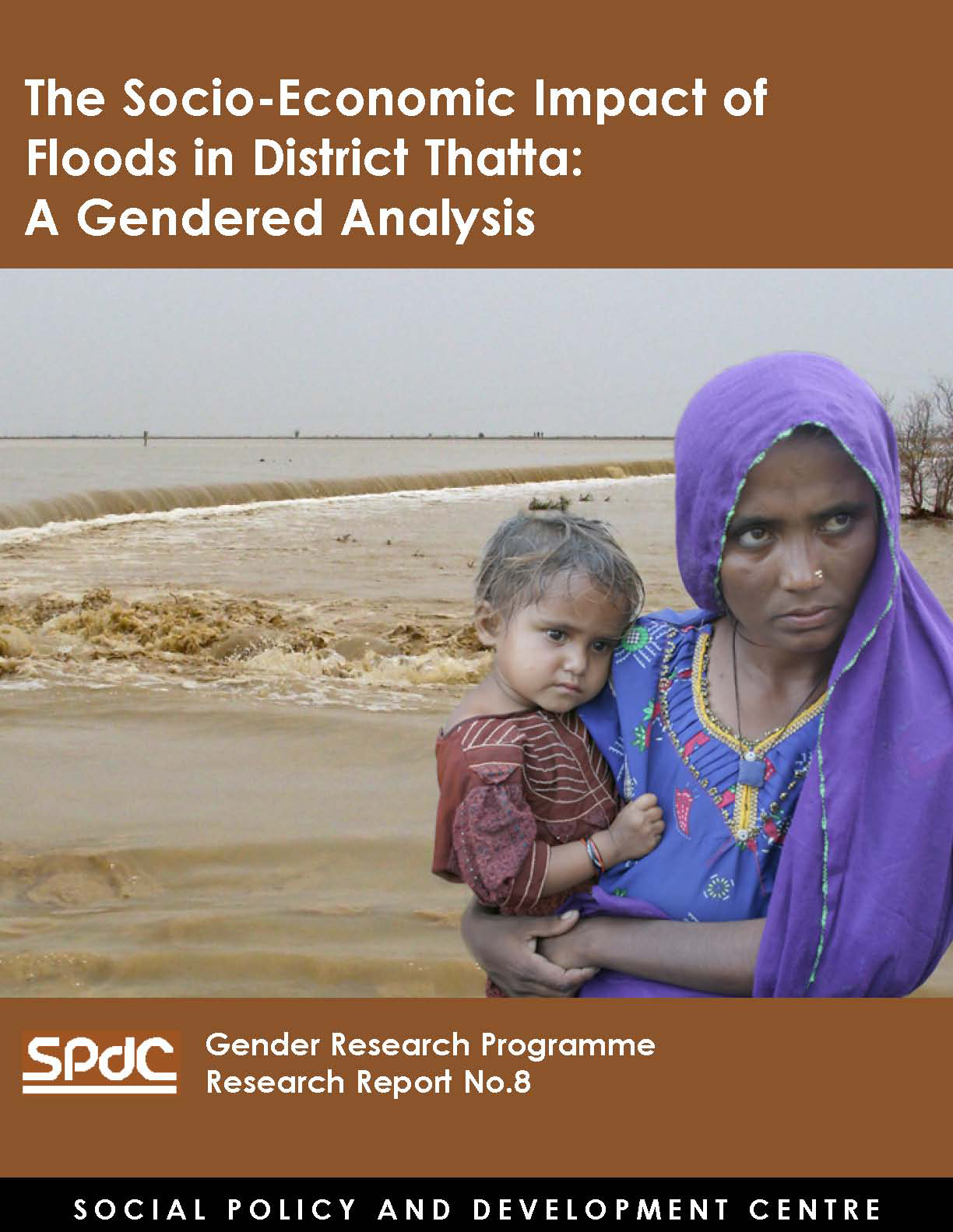
The Socio-Economic Impact of Floods in District Thatta: A Gendered Analysis ..
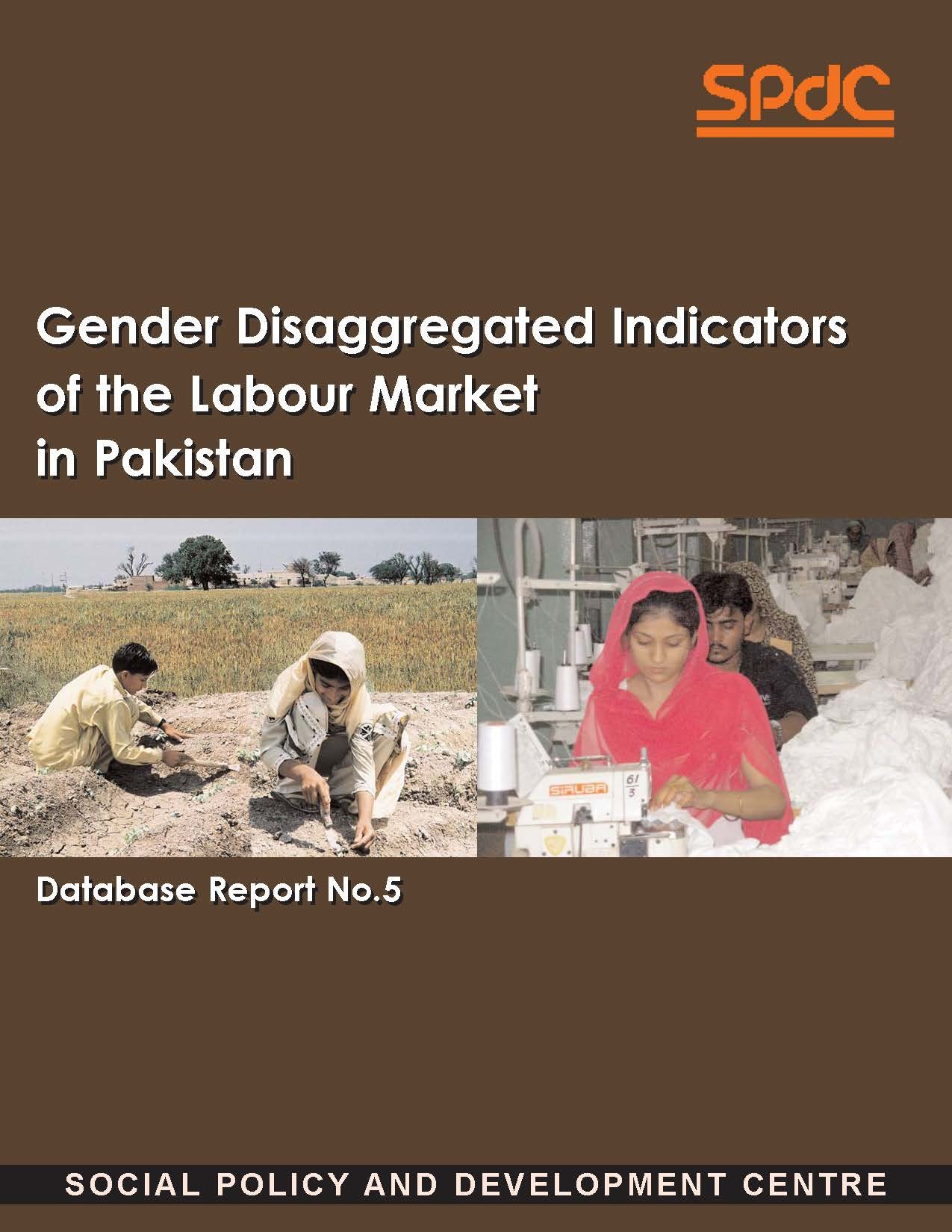
This database report presents a comprehensive time-series of gender‑disaggregated indicators to analyze Pakistan’s labour market, covering the period from 1990-91 to 2010-11. It highlights disparities in employment, wages, participation rates, and sectoral distribution between men and women, dra ..
Dadu Zila main Taleem ji Tabahi ain upa ..
This research note provides sub-national estimates of monetary poverty with the help of information available in two household surveys conducted during 2010-11. Data of Pakistan Social and Living Standards Measurement Survey (PSLM) and Household Integrated Economic Survey (HIES) are combined to prod ..
State of the Economy: Imperatives for Fiscal Policy in the Federal Budget of 2013-14 ..
The report critically reviews Pakistan’s federal budget for FY2013-14, assessing its ambitious targets against prevailing economic realities. It examines revenue measures, expenditure priorities, and fiscal balance, highlighting the challenges of implementation amid structural constraints. The ana ..
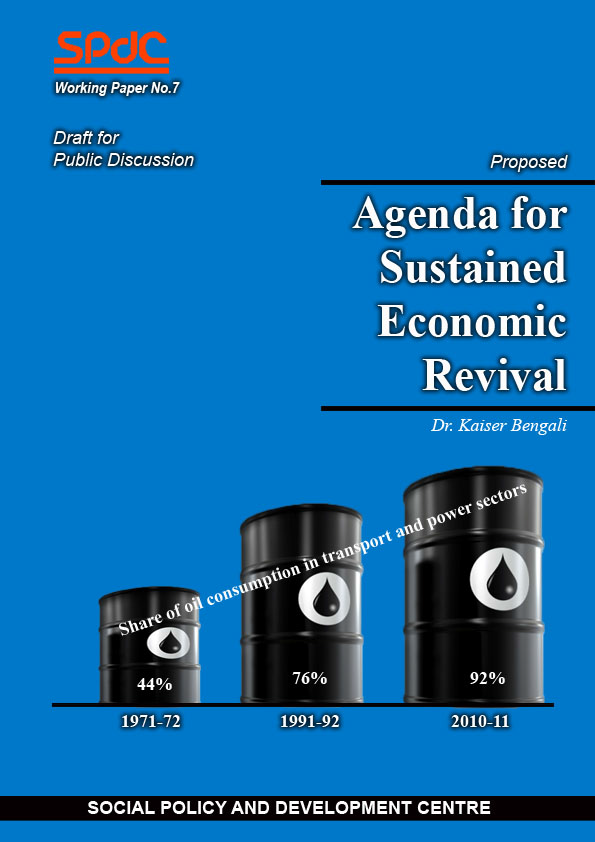
Proposed Agenda for Sustained Economic Revival ..
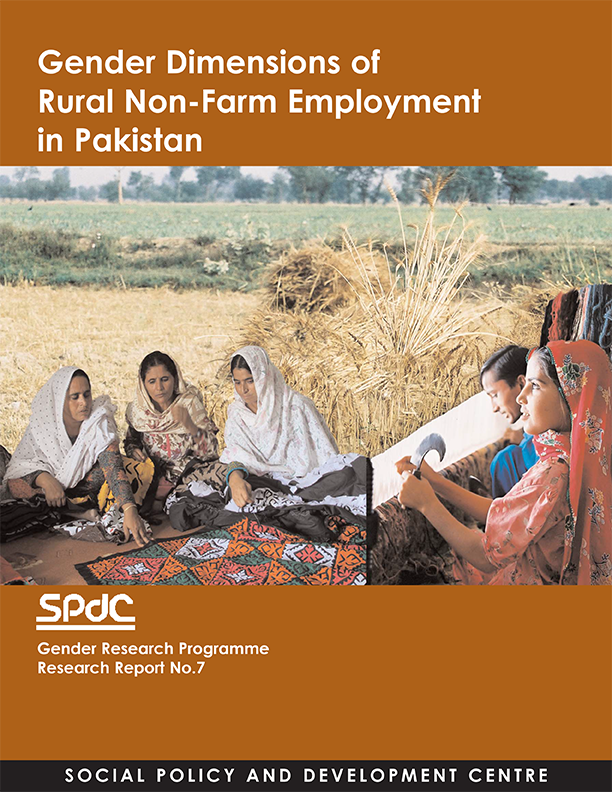
This study explores the role of women in rural non‑farm employment, highlighting both opportunities and barriers in diversifying livelihoods beyond agriculture. Using household survey data, it examines gender disparities in access to jobs, wages, and working conditions, while assessing the contrib ..
This report examines how Pakistan’s devolution process has shaped social development outcomes across provinces and districts. It highlights the opportunities and challenges of decentralization, including resource mobilization, service delivery, and local governance capacity. The link between devol ..
Mooashi Istehkam ke Raaste Masdood.......Siyasi Azadi Mazboot Maeeshiyat Ke Bagair Namumkin Hai ..
Sindh maen Thiyal Taleemi Tabahi Aeen Imdadi Idaran Joon Tarjihaat ..
Taleem Ji behtri Lai Sanjeedgi kithy aahe? ..
Fiscal Devolution: Still an Unfinished Agenda ..
Balochistan Budget 2012-13: Compromising Social Development ..
This study analyses disparities among provinces and districts for the years 2011, 2009 and 2005 with respect to household socio-economic deprivations and could be used as a reliable base for provincial and district development policies. Analysis presented in this study is based on 17 variables, arra ..
This study moves beyond income-based measures to quantify multidimensional poverty in Pakistan using household survey data. Applying the Foster–Greer–Thorbecke indices across education, health, housing, and asset deprivation, it tracks poverty levels for 2005, 2009, and 2011 to assess changes ov ..
This research paper provides poverty statistics estimated from the latest available household survey data. The estimates show that an overall 38 percent of the population was poor according to the methodology adopted for this study during the year 2010-11. The incidence, depth and severity of rural ..
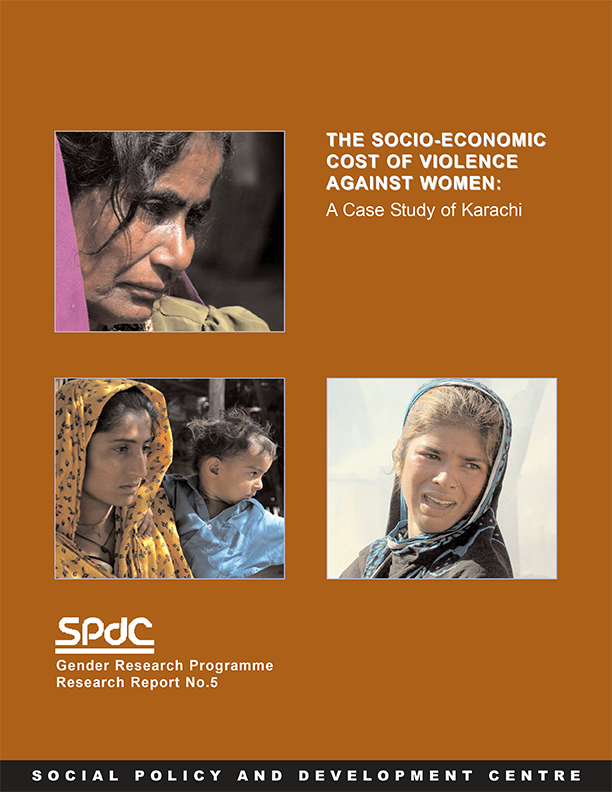
The report quantifies the economic and social burden of violence against women in Karachi, highlighting its impact on household welfare, productivity, and public resources. Drawing on survey evidence, the report examines the hidden costs of gender-based violence, from healthcare and legal expenses t ..
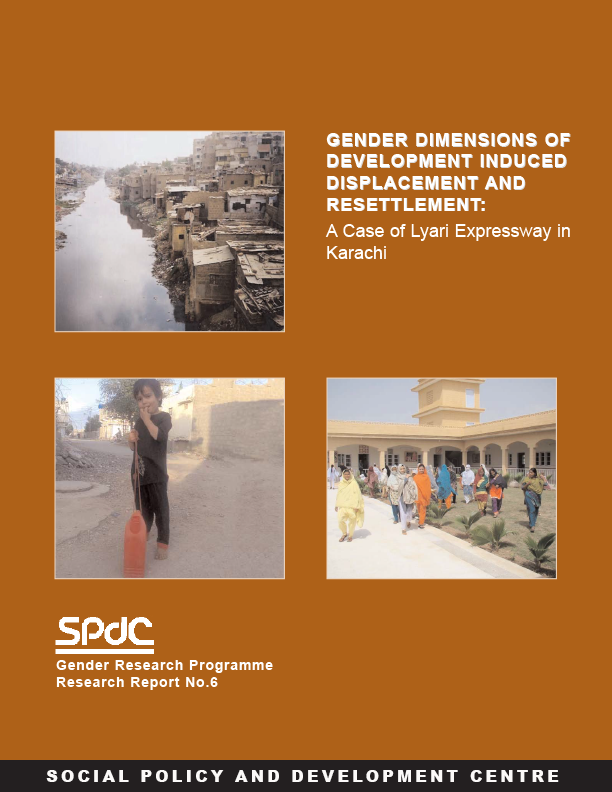
This study examines how large-scale infrastructure projects, such as the Lyari Expressway, affect displaced communities with a particular focus on gender. It highlights the social and economic challenges faced by women during resettlement, including loss of livelihoods, disruption of social networks ..
SPDC launched a series of interactive discussions aiming to bridge divides among policymakers, academics, civil society, and business leaders, fostering consensus on issues of social progress and human development. Over six months, themes include the implementation of the 18th Amendment, women’s e ..
Financial Implications of 7th NFC Award and the Impact on Social Services. ..
Decentralisation of GST Services and Vertical Imbalances in Pakistan. ..
Is Devaluation Contractionary? Empirical Evidence for Pakistan. ..
Assessing Poverty with Non-Income Deprivation Indicators: Pakistan, 2008-09 ..
Gender preference in Zakat spending ..
Tijarti Woosat Pazeeri: Women Work Force per Asaraat Mehdood Kiyun? ..
Federal Budge FY12: Unpleasant Arithmetic - ..
Punjab Compromising on Social Development - ..
Balochistan Ignores Social Development - ..
Dolti Maeeshiyat per aik aur kaari Zarb ..
Primary Sattah per Sanfi Adam Masawat ki Booland Sharah ..
Chamre ki Sanath - Eid ul Azha.....Mazhabi Tehwaar, Aham Moashee Sargarmiyun ka Maakhiz ..
The Poorest of the Poor in Pakistan: Households Headed by Women ..
This working paper critically examines the role of civil society in Pakistan, assessing its capacity to influence governance, social development, and democratic accountability. It explores the challenges of institutional weakness, limited outreach, and political constraints that have hindered civil ..
Pakistan’s population dividend cannot be fully realized without integrating women into the economy. Yet official statistics show their participation remains low, leaving a significant share of the workforce untapped. Persistent barriers such as mobility constraints, workplace discrimination, and w ..
Pakistan must advance social development despite the ongoing security crisis, as neglect would deepen instability. SPDC’s analysis shows the crisis has undermined investment, social indicators, and fiscal stability, distorting public spending priorities. While the situation is alarming, the 7th NF ..
Savings-Investment Correlation and Capital Outflow: The Case of Pakistan ..
Macroeconomic Environment and Financial Sector’s Performance: Econometric Evidence from three Traditional Approaches. ..
G-20 and Development: A View from Pakistan ..
The Impact of Trade and Financial-Openness on Government Size: A Case Study of Pakistan ..
Urbanization and Poverty Reduction: A Case Study of Pakistan - ..
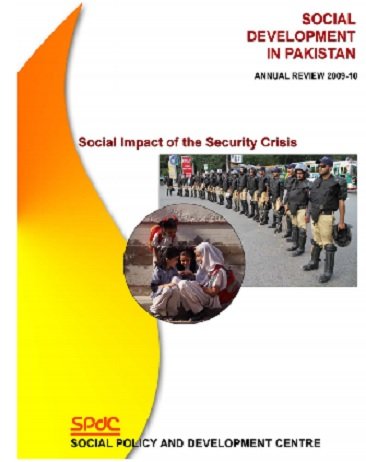
The Annual Review of Social Development in Pakistan 2009-10 comprehensively examines the multidimensional socioeconomic crisis stemming from the country's involvement in the post-9/11 war on terror. The report details how escalating terrorist violence and military operations have dislocated economic ..
Debt Sustainability: Thwarting Economic Outlook ..
The NFC Award: Punjab Biggest Gainer ..
Gender and Public Spending on Education. ..
Trade Liberalisation and Women Participation in Labour Force ..
This SPDC study reviews Pakistan’s fragmented social protection landscape, where programs often emerge as ad hoc responses or donor-driven initiatives without a coherent national framework. Drawing on recent empirical research, it outlines existing schemes, identifies duplication and gaps, and ass ..

The study analyzes how government spending on education and health is distributed across gender, highlighting disparities in access and outcomes. Using dynamic assessment methods, the report tracks shifts in resource allocation and evaluates whether public investments are responsive to gender needs. ..
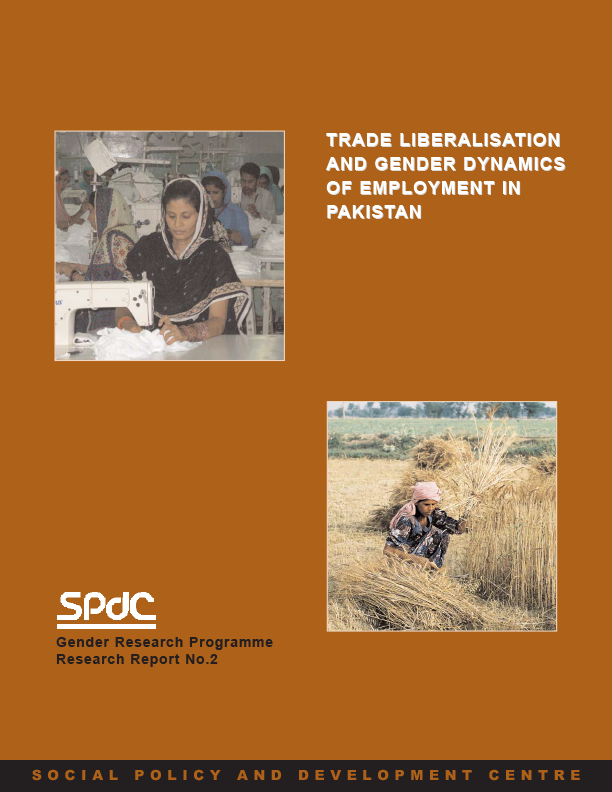
This report explores how trade liberalisation has reshaped employment patterns in Pakistan, with a particular focus on gender. It examines sectoral shifts, wage disparities, and labour market participation, highlighting both opportunities and challenges for women. The study provides evidence-based i ..
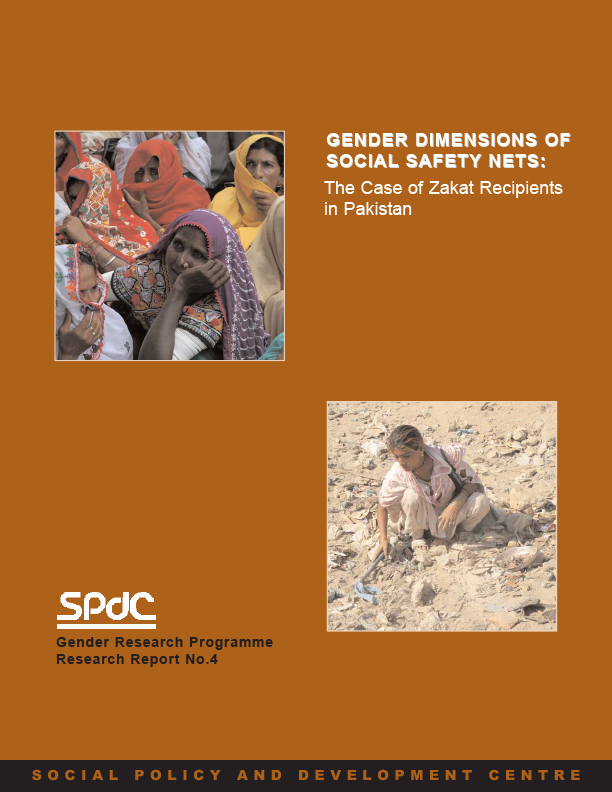
This SPDC study investigates how Pakistan’s Zakat program affects men and women differently, highlighting gender disparities in access, coverage, and benefits. By analyzing household survey data, the report assesses whether social safety nets adequately address women’s vulnerabilities and contri ..
Neo-Liberal Governance and Poverty in Pakistan ..
Role of Women in Peace and Conflict: Suffering of Afghan Women ..
Determinants of Workers’ Remittances: Implications for Poor People of Pakistan ..
Is There any Causality between Human Resource Development and Economic Growth? A Provincial Case Study on Pakistan - 2009 ..
Capitalizing the Demograhic Dividend ..
Challenges and Responses for Democracy and Security: Pakistan’s Perspective ..
Finance-Openness Nexus and Financial Institutions: A Case of Pakistan ..
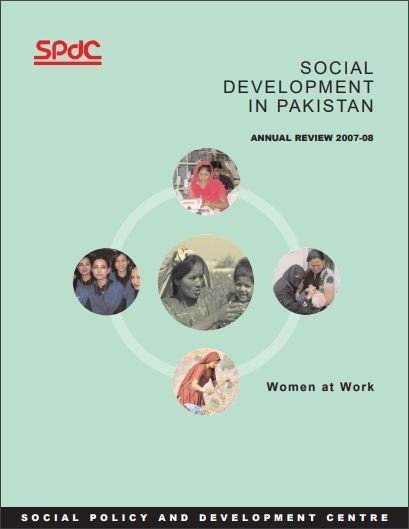
This study explores the role of women in Pakistan’s labor force, highlighting barriers to participation, wage disparities, and the challenges of balancing work with social responsibilities. It examines structural and cultural constraints that limit women’s economic opportunities, while identifyi ..
Knowing the Unknown: Federal Budget 2009-10 ..
Mazdoor Bachoun ki Falah-O-Bahbood Kaise? ..
Street Children, Aik Ahem Samaji Masala ..
This study is the first attempt to quantify the extent of multidimensional poverty in the context of Pakistan. It involves developing multidimensional poverty indices (headcount, poverty gap, and poverty severity) and comparing them with the traditional income approach. It has been estimated, using ..
This paper estimates household vulnerability as “expected poverty” using cross‑sectional survey data, given the absence of long‑term panel datasets. Results show that about 52 percent of the population was vulnerable in 2004-05, with rural households facing higher risk than urban. While mone ..
The Changing Security Spectrum of South Asia: Consequences for SAARC ..
Nominal and Real Devaluation Nexus & Two Econometric Approaches for Pakistan ..
Stock Market Development and Economic Growth: ARDL Causality in Pakistan ..
Does Foreign Remittances Reduce Government Spending? Long and Short Run Phenomenon ..
Estimating the Black Economy through a Monetary Appraoch: A Case Study of Pakistan ..
Does Globalization Benefit the Poor? Evidence from Pakistan ..
Macroeconomic Determinants of Poor's Happiness: A Case Study of Pakistan ..
Either Captial Account Opennes Regressive or Progressive: Economietric Evidence from Pakistan ..
Bi-Directional causality Between FDI & Savings: A Case Study of Pakistan ..
Direct Foreign Investment and Income Distribution: A Case Study for Pakistan ..
Mapping the Terrain: The Activities of Faith-based Organizations in Development in Pakistan ..
Imperatives for the Economy: Federal Budget 2008-09 ..
Mehngai, Ghurbat, Berozgari, Loadshadding: Karachi Sheher ki Awan ke Bunyadi Masail aur unke Asarat ..

This SPDC study captures the perspectives of district officials and Nazims on Pakistan’s local governance system. Through semi‑structured interviews, it explores satisfaction with the system, coordination across government tiers, financing challenges, development planning issues, and the role of ..
This paper uses Pakistan Social and Living Standard Measurement Survey (PSLM) 2004-2005 to examine labour market earnings. The earning function controls for educational qualifications in addition to years of schooling and other conventional correlates. The estimated returns to additional years of sc ..
The report analyzes Pakistan’s fiscal policy stance in the 2008‑09 budget, focusing on revenue mobilization, expenditure priorities, and deficit management. It highlights the challenges of balancing growth and stability amid rising inflation, energy shortages, and external pressures. The report ..
The study evaluates the economic and social effects of microfinance programs, analyzing income, expenditure, child education, and women’s empowerment outcomes. Based on survey data from 3,400 respondents across six major institutions, the findings suggest microfinance helps smooth consumption and ..

This research focuses on changes in the poverty status of rural households to explore the main determinants of upward and downward income and poverty mobility. The study uses panel survey data for District Badin, which is among the poorest districts of the Sindh province. Households interviewed earl ..
In this study, SPDC provides updated poverty and inequality estimates for 2004–05 using unit‑level household survey data and a consistent methodology for national and regional poverty lines. It highlights shifts in poverty incidence, regional disparities, and changes in income distribution, offe ..
Ideological Divide of theNonprofit Sector in Pakistan ..
Long-Run and Short-Run Linkage between Financial Development and Poverty Reducation in Pakistan ..
Stock Returns and Inflation: An ARDL Econometric Investigation Utilizing Pakistani Data ..
The Changing Security Spectrum and Issues of Cultural Identitity ..
Remittances and Financial Sector's Performance: Under Two Alternative Approaches for Pakistan ..
An Empirical Investigation of the Relationship between Trade Liberalization and Poverty Reduction: A Case for Pakistan ..
Trade and Inequality Nexus in Pakistan: Under Investigation of Alternative Techniques ..
Dynamism in the Gender Wage Gap: Evidence from Pakistan ..
Rural-Urban Income Inequality under Financial Development and Trade Openness in Pakistan: The Econometric Evidence ..
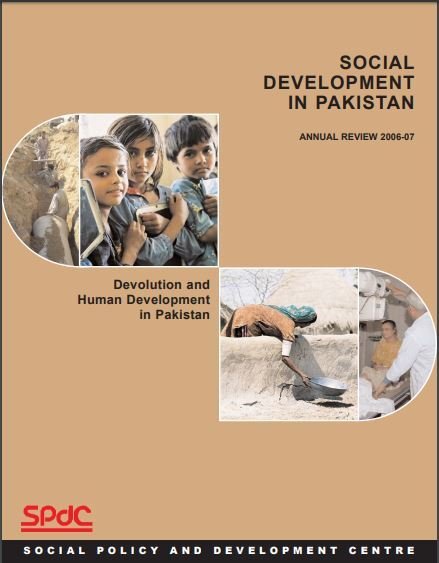
The Annual Review analyzes how Pakistan’s devolution reforms have influenced human development outcomes across provinces and districts. It explores the opportunities and challenges of decentralization in improving education, health, and social services, while assessing the capacity of local govern ..
Indentifying Causes of High Inflation ..
Understanding the Making of the Failed States Index ..
ABC of the Economics of Tariffs and Import Quotas ..
Large Subsidies with Little Relief ..
Does Globalisation Benefit the Poor? Evidence from Pakistan ..
The expansionary economic policies of the government and of the central bank (State Bank of Pakistan – SBP), which on one side resulted in impressive economic performance, stimulated a rise in the Consumer Price Index (CPI) on the other. This initiated a debate on the determinants of the recent in ..
This study examines how trade liberalisation has influenced gender disparities in Pakistan across labour markets, education, and health from 1973 to 2005. Using econometric analysis, it identifies key determinants such as trade openness, per capita GDP, and the ratio of girls’ to boys’ schools. ..

The report provides district‑level poverty estimates for Pakistan by combining PSLM and HIES 2004–05 data and applying small area estimation methods. Separate consumption functions for urban and rural areas are used to predict poverty incidence across provinces and districts. The results offer a ..

This study tracks changes in access and inequality in education using the District Education Index (DEI), a composite measure of enrollment and literacy. Drawing on the 1998 Population Census and PSLM 2005 survey of 76,500 households, the analysis shows notable progress in enrollment and literacy ra ..
The objective of this research is to update district-wise Indices of Multiple Deprivations 1998, using the latest available data of the Pakistan Social and Living Standards Measurement Survey 2005 (PSLM, 2005). The period from 1998 to 2005, offers an opportunity to evaluate performance of the presen ..
The purpose of this research is to highlight changes in human development status of districts of Pakistan during the period between 1998 and 2005. The standard summary measure, Human Development Index (HDI) proposed by UNDP, is applied at the district level. District HDIs, estimated for both periods ..
The elimination of textile quotas in 2005 reshaped Pakistan’s trade with the European Union, intensifying competition with China, India, and Turkey. This policy brief reviews actual export performance since quota removal, assesses challenges facing the textile and clothing sector, and identifies p ..
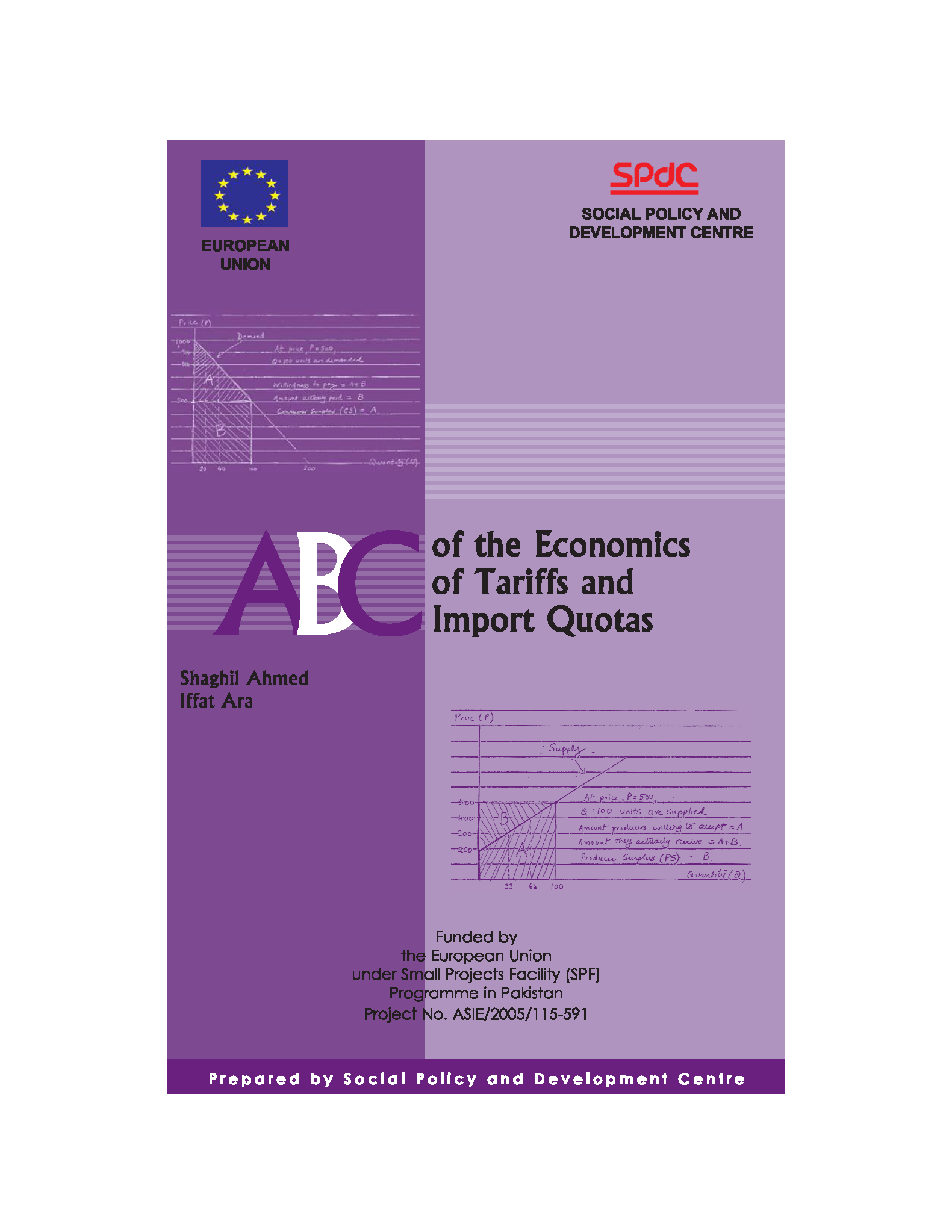
Pakistan faces the critical task of shaping a comprehensive export strategy that drives long‑term growth and higher per capita incomes while safeguarding poverty reduction and equity. Trade policy debates remain central to this challenge, yet public understanding of the basic economics of trade ba ..
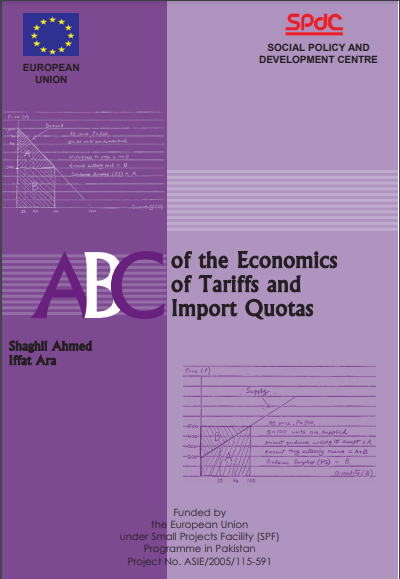
This booklet serves as a primer on the fundamental concepts of trade policy, explaining how tariffs and import quotas shape domestic markets, consumer welfare, and government revenues. It outlines the mechanics of protectionist measures, their economic costs and benefits, and the implications for ef ..
Exports, Productivity and Economic Growth in Pakistan: A Time Series Analysis ..
Does Inequality Matter for Poverty Reducation? Evidence from Pakistan's Poverty Trends ..
This report examines the complex relationship between trade liberalization, economic growth, and poverty reduction in Pakistan. It analyzes how tariff reforms, market openness, and structural adjustments have influenced income distribution and social development. The study highlights the need for co ..
The Review represents the efforts of SPDC to objectively present the situation with respect to the state of the economy. It points out the improvements in economic performance and an increase in the economy's sustainable rate of growth over the past few years, which are in part a result of the impro ..

The study estimates the size of Pakistan’s black economy and examines its implications for macroeconomic policy. Using a modified monetary approach, it assesses how tax and tariff reforms - particularly those of the 1990s - have influenced unrecorded economic activity and tax evasion practices. Th ..
The research examines how fiscal, monetary, and structural reforms have shaped total factor productivity (TFP) in Pakistan. Using recent data, it analyzes sector‑wise productivity trends in the context of wide‑ranging reforms since 1999-2000, including changes in exchange rates, interest rates, ..
Determinants of Health Care Expenditure in Pakistan ..
Is Search of Poverty Predictors: The Case of Urban and Rural Pakistan ..
Short-Run Effects of Exchange Rate Volatility on the Volume of Exports: A Case Study for Pakistan ..
Is Pakistan's Manufacturing Sector Competitive? ..
Agricultural Terms of Trade in Pakistan: Issues of Profitability and Standard of Living of the Farmers ..
How External Shocks and Exchange Rate Depreciations Affect Pakistan? Implications for Choice of an Exchange Rate Regime ..
Pakistan in Quota-free Textile Trade ..
Moving from Tax to Expenditure Reform ..
Inflationary Risks to Economic Gains - ..
This report is motivated to fill the gap in policy analysis by estimating the human capital index (HCI) at the provincial level from 1982-83 to 2001-02. The accumulated human capital is estimated using the Labourincome based methodology. The index is computed for the three sectors of the economy: Ag ..
This study examines the profound social and economic challenges faced by cancer patients and their families. Drawing on survey evidence, it highlights the heavy financial costs of treatment, the strain on household resources, and the broader social impacts of coping with long‑term illness. The fin ..
The Annual Review presents an objective assessment of Pakistan’s economic performance. It highlights impressive growth achievements and the government’s role in driving expansion, while warning of emerging signs of overheating such as rising inflation, widening deficits, and external pressures. ..
This study uses large‑scale simulations to quantify the economic losses from the October 8, 2005 earthquake. The analysis shows that growth could initially decline by 1.5 percentage points, with permanent losses in capital, consumption, and income if reconstruction is absent. Under a $5.8 billion ..
The study develops a consistent framework for compiling provincial accounts in Pakistan, covering the period 1973-2000. Using national income data and sectoral indicators, it estimates provincial GDP and growth trends, providing insights into regional disparities and structural changes over nearly t ..
This report compiles updated gender‑segregated indicators to track progress on equality and human development in Pakistan. Recognizing that achieving gender equality is a prerequisite for sustainable development, the study addresses the lack of reliable, regularly updated data by presenting indica ..
Health Demand and Outcomes in Pakistan ..
Factors Influencing of Girls' Primary Enrolment in Pakistan ..
Why Private Investment in Pakistan has Collasped and How it can be Restored ..
Zakat as a Social Safety Net: Exploring the Impat on Household welfare in Pakistan ..
On the Causal Relationship between Government Expenditure and Tax Revenue in Pakistan ..
Burden of Stabilization on Provinces and Its Implication on Social Sectors ..
Macroeconomic Reforms and Return to Human Capital in Pakistan ..
The Plight of Working Mothers in Pakistan: Advantages and Disadvantages of a Joint Family System ..
This report investigates whether economic growth alone can reduce poverty in Pakistan. It evaluates the limits of growth‑driven strategies, highlighting persistent inequalities and the need for complementary policies in social protection, resource allocation, and human development. Analyzing the i ..
The Annual Review offers an objective assessment of Pakistan’s economic performance, acknowledging recent gains while identifying areas of weakness that demand policy attention. It highlights improved macroeconomic indicators and stronger investment flows, but also warns of inflationary pressures ..

The study explores the complex linkages between poverty, economic growth, and inequality from 1979 to 2002. Using time‑series data and a multi‑variate regression framework, it estimates poverty elasticity with respect to growth and inequality, and identifies macroeconomic and structural correlat ..

The research identifies non‑monetary correlates of household consumption to predict poverty incidence using survey data. Separate welfare functions for urban and rural areas are applied to provincial and district levels, enabling poverty estimation through light monitoring tools such as the CWIQ. ..
This working paper traces the evolution of Pakistan’s nonprofit sector, examining its historical roots, institutional development, and role in social service delivery. It highlights the sector’s growth in response to gaps in public provision, its diverse organizational forms, and the challenges ..
Nonprofit Sector in Pakistan: Government Policy and Future Issues ..
Gender and Public Spending on Education in Pakistan: A Case Study of Disaggregated Benefit Incidence ..
Why Private Investment in Pakistan has Collapsed and how can it be Restored ..
Expenditure, depriciation, allowances, model, economy ..
Tax Holidays Cost of Capital and Investment Behaviour: Jorgenson Approach ..
Is Female Illiteracy a Determinant for Child Malnutrition: An Analyses of Developing Countries ..
Budgets and Fiscal Decentralization: A Case Study of Sindh ..
Macroeconomic Reforms and Total Factor Productivity Growth in Pakistan: An Empirical Analysis ..
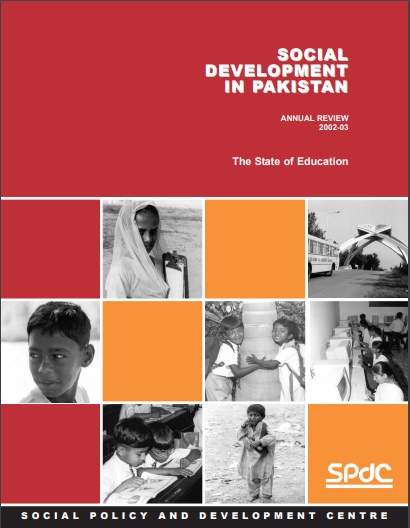
This volume of Social Development in Pakistan focuses on the state of education, examining progress and persistent challenges in access, quality, and equity. It highlights how structural weaknesses in Pakistan’s education system—ranging from resource constraints to governance gaps—continue to ..
Mulki Maeeshiyat, Karkardagi, Ihdaaf aur Nataij: 2003-04 ke Iqtesadi Survey aur Wafaqi Budget ki Roshni main Quomi Mansooba bandi ka Jaeza ..
Sarkari Iqtesadi Jaeze aur Reports-Haqaeq kiya hain? Intehai Musbat Aadad-o-Shumar ke Bawajood Buniyadi Moashi Khamiyan door nahi ki ja Sakeen ..
Prospect for Public-Private Partnership in the Delivery of Immunization ..
The report examines the scale and dynamics of Pakistan’s external debt, analyzing its underlying causes, structural complexities, and long‑term implications for economic stability. It highlights how persistent borrowing, balance of payments pressures, and policy choices have contributed to risin ..
In a knowledge‑driven economy, unequal access to education fuels poverty and inequality. SPDC’s study introduces a District Education Index (DEI) to measure disparities across Pakistan, linking education outcomes with district‑level economic development. The findings show how exclusion from ed ..
Growing concern in developing economies highlights how spatial and regional disparities in income, activity, and social indicators can fuel instability. This SPDC study documents shifts in regional inequality in Pakistan from the early 1980s to the late 1990s, analyzing provincial and district‑lev ..
This study explores the role of microfinance in reducing poverty in Pakistan, assessing its impact on household welfare and economic empowerment. Access to small loans can transform lives by enabling the poor to invest in livelihoods, education, and health. By highlighting both opportunities and cha ..
This paper examines the relationship between education and fertility in Pakistan, highlighting how schooling influences reproductive choices and demographic outcomes. Using empirical evidence, it demonstrates that higher levels of education—particularly for women—are strongly associated with red ..

This report estimates the economic benefits of education in Pakistan using household survey data from 1990-91 and 2001-02. Results show that returns are highest for higher secondary and tertiary education, while gains from primary schooling have declined. Private schooling and English‑medium instr ..
This paper estimates the extent of undernutrition in urban Pakistan in terms of calorie consumption after controlling heterogeneity in household characteristics. It also evaluates the sensitivity of price and income shocks on incidence, depth and severity of undernutrition. Approximately 27 percent ..
Geographical targeting can make poverty alleviation more effective by directing resources to the areas most in need. Yet Pakistan has lacked systematic poverty maps or deprivation indices, leaving interventions ad‑hoc and fragmented. This study develops a Spatial Deprivation Index (SDI) using cens ..
Zakat has long been viewed as a tool for poverty alleviation and social justice. This report examines the impact of the Zakat program, assessing its effectiveness in reaching the poor and reducing vulnerability. By analyzing distribution mechanisms and outcomes, the report highlights both the streng ..
This study explores how patterns of land ownership and concentration in rural Punjab shape educational outcomes. Drawing on data from the Agricultural Census (2000) and Population Census (1998), it highlights how landlordism and landlessness hinder school life expectancy, perpetuating poverty and in ..

This study investigates the dynamics of poverty and inequality during Pakistan’s first decade (1988-1999) of Structural Adjustment Lending (SAL). Using comparable household surveys, it finds poverty incidence rose from 24% to 30% and the Gini coefficient from 0.34 to 0.38. Decomposition analysis s ..
The report presents a review of the Economic Survey 2002–03 and the Federal Budget 2003–04. Drawing on official data and independent sources, the report offers an objective assessment of the economy, acknowledging recent gains while cautioning against overly optimistic judgments. It highlights a ..
Different studies on poverty often report conflicting results, even when relying on the same data and methods. Such inconsistencies weaken the credibility of poverty estimates and complicate comparisons over time. To address this challenge, greater consensus is needed among researchers on the criter ..
Trade, Investment and Growth Nexus in Pakistan: An Application of Cointegration and Multivariate Causality Test ..
Socioeconomic and Environment Conditions and Diarrhoeal Disease among Children in Pakistan ..
The Periods of Disinvestment in Different Sectors of the Pakistan Economy ..
Relationship Between Health Expenditure and GDP in an Augmented Solow Growth Model for Pakistan: An Application of Co-integration and Error Correction Modelling ..
Income Patterns of Woman Workers in Pakistan- A Case Study of the Urban Manufacturing Sector ..
Changes in Returns to Education in Pakistan: 1990-2002 ..
The objectives of this study are to: document the size, scope, internal structure, finance and legal position of the nonprofit sector in the country; examine the relations between the nonprofit sector and government and identify the ways in which this relationship can be improved; to improve public ..
Non-profit Sector in Pakistan: Government Policy and Future Issues ..
Foreign Capital Inflows and Domestic Savings in Pakistan: Co-integration Techniques and Error Correction Modelling ..
Measurement of Cost of Capital for Foreign Direct Investment in Pakistan: A Neoclassical Approach ..
Stabilization Policy vs Growth Oriented Policy: Implication for the Pakistan Economy ..
Political Economy of Fiscal Reforms in the 1990s ..
Dynamic Consequences of the1997 National Finance Commission Award: Provincial Social Sector Expenditures ..
The Long run and Short run Impact of Exchange Rate Devaluation on Pakistan's Trade Performance ..
Dynamic Consequences of the1997 National Finance Commission Award: Provincial Social Sector Expenditures ..
Crowding Out Hypothesis in a Vector Error Correction Framework: A Case Study of Pakistan ..
Districts Level of Development as Push and Pull Factor in Inter- District Migration in Pakistan ..
This study explores the interplay between economic growth, income inequality, and poverty reduction in Pakistan. It assesses whether growth has translated into broad‑based improvements in living standards, highlighting persistent disparities across regions and social groups. By examining structura ..
The Feasibility of Tax Revenue Targets ..
Sarmaye ki Gher Munsifana Taqseem aur Adam Masawaat: Pakistan main Ghurbat ke Izafe ki Asal Wajoohaat hain ..
Sarmaye ki Gher Munsifana Taqseem aur Adam Masawaat: Pakistan main Ghurbat ke Izafe ki Asal Wajoohaat hain ..
Contradictory Monetary and Fiscal Policies ..
Foji aur Jamhoori Hukoomatain, Aik Iqtesadi Balance Sheet ..
General Pervez Musharraf ki Hukoomat ke Teen Saal ..

Public budgets often obscure how resources are actually allocated across departments. This study restructures Sindh’s budget data from the traditional head‑of‑account format into a department‑wise framework, making expenditures more transparent and policy‑relevant. By aligning spending wit ..
Report presents the first comprehensive study to measure spatial differences in living costs across 25 major urban centers in Pakistan relative to the national average. Utilizing retail price data for 274 commodities and services alongside household expenditure patterns, the report reveals a signifi ..

This study tracks TFP trends in Pakistan from 1972-73 to 1997-98, showing that the slowdown in growth during the 1990s was driven not only by weaker investment but also by declining productivity. Sectoral analysis explores where stagnation occurred and identifies structural factors behind the loss o ..
The nonprofit sector plays a vital role in advancing social development, yet its scale and diversity in Pakistan remain under‑documented. This SPDC study provides a comprehensive profile of nonprofit organizations, mapping their size, scope, and contributions across key areas such as education, he ..
The Changing Scenario of Development Priorities ..
Moashi Bohran Tashweeshnak Hai: Mayus kun nahin ..
Budget: Kiya Maliyati Wasail ke Intezam mein Tabdeeli Kare Ga ..
Hifazati teekay: Pasmanda Ilaqoon per Tawajjo kem kiyon> ..
Understanding Afghanistan under the Taliban ..
Access is only the Beginning: Quality is the Key ..
Girl Child Toady - A Woman Tomorrow ..
Making the Harm Visible - An Affront to Civilisation ..
Putting Sindh's Grievances in Perspective ..
Gurbat Khan Garib Tar Dauh Veenar Dagg (Sindhi Article) ..
Poverty Alleviation Programmes: great expectations ..
Devastating Effect of Reducing Public Investment on Economic Growth ..
Pakistan maen Garib Parwar Budget Waro Adhoro Khuwab ..
Subai Taraqiyati Programme - Aik Jaeza ..
Budget Planning at the Time of Drought ..
Sarkari Saymaya Kari main Kami: Maeeshiyat per Tabha kun Asraat ..
Khushk Sali main Budget ki Mansooba-bandi ..
Pakistan maen Garib Parwar Budget Waro Adhoro Khuwab ..
Devolution and Fiscal Decentralisation ..
New Budget: Challenges and Options ..
Governance, Decentralisation and Poverty: The Case of Pakistan ..
Internal Migration: The Case of Sindh Province ..
Growing Rural Poverty and Budget 2001-02 ..
Macroeconomics and Social Development ..
Pani ka Bohran Tareekh ke Tanazir Main ..
Rawan Mali Saal ki Budget Tajaveez Gher Haqiqi Hain ..
Fiscal Deficit: Target Missed but Performance much Better ..
A Struggle to Achieve Economic, Social Rights ..
Sarmaya Karon main Aitemaad ka Fuqdaan ..
Zaree Karkerday aur Sarkari Policy ..
Taxon ki Amadni, Takhmeene main Saqam ..
PSDP: Understanding Development Priorities ..
Agricultural Performance, Public Policy ..
Maeeshiyat main Gher Rawaeeti Shobay ka Kirdaar ..
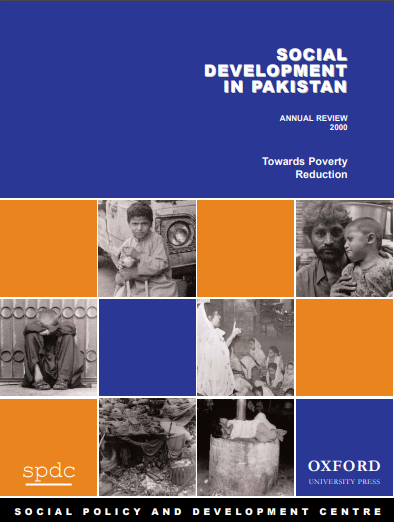
The Annual Review examines Pakistan’s strategies for reducing poverty, assessing the effectiveness of growth‑driven approaches alongside social sector interventions. It highlights persistent challenges in inequality, resource allocation, and human development, while emphasizing the need for inte ..
America aur Kabul main Malbay ke Dher ..
America aur Kabul main Malbay ke Dher ..
Gher Riwaeeti Maeeshiyat-Ghurbat ke Khateme main Moaven ..
Jadeed Daur main Panapne ka Tareeqa ..
What Muslim Societies are Grossly Lacking ..
The report examines the relationship between social development and economic growth in Pakistan, testing whether improvements in education, health, and welfare indicators can be explained by changes in per capita income. Using a composite Social Development Index (SDI) built from consistent time‑s ..
Microcredit has been promoted as a pathway out of poverty, but its real impact depends on the experiences of borrowers themselves. SPDC’s study draws on consultations with poor households in Pakistan, exploring how access to credit shapes livelihoods, coping strategies, and empowerment. By highlig ..
The study uses household income and expenditure surveys to measure poverty incidence across Pakistan, highlighting variations by region and over time. The findings reveal how economic shocks and structural factors shape household welfare, offering evidence to guide targeted interventions and strateg ..
The report analyzes the Federal Budget 2001–02, assessing how stabilization measures such as deficit control and revenue mobilization interact with growth objectives. By examining expenditure priorities and macroeconomic trade‑offs, the report provides evidence to inform policies that safeguard ..
The spillover effects of the Afghan conflict have reshaped Pakistan’s economic landscape, creating both challenges and policy dilemmas. SPDC’s study assesses the economic impact of the Afghan war, examining pressures on trade, fiscal stability, and social welfare. By outlining strategic options, ..
Elasticity and Buoyancy of Major Taxes in Pakistan ..
Dynamic Consequences of 1997 NFC Award: Provincial Social Sector Expenditure ..
Stabilization Policy vs Growth Oriented Policy: Implications for the Pakistan Economy ..
Immunization: Is it a Gender or Poverty Issue? ..
Galla-bani: Ghurbat ki Rok Thaam ka Moassan Zariya ..
Policy Research and Its Implementation: Pakistan and Canada ..
Brief on Annual Review of SPDC for 2000 on Towards Poverty Reduction ..
Strong governance is central to achieving sustainable growth and equitable development. The report outlines the core elements of economic governance - including transparency, accountability, fiscal discipline, and institutional capacity - that shape policy effectiveness in Pakistan. ..
Developed by the Macroeconomic Framework Sub‑Group of the Economic Advisory Board, this SPDC study revises projections in light of updated data and institutional feedback. It presents a medium‑term roadmap for Pakistan’s economy, outlining key indicators to guide fiscal, monetary, and external ..
Social safety nets are critical for protecting vulnerable households, yet their effectiveness depends on design and delivery. This study evaluates Pakistan’s key safety net programs, assessing coverage, targeting, and impact on poverty reduction. By identifying strengths and gaps, the report provi ..
The report examines how macroeconomic shifts shaped poverty trends in Pakistan, explaining the sharp decline in the 1980s and the significant rise in the 1990s. It develops medium‑term projections under a “business as usual” scenario, assessing likely poverty outcomes. The analysis also consid ..
This study provides guidelines for developing PPP case studies in health and illustrates them through a partnership between a private medical college and a public hospital in Abbottabad. The case highlights how synergy, strong leadership, shared objectives, governance reforms, legal safeguards, and ..
The Social Policy and Development Centre (SPDC) has a tradition of bringing out a Research Report every year containing analysis of the proposals for expenditure and taxation in the Federal Budget from the viewpoint of their impact on the economy and people of Pakistan. This year’s report contains ..

The Social Action Programme marked a major commitment by Pakistan’s government and donors to expand access to essential social services. While SAP aimed to improve service quality, efficiency, and governance through public‑private partnerships, experience revealed serious gaps in government perf ..
Food Pricing Strategy: A Fundamental Dilemma ..
The Missing Element of Public Expenditure Management ..
Unsustainability of the Balance of Payments ..
Crops Pattern in Pakistan: Some Consequences ..
Karachi Sheher Ki Kachi Abadian Or Unki Halat-e-Zaar ..
Alarming Level of Poverty in Pakistan ..
Major Economic Problems Faced by the Sub-Continent ..
Impact of Economic Factors on Diarrhoeal Disease ..
Consequences of Malnutrition and Poverty in Pakistan ..
True Meaning of Decentralisation: Empowerment of People or Concentration of Power in Local Elite ..
Budgetary Allocations for Rural Development ..
Microfinance: A panacea for poverty? ..
The International Experience of Micro- finance ..
Potentials of the Poverty Elimination Strategy ..
Pro-Poor Programme: Is that a New Promise ..
Poverty Alleviation through Food Stamps ..
What is the True Fiscal Deficit in 1999-2000? ..
Budgetary Imperatives and Strategy ..
What Explains Fall in the Inflation Rate ..
Federal Transfer to Provinces: Some Growth at Last ..
From Pro-Women Slogans to Anti Women Acts ..
Revenue Dreams: (The Reforms Agenda of the Budget) ..
Maleeyati Khasara - Asal Soorat-e-Haal (urdu) ..
Tawaqqo'aat aur Umeedon ka Budget (Urdu) ..
Ghareebon ke Liye Package - Saheeh Simt Main Pehla Qadam (Urdu) ..
Macroeconomic Developments and Poverty ..
Budgetary Outcome in 1999-2000: Fiscal Deficit Exceeds Target ..
The Microcredit Bank and Poverty Reduction: Some Policy Issues ..
Feasibility of Macroeconomic Targets for 2000-01 ..
Balance of Payments Scenario in 2000-01: Transparency Admist Uncertainty - ..
Wifaq ney Soobai Ruqoom ki Muntaqli main Izafa ker diya (Urdu) ..
Mo'aashee Bahalee Se Ziyada Mo'aashee Ishtehkam Kee Koshish (Urdu) ..
PSDP Reflects No Departure From Past Development Priorities ..
Budget Khasara: Aadad-o-Shumar Kiya Kehtey Hain (Urdu) ..
Wifaqi Budget 2000-01: Zakat aur Ghurbat ka Khatema (Urdu) ..
Microcredit Bank: Hukumati Policy Kiya Hogi (Urdu) ..
Awaam Mini-Budget ke liya Tayyar Rahian (Urdu) ..
Moaashi Istehkaam: Khawab se Tabeer Tek ..
Moaashi Mansooba-bandi: Naey Ihdaaf ..
Moaashi Taraqi - Khawateen ko Nazar Andaaz Na Kiya Jae ..
Are Genetically Modified Food a Solution for Poverty ..
Ghurbat Mitao Programme: Mansoobay Muqarrara Muddat main Mukammal Kiye Jaien Gay ..
Issues in Fiscal Decentralisation - I ..
Issues in Fiscal Decentralisation - II ..
Issues in Fiscal Decentralisation - III ..
Civil Society Perspectives on Devolution ..
Institutional Reform for Devolution ..
Poverty rose sharply during the 1990s, with nearly one in three families living below the poverty line. Recognizing this urgent challenge, SPDC presents a comprehensive national poverty reduction strategy that goes beyond short-term alleviation programs. This paper highlights the structural causes o ..
Macroeconomic Framework for Debt Management ..
Political Perspectives on Devolution ..
Political Perspectives on Devolution ..
The Social Action Programme (SAP), once envisioned as Pakistan’s flagship initiative for improving education, health, and basic services, fell short of expectations due to weak design and implementation gaps. SAP‑II seeks to build a stronger policy environment for social services by shifting foc ..
Institutional Reform for Devolution - II ..
Taraqqiati Tarjeehat mein Tabdeeli ..
A Better Approach for a Results-Oriented Fiscal Policy: Multi-year Budgeting Framework ..
Teen Sala Macroeconomic Mansooba: Mehaz Kagzi Karwai ..
Tawazun-e-Adaigi ki Mojuda Soorat-e-Haal ..
Public Works Programme - Aik Naya Wada ..
Ikhtiarat ki Taqseem: Mansoobay ke Aham Nukaat ..
Ikhtiarat ki Taqseem: Chend Fikri Zaviye ..
Ikhtiarat ki Taqseem: Gher Mamooli Tezi ki Zaroorat Nahin ..
The City of Karachi: Planning and Managing for Urban Development ..
Ikhtiarat ki Taqseem: Mali Wasail - Aik Aham Mas'la - ..
Impediments to Improvements of Social Services in Pakistan ..
Ikhtiarat ki Taqseem: Mahireen ki Rai Kiya Hai? ..
Fiscal Decentralisation: Lessons from the South Asian Experience ..
Ikhtiarat ki Taqseem: Siyasi Jamatein Kiya Kehti Hain - ..
Kiya Moaashi Islaahat ki Tawaqoo Puri Ho-sakey-gi? ..
Some Issues of Governance in Pakistan ..
Ifrat-e-Zar Mein Kami ke Nataij Kiya Hongey? ..
Pakistan's Trade Performance vis-à-vis its Major Trading Partners ..
Maliyati Khasara: Pehle se Kahin Ziyada ..
Lethargic Growth in Health Sector Infrastructure in 1990s ..
Adaad-o-Shumar mein Ulat Pher Danista Nahin Ki Gayee ..
Khushal Bank: Ghurbat ka Khatima Kar Sakey Ga ..
CBR ka Aainda Hadaf: Haqeeat se Bahut Door Nahin ..
Co-integration & Causality Between Money Supply and Inflation: A Case of Pakistan ..
Taveel-ul-Muddati Budget Saazi: Umeed Afza Mansooba ..
Perils of a 'chastened' parliament ..
Jeeniati Inqelab: Bhook aur Iflas ka Khatima ker dega ..
Role of Livestock in Rural Poverty Alleviation ..
Proceedings of the Seminar on Prospects and Policies for the Future ..
Kabul Khandraat aur Mazoor afrad ka shehr ban gaya ..
Ghareeb Logon ka liye Meyari Hospitaloon ki tadaad bahut kem hai ..
Pakistani Maeeshat Tabahi ke Dahane Per ..
In Defence of Democracy: Not a Matter of Choice but a Question of Our Survival ..
An Econometric Evaluation of Pakistan's National Education Policy 1998-2010 ..
Pakistan's Ranking in Social Development: Have We Always Been Backward ..
This volume of Social Development in Pakistan examines how recurring economic crises have shaped the trajectory of social progress in the country. It highlights the strain that fiscal imbalances, inflation, and declining growth place on education, health, and poverty reduction, often forcing governm ..
SPDC’s study provides an independent assessment of the federal budget 1999-2000, examining revenue measures, expenditure priorities, and their implications for growth and equity. By highlighting trade‑offs and policy gaps, the report offers evidence to strengthen fiscal management and guide futu ..
Reliable demographic data is vital for planning and policy. This study reviews Pakistan’s 1998 Population Census, analyzing its findings, methodology, and implications for resource distribution and development. The report provides evidence to inform debates on census quality and its role in shapin ..
The report provides an independent review of the 1999-2000 provincial budgets, examining revenue mobilization, expenditure priorities, and intergovernmental transfers. By highlighting key trends and policy implications, the report offers evidence to strengthen provincial fiscal management and improv ..
This study provides additional evidence on poverty trends, using econometric modeling to explain shifts in incidence and distribution across time. By refining projections and testing alternative scenarios, the report offers insights into the drivers of poverty reduction and persistence, supporting m ..
This study evaluates the impact of adjustment policies on Pakistan’s social development, focusing on poverty, education, health, and welfare outcomes. By analyzing trade‑offs between stabilization and human development, the report provides evidence to guide policies that protect vulnerable group ..
Economic downturns affect not just fiscal stability, but they also reshape livelihoods and social welfare. This research examines the social consequences of Pakistan’s economic crisis, analyzing its effects on poverty, employment, and human development. ..
Wheat Crises in Pakistan: A Case of Government Failure ..
Wheat Pricing Policy: A Risk to Food Security ..
Economic Success and Technology: How Pakistan Can Reap the Benefits ..
Federal Budget 1999-2000: Desirable Economic Agenda for the Coming Century ..
Budget 1999:2000: Towards Economic Revival ..
Does the Budget Have a Human Face? ..
Budget 1999-2000: A Brief Analysis of a Quasi Budget ..
Federal Budget 1999-2000: Implications for Provincial and Local Governments ..
Sectoral Priorities in Development ..
Is Girls Education Really the Best Investment? ..
The Resource Crunch and Social Sector Expenditures ..
What Explains the Shortfall in Federal Transfers to Provinces ..
Management of Finances by Provincial Governments ..
Alarming Rise in External Indebtedness ..
The Financial Outlook for Provincial Governments in 1999-2000 ..
Provincial Governments and the Budget Deficits ..
The Buoyancy in Provincial Revenues1 ..
Is there a Need for Policy Reforms in Agriculture? ..
Provincial Budgets and Rural Development ..
GST: A Retreat from the Battlefield Yet Again ..
Political Economy of Cotton Pricing ..
Dynamics of Inflation in 1999-2000 ..
The Importance of the Commonwealth to the Pakistan Economy ..
International Population Scenario: Pakistan Entering the New Millenium ..
Fiscal Imbalances: A Mother Problem ..
Private Tuition Syndrome: Remedy or Revile ..
In the late 1990s, Pakistan faced mounting social and economic challenges that demanded urgent policy attention. SPDC presented this statement to the visiting Commonwealth Delegation to highlight the country’s poverty trends, fiscal constraints, and governance issues. The paper underscores the nee ..
Pakistan’s balance of payments remains the foremost challenge to economic revival, with debt relief set to expire by December 2000. Without reducing the current account deficit, the country risks severe import compression and stalled growth, even if further relief is secured. This note reviews the ..
Broad-Basing of GST: The Strategy for Transition ..
Facilitating the Provision of Farm Credit: The Role of Interlocking Transactions Between Traders and Zamindars in Crop Marketing Systems in Sindh ..
Fifty Years of Public Finance in Pakistan ..
Persistent disparities between women and men in education, health, and economic participation continue to constrain Pakistan’s social and economic progress. Evidence shows that gender inequality not only limits productivity but also undermines broader development outcomes such as child survival, n ..
Pakistan's Ranking in Social Development: Have We Always Been Backward? ..
Impediments to Social Development in Pakistan ..
Impediments to Improvement of Social Sectors in Pakistan ..
This report provides a comprehensive overview of Pakistan’s social sector, tracing its evolution through key initiatives such as the Social Action Programme (SAP) and subsequent reforms. It underscores the urgency of addressing persistent gaps in education, health, and basic services, while stress ..
The study ranks Pakistan’s districts using 37 indicators across education, health, housing, agriculture, transport, and labor to assess social and economic progress. Findings show education, especially female literacy and enrollment, as the strongest driver of social development, while housing wea ..
This report reviews SKAA’s changes in lease and development processes, highlighting decentralization of decision‑making, streamlined procedures, and the role of community‑based organizations in mobilization. Mobile lease camps and one‑window operations have improved access for residents, whi ..
This report compiles a dozen essays relating to the state of the economy, budgetary trends, accuracy of budgetary proposals, evaluation of the taxation proposals, development priorities and the macro economic impact of the budget on growth, inflation, savings and investments, external sector, povert ..
An Overdose of Superficial & Symbolic Policies ..
Post Nuclear Economic Policy Alternatives ..
Budget - An Exercise In Realism Or Fantasy? ..
The Budget And The National Agenda- Diverging Paths ..
Budget 1998-99: Will It Stabilize Inflation ..
Budget 1998-99: Signaling Shifts In Growth Strategy ..
Strategy Of Resource Mobilisation: Does It Offer Anything New ..
A Year Of Resurrecting Supply Side Economics ..
Imponderables Of Budget Projections ..
Budget 98-99, Devaluation and External Sector ..
‘Hard' Deficit Targets, But ‘Soft' Taxation ..
Development Priorities in the 1998-99 PSDP ..
Provincial Budgets 1998-99 and Social Sector Allocations ..
Impact of the Budget on Poverty-Limited Opportunity for the Poor ..
Pakistan in the ‘Debt-Trap' Can We Still Find a Way Out of This Deadly Quagmire? ..
This paper examines the challenges provinces face in raising revenues, highlights structural gaps in taxation and fiscal capacity, and proposes strategies to broaden the revenue base. It finds that linking provincial and federal tax administration through a shared computerized database can boost rev ..
Non‑governmental organizations (NGOs) play a vital role in delivering social services and supporting development in Pakistan, yet their financial sustainability remains a pressing concern. This paper examines the fiscal challenges NGOs face and proposes measures within the 1998-99 federal budget t ..
Interlocking Transactions in Agriculture, Sindh, Pakistan ..
Macro Trends in Corporate Profitability in Pakistan ..
Comparing the Seed Cotton and Wheat Marketing Chains in Sindh ..
Proceedings of the Launching Ceremony of the Social Development in Pakistan - Annual Review 1998 ..
This study reviews fiscal decentralization across Asian countries, covering expenditure responsibilities, tax assignments, transfers, and sub-national borrowing. It highlights best practices and pitfalls, analyzing how decentralization affects public spending, fiscal deficits, and service delivery. ..
Caretakers' Therapy For The Deficit Problem ..
Is The New Wave of Reforms Sustainable? ..
Financial Saving: An Important Source For Financing Budget ..
Accessibility to Basic Services in Pakistan ..
National Finance Commission 1996: Implications of The New Revenue Sharing Arrangements ..
Will it Stimulate Private Investment? ..
Debt Management: Can This Stalemate Continue? ..
The Budget: A Dilemma for Policy Makers ..
Fiscal Status of The Provincial Governments ..
Allocation of Budget To Priority Expenditures ..
Budget: Implications For Infrastructure Development ..
Budget 1997-98 Social Sector Allocations: What's New? ..
Relative Fiscal Effort by The Provincial Governments ..
Is SAP Expenditure Priority Still Valid? ..
Impact of Provincial Budgets on Social Sector Development ..
Inter-Sectoral Priorities of Provinces in Annual Development Programme ..
Implications of The Federal Budget 1997-98 ..
Federal & Provincial Budgets 1997-98 Economic & Social Infrastructure: Implications ..
This report analyzes Pakistan’s 1997-98 federal budget, set against the weak macroeconomic backdrop of 1996-97 and the policy shift introduced by the newly elected government. Covering debt management, fiscal projections, NFC Award implications, and social sector allocations, the study provides an ..
Determinants of Inflation in Pakistan ..
This report is a compilation of articles produced after the announcement of the provincial budgets. We hope that our analyses will represent an objective appraisal of the state of affairs and will be of some use to the readers. ..
Budgetary Targets and Trade Performance ..
The Social Action Program (SAP) was designed to expand access to education, health, water supply, and sanitation across Pakistan. This study provides an independent evaluation of SAP’s performance, examining achievements, shortcomings, and institutional challenges. The report offers lessons to str ..
Current Expenditure Priorities of Provincial Governments ..
Dilemma of Primary Stage in Sindh Education: Effective Schooling System Imperative ..
NFC Award 1997: Long-Term Scenario ..
Health Sector: Still Not On The Right Track? ..
Evolution of Social Services in Pakistan (1947-1997) ..
Dissemination of Knowledge: An International Comparison Human Development Is The End - Economic Growth Is Only the Means ..
Devaluation, Agricultural Output, and The PSDP ..
Can Cost Effective Reallocation of Inputs Increase the Efficiency of the Public Health System in Pakistan? ..
Determinants of Intra-Urban Residential Mobility in Developing Countries: An Empirical Study of Pakistan ..
Globalization of the Pakistani Economy: Autarky or Dependence ..
The Structure of Government in Pakistan ..
Pakistan’s tax system has long struggled with low fiscal effort, heavy reliance on indirect taxes, narrow bases, and weak administration. These structural flaws have kept the tax‑to‑GDP ratio stagnant, fueled high deficits, and eroded efficiency. Beginning in the early 1990s, successive govern ..
This module has been developed to provide accessible, evidence‑based insights into Pakistan’s education sector. Province-wise, time-series database is constructed from 1973 to 1995 with the education data disaggregated at six levels: Primary, Secondary, Intermediate, Degree, University, and Voca ..
Developed by the Social Policy and Development Centre (SPDC), this module examines the fiscal architecture of Pakistan’s provinces, highlighting issues of revenue generation, expenditure management, and the distribution of resources under federal–provincial frameworks. Province-wise, time-series ..
This module provides a clear overview of Pakistan’s federal fiscal framework by generating time-series database for the period 1973 to 1997. ..
Is There a Long-Run Relationship Between Economic Growth and Human Development? Some Cross Country Evidence from Developing Countries ..
Improved Health Status and Economic Growth: Some Co- integration Results from Developing Economies ..
Sustainability of Public Debt in Pakistan ..
The City of Karachi: Planning and Managing for Urban ..
Social Development Ranking of Districts of Pakistan ..
Integrated Social-Sector Macroeconomic Model for Pakistan ..
Education Status: Where Does Pakistan Stand? ..
Can Cost Effective Reallocation of Resources Lead to Higher Enrollments in the Public Education System? ..
Evolution of Revenue Sharing Arrangements ..
International Practice of Revenue Sharing ..
An Evaluation of The 1990 NFC Award ..
Terms of Reference of The 1995 NFC: Implications for The Provinces ..
Provincial Positions on Revenue Sharing ..
Budget 1996-97: Government Should Avoid Over-Zealous GST, Excise Duties ..
The Debt Trap: An Ominous Indicator ..
Education Status: Where Does Pakistan Stand? - Revisited ..
Salient Features of Budget, 1996-97 ..
An Overview of The State of The Economy ..
Federal Budget: Implications for Provincial Governments ..
Impact of The Budget on Poverty and Inequality ..
Budget 1996-97: Provincial Expenditure Priorities ..
Resource Mobilisation by Provincial Governments ..
Fiscal transfers underpin provincial capacity to deliver social services. This SPDC report, prepared in the context of the newly constituted National Finance Commission (NFC), examines the evolution of revenue sharing in Pakistan, compares international practices, and evaluates recent and impending ..
This study measures continuation rates in Pakistan’s primary schools (1972–1993), examining gender and class‑wise patterns against factors such as school and teacher availability, urbanization, income, and female literacy. Results show that access to schools and teachers most strongly influenc ..
This report investigates district‑level disparities in social development and their links to economic progress. It identifies regions with low rankings in education, health, water supply, and other basic services, highlighting where targeted allocations under the Social Action Program (SAP) can re ..

Held in Copenhagen in 1995, the Summit placed social development at the heart of global agendas, emphasizing poverty eradication, equity, and human resource investment. This SPDC report explores its implications for Pakistan, highlighting the need for transparent governance, gender equity, and unive ..
This report examines how Pakistan can strengthen financing and expenditure planning to meet the growing demands of education, health, and other social services. It highlights strategies for mobilizing domestic resources, improving fiscal efficiency, and aligning allocations with equity and developme ..
This SPDC compilation brings together analyses on the state of the economy, debt dynamics, fiscal adjustment, and the impact of budgetary measures on poverty, social development, and provincial finances. Offering an objective appraisal of the 1996‑97 Budget, the report highlights options for resou ..
This report analyzes the rapid expansion of Pakistan’s public debt and the rising burden of debt servicing on fiscal sustainability. It explores the structural causes of debt accumulation, the implications for development spending, and the challenges of balancing resource mobilization with social ..
Political Economy of Higher Education: A Study of Pakistan ..
This study compares provincial fiscal efforts from 1989–90 to 1994–95 using the representative tax system approach. By measuring tax bases and constructing an index of actual versus potential revenues, it identifies areas of slack in each province’s effort. The findings suggest differentiated ..
Integrated Social-Sector Macroeconometric Model for Pakistan ..
Gender Differentials in the Cost of Primary Education: A Study of Pakistan ..
Excess Burden of the Property Tax: The Open Jurisdiction Case ..
Do Girls have a Higher School Drop-out Rate than Boys? A Hazard Rate Analysis of Evidence from a Third World City ..
Suburban Minimum Lot Zoning and Spatial Equilibrium ..
Demand for Housing Attributes in Developing Countries: A Case Study of Pakistan ..
The Ninth Five Year Plan (1998–2003) is framed at a time when markets are seen as the most efficient means of resource allocation. The paper argues that markets alone cannot secure sustained growth or distributive justice. Rather, planning remains vital through strategic interventions in sectors t ..
Prospects of Resource Mobilisation by the Provincial Governments ..
Overview of Integrated Revenue and Expenditure Planning Model for Social Sectors ..
Specification of the Integrated Social Policy Macro Economic Model ..
Software Development and Use of the Model ..
Is the Social Action Programme (SAP) in Pakistan Financially Sustainable? ..
Is Public Sector Investment Productive? Some Evidence from Pakistan ..
Financial Development of Megacities ..
Determinants of Rates of Octroi Tax in Pakistan ..
Social Action Programme will be the Worst Casualty ..
The Level and Pattern of Provincial Expenditures ..
The Structure of Government in Pakistan ..
The Status of Provincial Governments in Pakistan ..
Resource Mobilisation by Provincial Governments ..
Inter-Governmental Fiscal Relations - The 1990 NFC Award: An Evaluation ..
Is the Social Action Programme Financially Sustainable ..
A Review of the Social Action Programme ..
Issues in Expenditure Planning for Social Development ..
Value of Cost-effectiveness in Service Provision ..
User Charges in Social Sectors Need Revision ..

The report presents a framework for linking social sector priorities with macro‑economic planning in Pakistan. It emphasizes the need to align resource mobilization, expenditure strategies, and development objectives to ensure that growth translates into improved education, health, and welfare out ..
The Determinants of Rates of Octroi Tax in Pakistan ..
Political Economy of Tax: A Study on Improving the Efficiency & Effectiveness of Spending in the Social Sectors & Increasing Resources Mobilisation in the Provinces ..
What Explains the Current High Rate of Inflation in Pakistan ..
Is the Social Action Programme in Pakistan Financially Sustainable? ..
General Equilibrium Effects of Local Taxes ..
The paper highlights how the new Terms of Reference (TOR) for Pakistan’s National Finance Commission reshape fiscal federalism by expanding cost‑sharing responsibilities, redefining expenditure assignments, and emphasizing institutional reforms to balance efficiency with equity. ..
Comparative Statistics Analysis of Urban Land Value in the Presence of Government Regulation ..
The provincial budgets for 1995–96 stand out for their unprecedented emphasis on resource mobilization. All four provinces introduced both traditional measures such as higher motor vehicle taxes and innovative, politically sensitive instruments including levies on advertisements, cheques, and prop ..
Excess Burden of the Property Tax: The Open Versus the Closed City Case ..
Fiscal Effort by Provincial Governments in Pakistan ..
Proceedings of the Second Conference on Resource Mobilisation and Expenditure Planning ..

This report outlines the creation of a comprehensive database to support integrated revenue and expenditure modeling for Pakistan’s social sectors. It emphasizes the importance of reliable data systems in guiding fiscal planning, resource allocation, and policy analysis. By linking social sector p ..

This study examines strategies for achieving optimal enrollment and ensuring cost‑effective expenditures within the public school system. It highlights the challenges of resource allocation, efficiency in spending, and equitable access to education. It also provides a framework to improve educatio ..
This study examines the stark differences in octroi revenues from international imports, contrasting Karachi’s buoyant sea dues with the relatively modest collections at dry ports. It explores whether these disparities stem from the nature of imports or from variations in tax structures and admini ..
Octroi remains the largest revenue source for local governments, yet its structure is riddled with fiscal anomalies. Based on a representative sample of urban councils, this study quantifies commodity‑wise variations in octroi rates and highlights their regressive incidence where basic goods often ..
This study examines the efficiency of Pakistan’s public health care delivery system and the expanding role of the private sector. Despite rising public expenditure, cost recovery remains minimal, and management weaknesses persist. Using affordability and willingness‑to‑pay analysis, the findin ..
The Sindh Government Budget of 1993–94 marked a critical effort to strengthen provincial finances through new resource mobilization measures and fiscal reforms. While traditional taxes remained important, the budget introduced innovative proposals to broaden the revenue base and reduce deficits. M ..
Primary education is critical to Pakistan’s social and economic development, yet funding remains vulnerable to austerity and competing infrastructure priorities. Despite rising public expenditure, cost recovery has declined sharply, and private participation is uneven in quality. This study highli ..
Sales Taxation of Services by Provincial Governments ..
Stamp duty, the single largest source of provincial tax revenue, has shown strong buoyancy since the early 1980s, driven mainly by property transactions. Yet its century‑old structure under the 1899 Stamp Act remains riddled with anomalies, outdated rates, and weak coverage. This study reviews the ..

This report specifies a comprehensive model designed to align social sector priorities with fiscal planning in Pakistan. It provides a structured framework for linking revenue mobilization and expenditure allocation, ensuring that policy objectives in education, health, and welfare are supported by ..
Proceedings of the Conference on Resource Mobilisation & Expenditure Planning ..
The Implementation Environment of the Social Action Programme ..
Investment Strategy and Expenditure Requirements for Social Development ..
Provincial, islamization, environment, Buoyancy, Taxes. ..
Problems in Resource Mobilisation in Punjab ..
Local Government Resource Mobilisation ..
Local Government Resource Mobilisation ..

A Study on Improving the Efficiency and Effectiveness of Spending in the Social Sectors and Increasing Resource Mobilisation in the Provinces (5 volumes) ..
This report traces Pakistan’s mounting fiscal challenges from the late 1970s to the early 1990s, revealing a structural imbalance where revenues lagged behind rapidly rising expenditures. With defense and debt servicing consuming nearly 80 percent of current spending, federal deficits widened and ..